College of Pharmacy, Hunan University of Chinese Medicine, Changsha 410208, Hunan, China.
Hunan Engineering Technology Center of Standardization and Function of Chinese Herbal Decoction Pieces, Changsha 410208, Hunan, China.
Cells. 2019 Jul 18;8(7):738. doi: 10.3390/cells8070738.
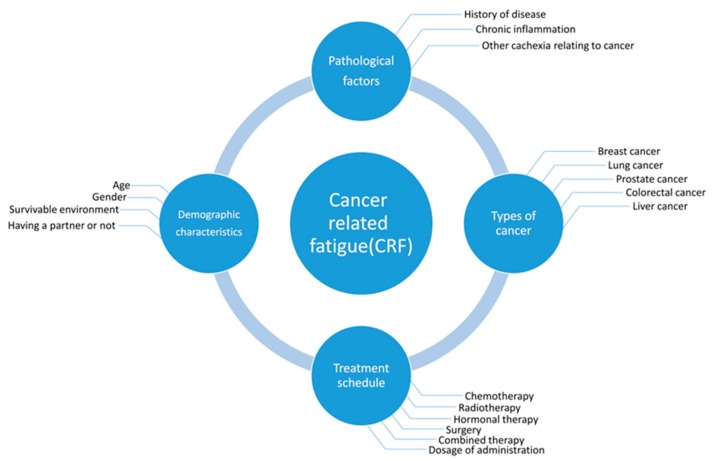
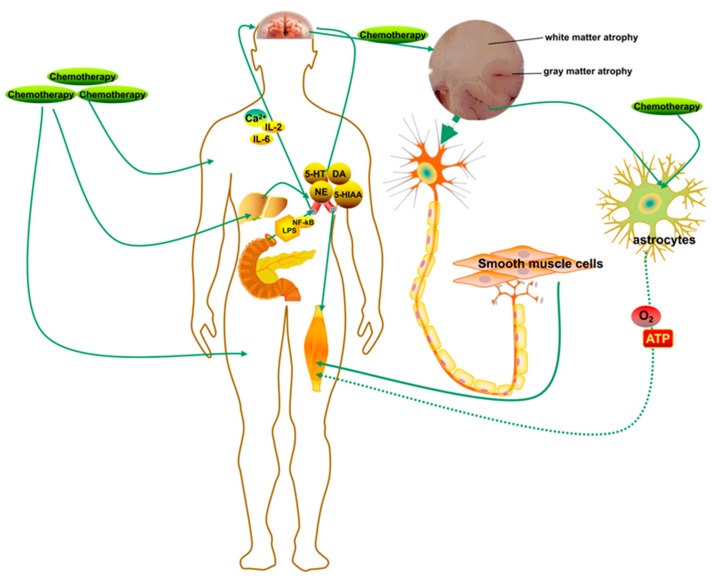
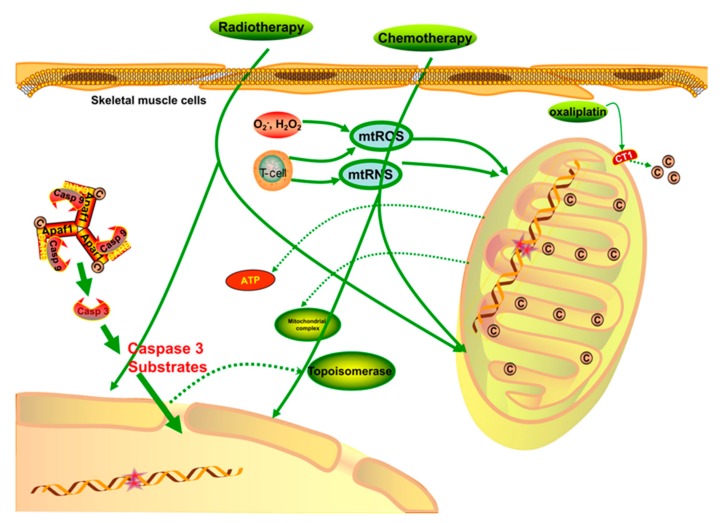
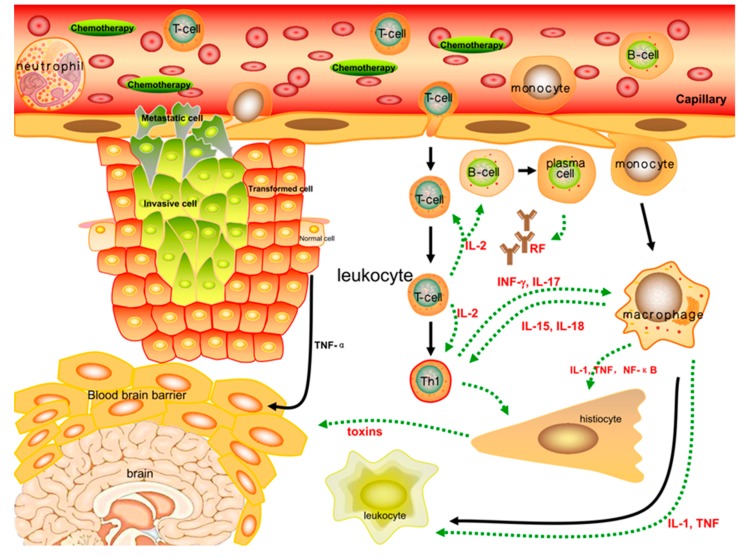
Many cancer patients suffer from severe fatigue when treated with chemotherapy or radiotherapy; however, the etiology and pathogenesis of this kind of fatigue remains unknown. Fatigue is associated with cancer itself, as well as adjuvant therapies and can persist for a long time. Cancer patients present a high degree of fatigue, which dramatically affects the quality of their everyday life. There are various clinical research studies and reviews that aimed to explore the mechanisms of cancer-related fatigue (CRF). However, there are certain limitations in these studies: For example, some studies have only blood biochemical texts without histopathological examination, and there has been insufficient systemic evaluation of the dynamic changes in relevant indexes. Thus, we present this narrative review to summarize previous studies on CRF and explore promising research directions. Plenty of evidence suggests a possible association between CRF and physiological dysfunction, including skeletal muscular and mitochondrial dysfunction, peripheral immune activation and inflammation dysfunction, as well as central nervous system (CNS) disorder. Mitochondrial DNA (mtDNA), mitochondrial structure, oxidative pressure, and some active factors such as ATP play significant roles that lead to the induction of CRF. Meanwhile, several pro-inflammatory and anti-inflammatory cytokines in the peripheral system, even in the CNS, significantly contribute to the occurrence of CRF. Moreover, CNS function disorders, such as neuropeptide, neurotransmitter, and hypothalamic-pituitary-adrenal (HPA) axis dysfunction, tend to amplify the sense of fatigue in cancer patients through various signaling pathways. There have been few accurate animal models established to further explore the molecular mechanisms of CRF due to different types of cancer, adjuvant therapy schedules, living environments, and physical status. It is imperative to develop appropriate animal models that can mimic human CRF and to explore additional mechanisms using histopathological and biochemical methods. Therefore, the main purpose of this review is to analyze the possible pathogenesis of CRF and recommend future research that will clarify CRF pathogenesis and facilitate the formulation of new treatment options.
许多癌症患者在接受化疗或放疗时会遭受严重的疲劳;然而,这种疲劳的病因和发病机制尚不清楚。疲劳与癌症本身以及辅助治疗有关,并可能持续很长时间。癌症患者表现出高度的疲劳,这极大地影响了他们的日常生活质量。有许多临床研究和综述旨在探讨癌症相关疲劳(CRF)的机制。然而,这些研究存在一定的局限性:例如,一些研究只有血液生化文本而没有组织病理学检查,并且对相关指标的动态变化没有进行充分的系统评估。因此,我们提出了这篇叙述性综述,以总结以前关于 CRF 的研究,并探讨有前途的研究方向。大量证据表明,CRF 可能与生理功能障碍有关,包括骨骼肌和线粒体功能障碍、外周免疫激活和炎症功能障碍以及中枢神经系统(CNS)障碍。线粒体 DNA(mtDNA)、线粒体结构、氧化压力以及 ATP 等一些活性因子在诱导 CRF 方面起着重要作用。同时,外周系统(甚至中枢神经系统)中的几种促炎和抗炎细胞因子也显著促进了 CRF 的发生。此外,CNS 功能障碍,如神经肽、神经递质和下丘脑-垂体-肾上腺(HPA)轴功能障碍,通过各种信号通路放大癌症患者的疲劳感。由于不同类型的癌症、辅助治疗方案、生活环境和身体状况,很少有准确的动物模型被建立来进一步探索 CRF 的分子机制。开发能够模拟人类 CRF 的适当动物模型,并使用组织病理学和生化方法探索其他机制,这一点至关重要。因此,本综述的主要目的是分析 CRF 的可能发病机制,并推荐未来的研究,以阐明 CRF 的发病机制,并为制定新的治疗方案提供依据。