Toblli Jorge E, Bevione P, Di Gennaro F, Madalena L, Cao G, Angerosa M
Laboratorio de Medicina Experimental, Hospital Alemán, Facultad de Medicina, University of Buenos Aires, Avenida Pueyrredon 1640, 1118 Buenos Aires, Argentina.
Int J Nephrol. 2012;2012:546039. doi: 10.1155/2012/546039. Epub 2012 Jul 4.
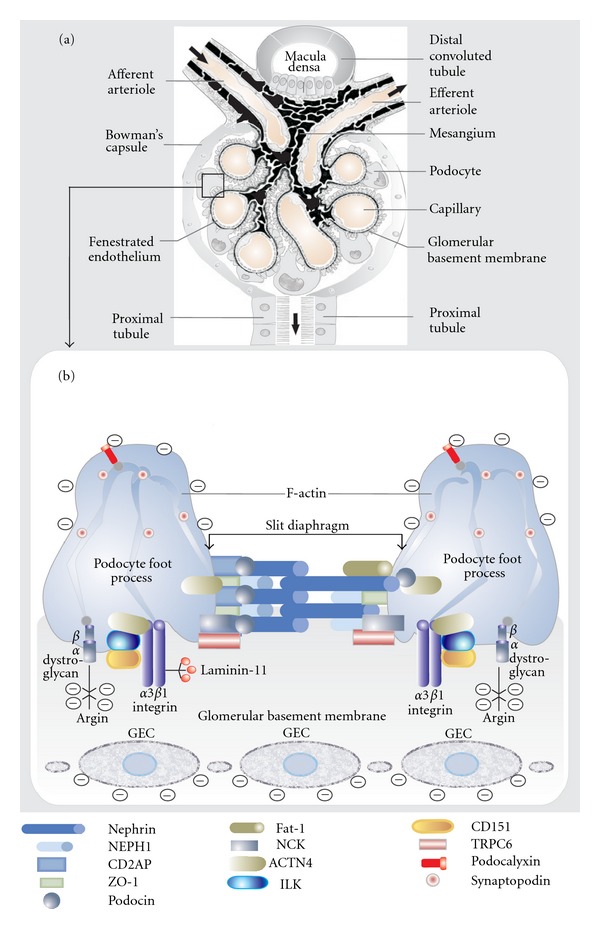
A large body of evidence indicates that proteinuria is a strong predictor of morbidity, a cause of inflammation, oxidative stress and progression of chronic kidney disease, and development of cardiovascular disease. The processes that lead to proteinuria are complex and involve factors such as glomerular hemodynamic, tubular absorption, and diffusion gradients. Alterations in various different molecular pathways and interactions may lead to the identical clinical end points of proteinuria and chronic kidney disease. Glomerular diseases include a wide range of immune and nonimmune insults that may target and thus damage some components of the glomerular filtration barrier. In many of these conditions, the renal visceral epithelial cell (podocyte) responds to injury along defined pathways, which may explain the resultant clinical and histological changes. The recent discovery of the molecular components of the slit diaphragm, specialized structure of podocyte-podocyte interaction, has been a major breakthrough in understanding the crucial role of the epithelial layer of the glomerular barrier and the pathogenesis of proteinuria. This paper provides an overview and update on the structure and function of the glomerular filtration barrier and the pathogenesis of proteinuria, highlighting the role of the podocyte in this setting. In addition, current antiproteinuric therapeutic approaches are briefly commented.
大量证据表明,蛋白尿是发病率的有力预测指标,是炎症、氧化应激、慢性肾脏病进展以及心血管疾病发生的一个原因。导致蛋白尿的过程很复杂,涉及肾小球血流动力学、肾小管重吸收和扩散梯度等因素。各种不同分子途径和相互作用的改变可能导致蛋白尿和慢性肾脏病相同的临床终点。肾小球疾病包括多种免疫和非免疫损伤,这些损伤可能靶向并因此损害肾小球滤过屏障的某些成分。在许多这些情况下,肾脏脏层上皮细胞(足细胞)会沿着特定途径对损伤作出反应,这或许可以解释由此产生的临床和组织学变化。足细胞 - 足细胞相互作用的特殊结构——裂孔隔膜分子成分的最新发现,是理解肾小球屏障上皮层的关键作用及蛋白尿发病机制方面的一项重大突破。本文概述并更新了肾小球滤过屏障的结构和功能以及蛋白尿的发病机制,强调了足细胞在此过程中的作用。此外,还简要评论了当前的抗蛋白尿治疗方法。