Key Laboratory of Synthetic Biology, Institute of Plant Physiology and Ecology, Shanghai Institutes for Biological Sciences, Chinese Academy of Sciences, 300 Fenglin Road, Shanghai 200032, China.
BMC Genomics. 2012 Jul 30;13:349. doi: 10.1186/1471-2164-13-349.
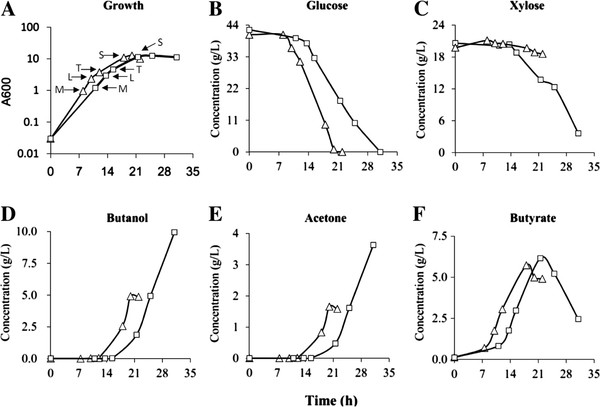
Clostridium acetobutylicum has been used to produce butanol in industry. Catabolite control protein A (CcpA), known to mediate carbon catabolite repression (CCR) in low GC gram-positive bacteria, has been identified and characterized in C. acetobutylicum by our previous work (Ren, C. et al. 2010, Metab Eng 12:446-54). To further dissect its regulatory function in C. acetobutylicum, CcpA was investigated using DNA microarray followed by phenotypic, genetic and biochemical validation.
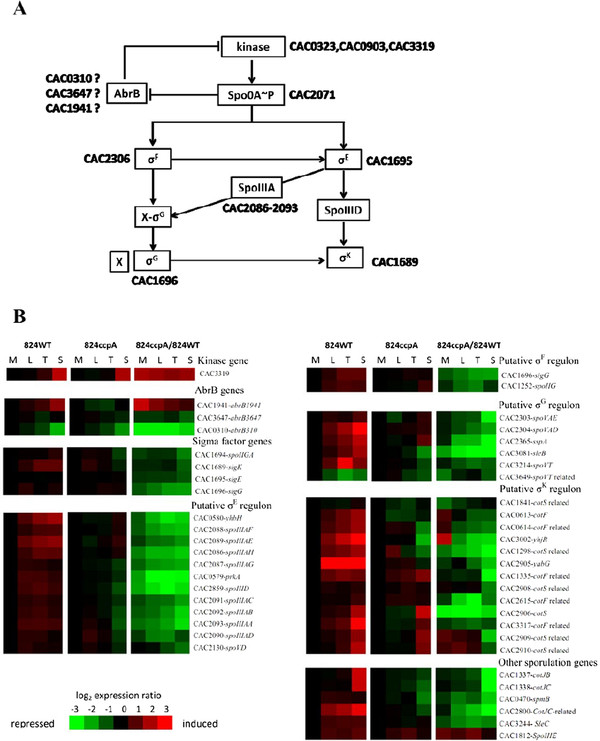
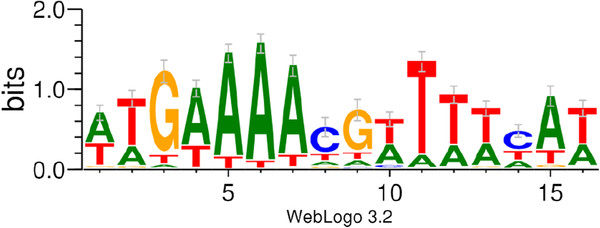
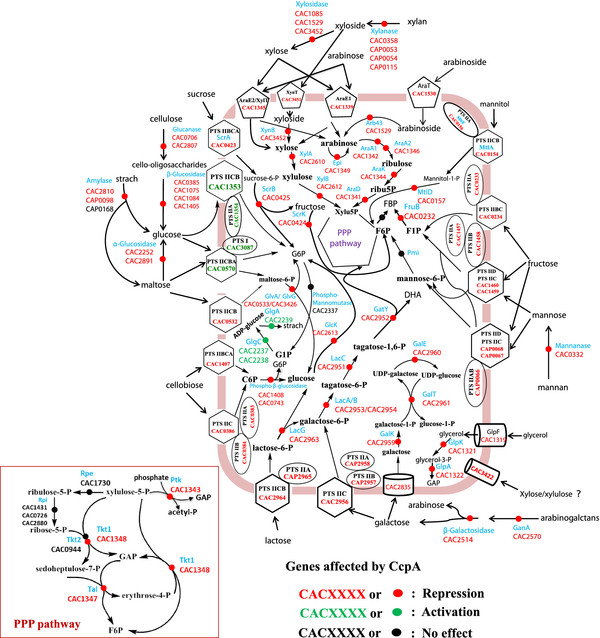
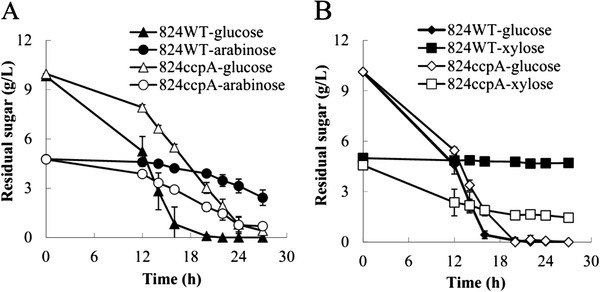
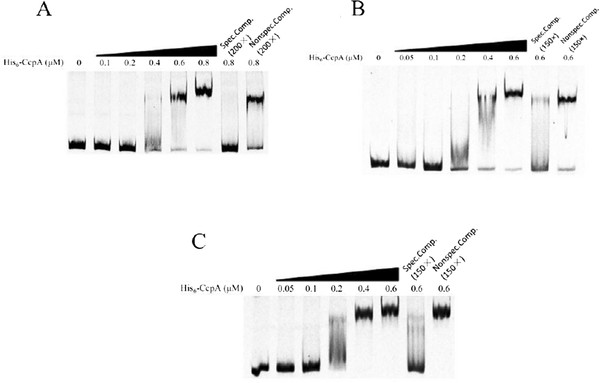
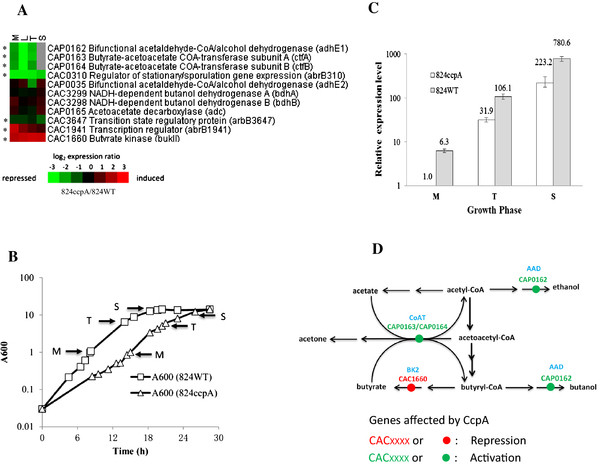
CcpA controls not only genes in carbon metabolism, but also those genes in solvent production and sporulation of the life cycle in C. acetobutylicum: i) CcpA directly repressed transcription of genes related to transport and metabolism of non-preferred carbon sources such as d-xylose and l-arabinose, and activated expression of genes responsible for d-glucose PTS system; ii) CcpA is involved in positive regulation of the key solventogenic operon sol (adhE1-ctfA-ctfB) and negative regulation of acidogenic gene bukII; and iii) transcriptional alterations were observed for several sporulation-related genes upon ccpA inactivation, which may account for the lower sporulation efficiency in the mutant, suggesting CcpA may be necessary for efficient sporulation of C. acetobutylicum, an important trait adversely affecting the solvent productivity.
This study provided insights to the pleiotropic functions that CcpA displayed in butanol-producing C. acetobutylicum. The information could be valuable for further dissecting its pleiotropic regulatory mechanism in C. acetobutylicum, and for genetic modification in order to obtain more effective butanol-producing Clostridium strains.
丙酮丁醇梭菌已被用于工业生产丁醇。我们之前的工作已经鉴定并描述了在低 GC 革兰氏阳性菌中介导碳分解代谢物阻遏(CCR)的关键调节蛋白 CcpA(Ren, C. et al. 2010, Metab Eng 12:446-54)。为了进一步研究 CcpA 在丙酮丁醇梭菌中的调控功能,我们使用 DNA 微阵列并通过表型、遗传和生化验证对 CcpA 进行了研究。
CcpA 不仅控制了碳代谢相关基因的表达,还控制了丙酮丁醇梭菌生命周期中溶剂生成和孢子形成相关基因的表达:i)CcpA 直接抑制了非首选碳源(如 D-木糖和 L-阿拉伯糖)的运输和代谢相关基因的转录,同时激活了 D-葡萄糖 PTS 系统相关基因的表达;ii)CcpA 参与了关键溶剂生成操纵子 sol(adhE1-ctfA-ctfB)的正调控和酸生成基因 bukII 的负调控;iii)ccpA 失活后观察到几个与孢子形成相关基因的转录变化,这可能导致突变体中孢子形成效率降低,表明 CcpA 可能是丙酮丁醇梭菌有效孢子形成所必需的,这是一个重要的性状,会对溶剂生产力产生不利影响。
本研究深入了解了 CcpA 在丁醇生产丙酮丁醇梭菌中的多效性功能。这些信息对于进一步研究 CcpA 在丙酮丁醇梭菌中的多效性调控机制以及遗传修饰以获得更有效的丁醇生产梭菌菌株具有重要意义。