Department of Microbiology and Molecular Genetics, University of Medicine and Dentistry of New Jersey, New Jersey Medical School, 225 Warren Street, Newark, NJ 07103-3535, USA.
BMC Microbiol. 2012 Jul 30;12:157. doi: 10.1186/1471-2180-12-157.
Lyme disease in the United States is caused primarily by B. burgdorferi sensu stricto while other species are also prevalent in Europe. Genetic techniques have identified several chromosomal and plasmid-borne regulatory and virulence factors involved in Lyme pathogenesis. B31 and N40 are two widely studied strains of B. burgdorferi, which belong to two different 16 S-23 S rRNA spacer types (RST) and outer surface protein C (OspC) allelic groups. However, the presence of several known virulence factors in N40 has not been investigated. This is the first comprehensive study that compared these two strains both in vitro and using the mouse model of infection.
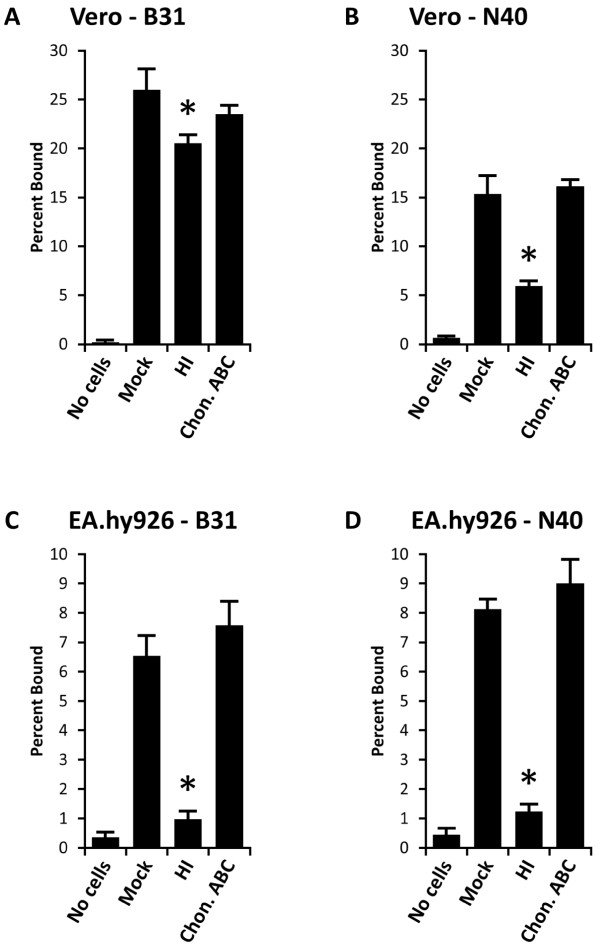
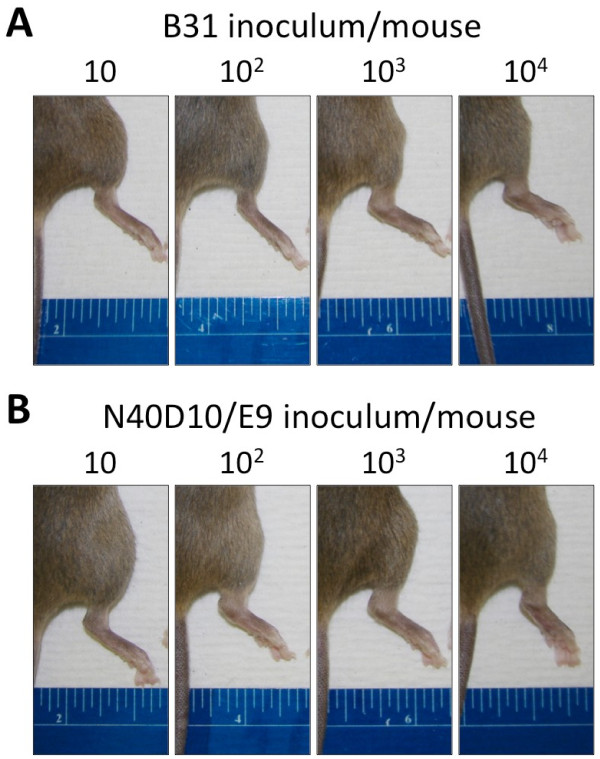
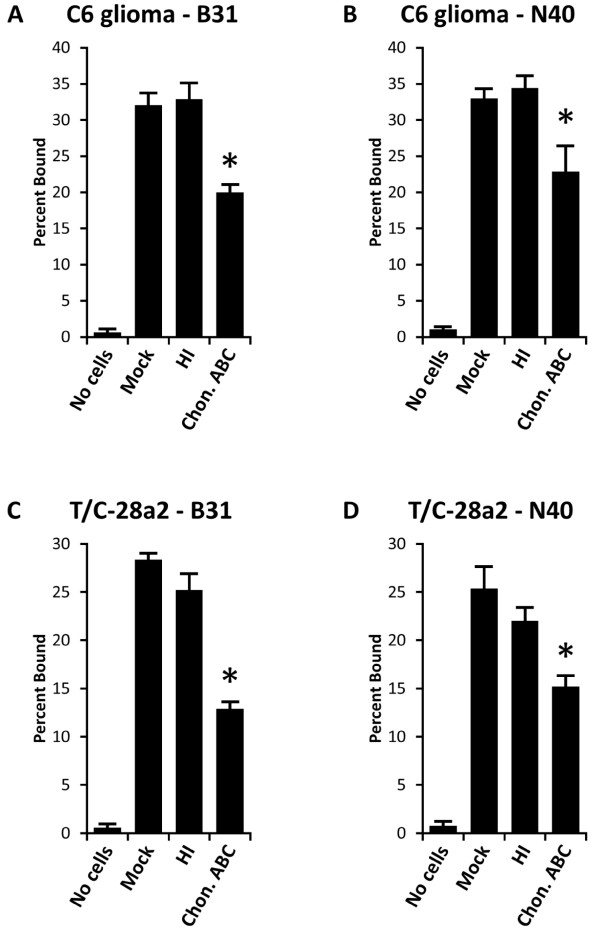
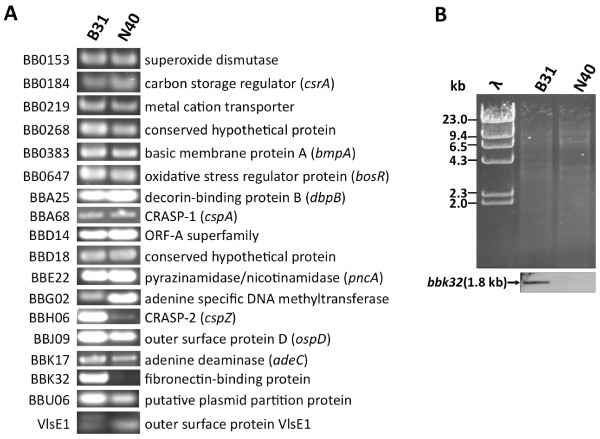
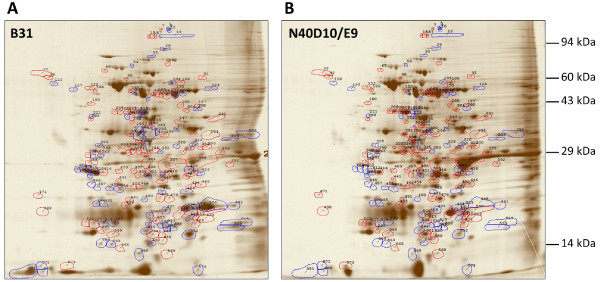
Phylogenetic analyses predict B31 to be more infectious. However, our studies here indicate that N40D10/E9 is more infectious than the B31 strain at lower doses of inoculation in the susceptible C3H mice. Based-upon a careful analyses of known adhesins of these strains, it is predicted that the absence of a known fibronectin-glycosaminoglycan binding adhesin, bbk32, in the N40 strain could at least partially be responsible for reduction in its binding to Vero cells in vitro. Nevertheless, this difference does not affect the infectivity of N40D10/E9 strain. The genes encoding known regulatory and virulence factors critical for pathogenesis were detected in both strains. Differences in the protein profiles of these B. burgdorferi strains in vitro suggest that the novel, differentially expressed molecules may affect infectivity of B. burgdorferi. Further exacerbation of these molecular differences in vivo could affect the pathogenesis of spirochete strains.
Based upon the studies here, it can be predicted that N40D10/E9 disseminated infection at lower doses may be enhanced by its lower binding to epithelial cells at the site of inoculation due to the absence of BBK32. We suggest that complete molecular analyses of virulence factors followed by their evaluation using the mouse infection model should form the basis of determining infectivity and pathogenicity of different strains rather than simple phylogenetic group analyses. This study further emphasizes a need to investigate multiple invasive strains of B. burgdorferi to fully appreciate the pathogenic mechanisms that contribute to Lyme disease manifestations.
在美国,莱姆病主要由 B. burgdorferi sensu stricto 引起,而其他物种在欧洲也很普遍。遗传技术已经确定了几个与莱姆病发病机制相关的染色体和质粒携带的调节因子和毒力因子。B31 和 N40 是两种广泛研究的 B. burgdorferi 菌株,它们属于两种不同的 16 S-23 S rRNA 间隔型(RST)和外表面蛋白 C(OspC)等位基因群。然而,尚未研究 N40 中存在的几种已知毒力因子。这是首次对这两种菌株进行比较的综合研究,既在体外进行,也在感染的小鼠模型中进行。
系统发育分析预测 B31 更具传染性。然而,我们在这里的研究表明,在易感 C3H 小鼠中,较低剂量接种时,N40D10/E9 比 B31 菌株更具传染性。基于对这些菌株已知黏附素的仔细分析,预计 N40 菌株中不存在已知的纤维连接蛋白-糖胺聚糖结合黏附素 bbk32,至少部分解释了其在体外与 Vero 细胞结合减少的原因。然而,这一差异并不影响 N40D10/E9 菌株的感染力。这两种菌株均检测到了编码对发病机制至关重要的已知调节因子和毒力因子的基因。这些 B. burgdorferi 菌株在体外的蛋白图谱差异表明,新的、差异表达的分子可能会影响伯氏疏螺旋体的感染力。在体内进一步加剧这些分子差异可能会影响螺旋体菌株的发病机制。
根据这里的研究,可以预测由于缺乏 BBK32,N40D10/E9 在较低剂量时传播感染的能力增强,可能是由于其在接种部位与上皮细胞的结合减少所致。我们建议,对毒力因子进行全面的分子分析,然后使用小鼠感染模型对其进行评估,这应该是确定不同菌株的感染力和致病性的基础,而不是简单的系统发育群分析。本研究进一步强调需要研究多种侵袭性伯氏疏螺旋体菌株,以充分了解导致莱姆病表现的发病机制。