International Vaccine Institute, Seoul, Korea.
PLoS Negl Trop Dis. 2012;6(7):e1743. doi: 10.1371/journal.pntd.0001743. Epub 2012 Jul 24.
Mass vaccinations are a main strategy in the deployment of oral cholera vaccines. Campaigns avoid giving vaccine to pregnant women because of the absence of safety data of the killed whole-cell oral cholera (rBS-WC) vaccine. Balancing this concern is the known higher risk of cholera and of complications of pregnancy should cholera occur in these women, as well as the lack of expected adverse events from a killed oral bacterial vaccine.
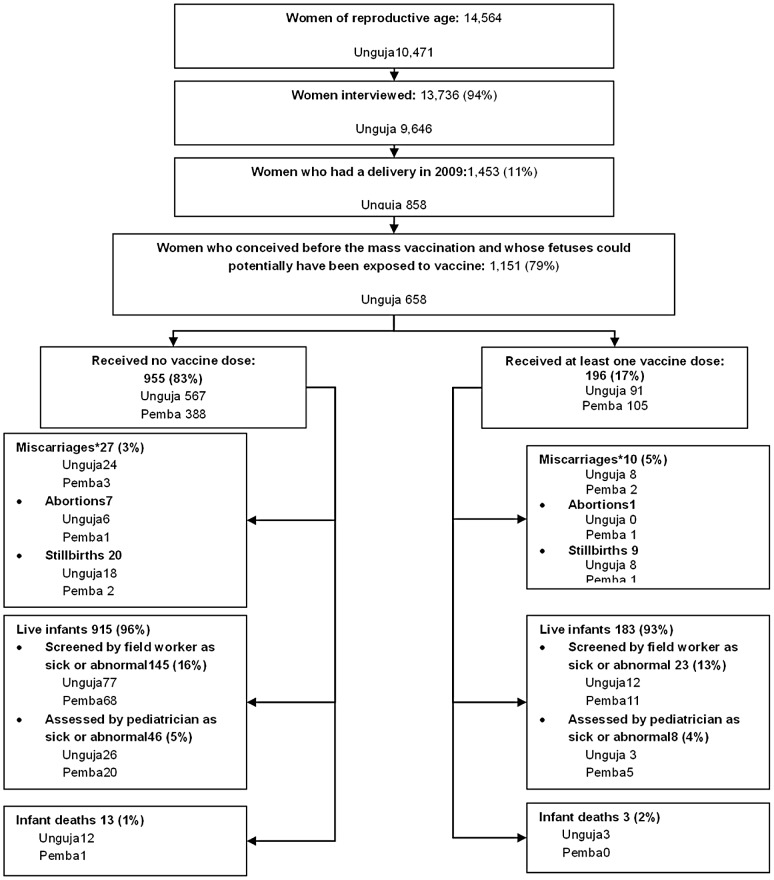
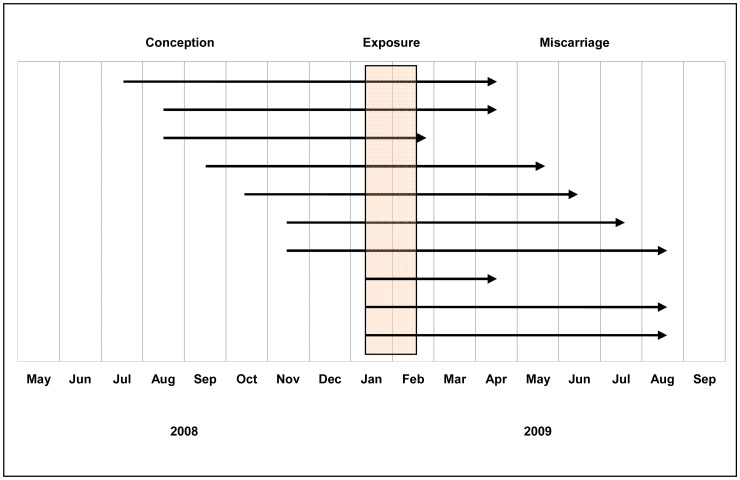
METHODOLOGY/PRINCIPAL FINDINGS: From January to February 2009, a mass rBS-WC vaccination campaign of persons over two years of age was conducted in an urban and a rural area (population 51,151) in Zanzibar. Pregnant women were advised not to participate in the campaign. More than nine months after the last dose of the vaccine was administered, we visited all women between 15 and 50 years of age living in the study area. The outcome of pregnancies that were inadvertently exposed to at least one oral cholera vaccine dose and those that were not exposed was evaluated. 13,736 (94%) of the target women in the study site were interviewed. 1,151 (79%) of the 1,453 deliveries in 2009 occurred during the period when foetal exposure to the vaccine could have occurred. 955 (83%) out of these 1,151 mothers had not been vaccinated; the remaining 196 (17%) mothers had received at least one dose of the oral cholera vaccine. There were no statistically significant differences in the odds ratios for birth outcomes among the exposed and unexposed pregnancies.
CONCLUSIONS/SIGNIFICANCE: We found no statistically significant evidence of a harmful effect of gestational exposure to the rBS-WC vaccine. These findings, along with the absence of a rational basis for expecting a risk from this killed oral bacterial vaccine, are reassuring but the study had insufficient power to detect infrequent events.
ClinicalTrials.gov NCT00709410.
大规模疫苗接种是部署口服霍乱疫苗的主要策略。由于缺乏经杀死的全细胞口服霍乱(rBS-WC)疫苗的安全性数据,因此 campaigns 避免给孕妇接种疫苗。平衡这一担忧的是,已知孕妇患霍乱和妊娠并发症的风险更高,如果这些妇女感染霍乱,以及由于杀死的口服细菌疫苗预计不会出现不良事件。
方法/主要发现:2009 年 1 月至 2 月,在桑给巴尔的一个城市和一个农村地区(人口 51151 人)进行了大规模的 rBS-WC 疫苗接种活动。建议孕妇不要参加该活动。在最后一剂疫苗接种九个多月后,我们访问了居住在研究区域内的所有 15 至 50 岁的妇女。评估了意外接触至少一剂口服霍乱疫苗的妊娠结局和未接触的妊娠结局。在研究地点,有 13736(94%)名目标妇女接受了访谈。2009 年有 1453 次分娩,其中 1151 次(79%)发生在胎儿可能接触疫苗的时期。在这些母亲中,955 人(83%)未接种疫苗;其余 196 人(17%)母亲至少接受了一剂口服霍乱疫苗。接触和未接触妊娠的出生结局比值没有统计学意义。
结论/意义:我们没有发现妊娠期接触 rBS-WC 疫苗有不良影响的统计学证据。这些发现,以及没有合理的理由期望这种杀死的口服细菌疫苗有风险,令人放心,但该研究没有足够的能力来检测罕见的事件。
ClinicalTrials.gov NCT00709410。