G.B. Elyakov Pacific Institute of Bioorganic Chemistry, Far Eastern Branch, Russian Academy of Sciences, 159, Pr. 100 let Vladivostoku, Vladivostok 690022, Russian Federation.
Shemyakin-Ovchinnikov Institute of Bioorganic Chemistry, Russian Academy of Sciences, 16/10, Miklukho-Maklaya Str., Moscow 117997, Russian Federation.
Mar Drugs. 2012 Jul;10(7):1545-1565. doi: 10.3390/md10071545. Epub 2012 Jul 19.
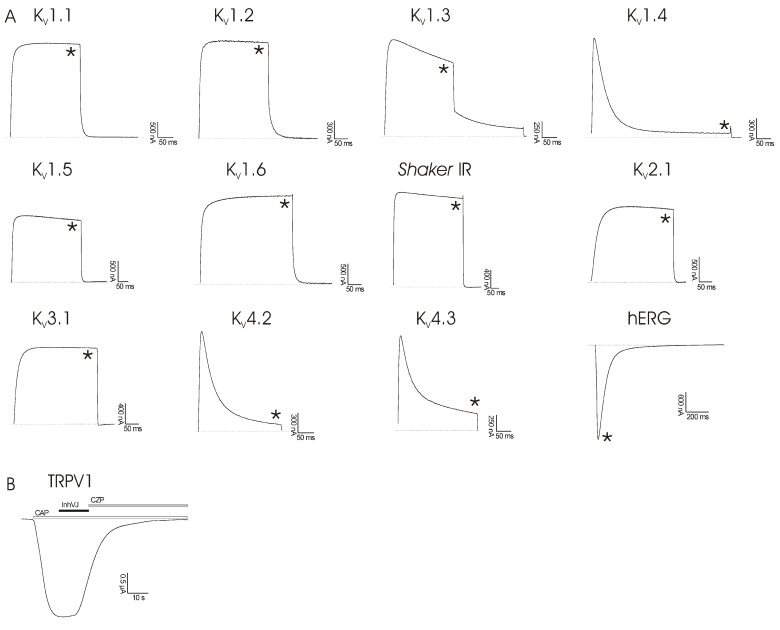
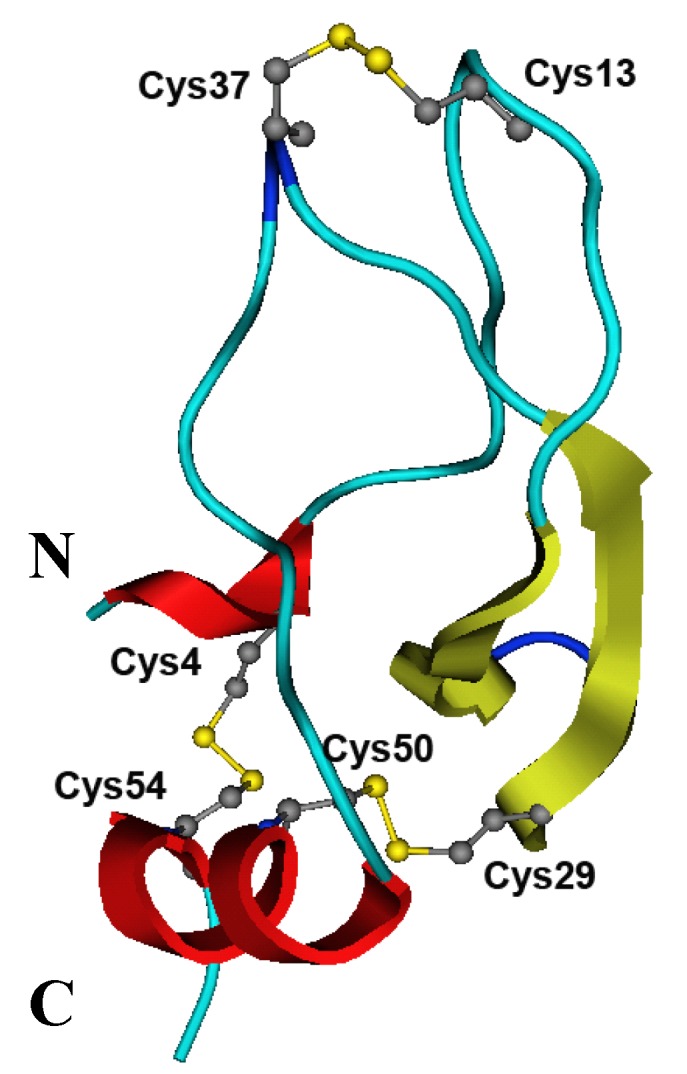
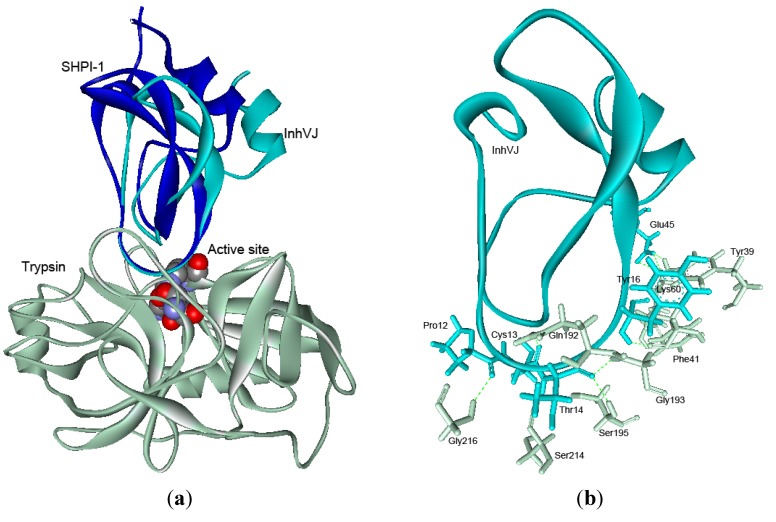
The primary structure of a new Kunitz-type protease inhibitor InhVJ from the sea anemone Heteractis crispa (Radianthus macrodactylus) was determined by protein sequencing and cDNA cloning. InhVJ amino acid sequence was shown to share high sequence identity (up to 98%) with the other known Kunitz-type sea anemones sequences. It was determined that the P1 Thr at the reactive site resulted in a decrease of the K(i) of InhVJ to trypsin and α-chymotrypsin (7.38 × 10(-8) M and 9.93 × 10(-7) M, respectively). By structure modeling the functional importance of amino acids at the reactive site as well as at the weak contact site were determined. The significant role of Glu45 for the orientation and stabilization of the InhVJ-trypsin complex was elucidated. We can suggest that there has been an adaptive evolution of the P1 residue at the inhibitor reactive site providing specialization or functional diversification of the paralogs. The appearance of a key so-called P1 Thr residue instead of Lys might lead to refinement of inhibitor specificity in the direction of subfamilies of serine proteases. The absence of Kv channel and TRPV1-receptor modulation activity was confirmed by electrophysiological screening tests.
从海葵 Heteractis crispa(Radianthus macrodactylus)中分离得到一种新的 Kunitz 型蛋白酶抑制剂 InhVJ,其一级结构通过蛋白质测序和 cDNA 克隆确定。InhVJ 的氨基酸序列与其他已知的海葵 Kunitz 型序列具有高度的序列同一性(高达 98%)。结果表明,反应部位的 P1 苏氨酸导致 InhVJ 对胰蛋白酶和 α-糜蛋白酶的 K(i)降低(分别为 7.38×10(-8) M 和 9.93×10(-7) M)。通过结构建模确定了反应部位和弱接触部位氨基酸的功能重要性。阐明了 Glu45 对 InhVJ-胰蛋白酶复合物的定向和稳定的重要作用。我们可以推测,抑制剂反应部位的 P1 残基发生了适应性进化,为旁系同源物的特化或功能多样化提供了条件。关键的所谓 P1 苏氨酸残基的出现可能导致抑制剂特异性朝着丝氨酸蛋白酶亚家族的方向细化。通过电生理筛选测试证实了该抑制剂对钾通道和 TRPV1 受体没有调节作用。