G.B. Elyakov Pacific Institute of Bioorganic Chemistry, Far Eastern Branch of the Russian Academy of Sciences, 159, Pr. 100 let Vladivostoku, Vladivostok, 690022, Russia.
Department of Biomedical Science and Environmental Biology, Kaohsiung Medical University, 100, Shih-Chuan 1st Road, Kaohsiung, 80708, Taiwan.
Sci Rep. 2020 Mar 6;10(1):4205. doi: 10.1038/s41598-020-61034-x.
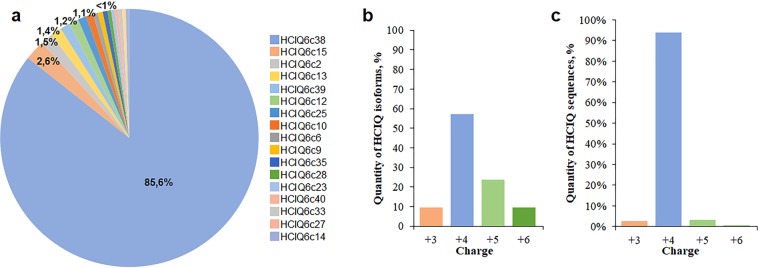
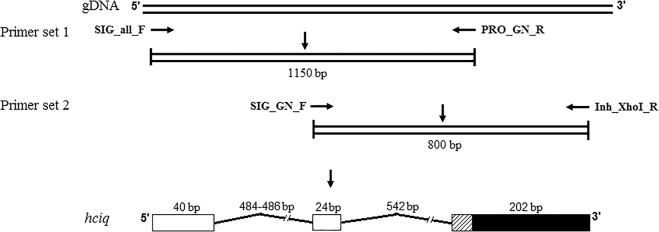
The Kunitz/BPTI-type peptides are ubiquitous in numerous organisms including marine venomous animals. The peptides demonstrate various biological activities and therefore they are the subject of a number of investigations. We have discovered a new HCIQ subfamily belonging to recently described multigene HCGS family of Heteractis crispa Kunitz-peptides. The uniqueness of this subfamily is that the HCIQ precursors contain a propeptide terminating in Lys-Arg (endopeptidase cleavage site) the same as in the neuro- and cytotoxin ones. Moreover, the HCIQ genes contain two introns in contrast to HCGS genes with one intron. As a result of Sanger and amplicon deep sequencings, 24 HCIQ isoforms were revealed. The recombinant peptides for the most prevalent isoform (HCIQ2c1) and for the isoform with the rare substitution Gly17Glu (HCIQ4c7) were obtained. They can inhibit trypsin with K 5.2 × 10 M and K 1.9 × 10 M, respectively, and interact with some serine proteinases including inflammatory ones according to the SPR method. For the first time, Kunitz-peptides have shown to significantly increase neuroblastoma cell viability in an in vitro 6-OHDA-induced neurotoxicity model being a consequence of an effective decrease of ROS level in the cells.
Kunitz/BPTI 型肽在包括海洋有毒动物在内的众多生物体中普遍存在。这些肽具有多种生物活性,因此它们是许多研究的主题。我们发现了一个属于 Heteractis crispa Kunitz 肽新的 HCIQ 亚家族,属于最近描述的多基因 HCGS 家族。这个亚家族的独特之处在于,HCIQ 前体含有一个以 Lys-Arg(内切酶切割位点)结尾的前肽,与神经毒素和细胞毒素相同。此外,与含有一个内含子的 HCGS 基因不同,HCIQ 基因含有两个内含子。通过 Sanger 和扩增子深度测序,共发现 24 种 HCIQ 同工型。获得了最常见同工型(HCIQ2c1)和罕见取代 Gly17Glu 同工型(HCIQ4c7)的重组肽。根据 SPR 方法,它们可以分别以 K 5.2×10⁻⁷M 和 K 1.9×10⁻⁷M 的亲和力抑制胰蛋白酶,并与一些丝氨酸蛋白酶(包括炎症蛋白酶)相互作用。首次发现 Kunitz 肽在体外 6-OHDA 诱导的神经毒性模型中显著增加神经母细胞瘤细胞活力,这是由于细胞内 ROS 水平有效降低的结果。