Department of Molecular, Cellular, and Developmental Biology, University of Colorado at Boulder, Boulder, Colorado, United States of America.
PLoS One. 2012;7(7):e42297. doi: 10.1371/journal.pone.0042297. Epub 2012 Jul 31.
Although the hypertrophic responses of the heart to pregnancy and exercise are both considered to be physiological processes, they occur in quite different hormonal and temporal settings. In this study, we have compared the global transcriptional profiles of left ventricular tissues at various time points during the progression of hypertrophy in exercise and pregnancy.
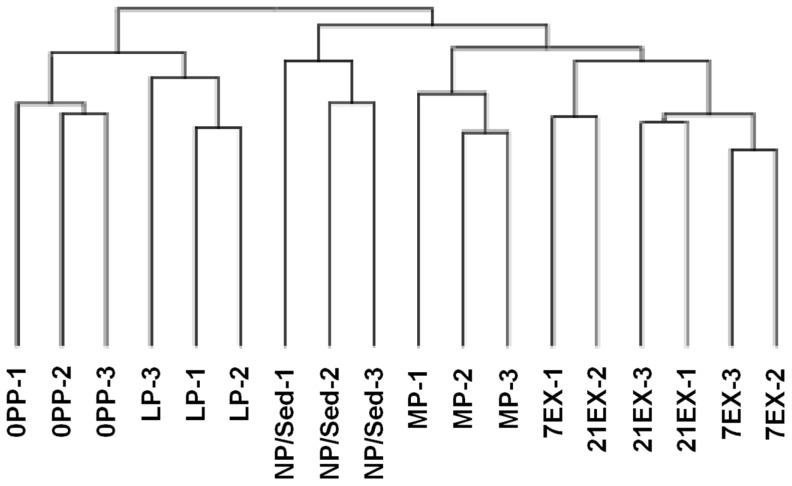
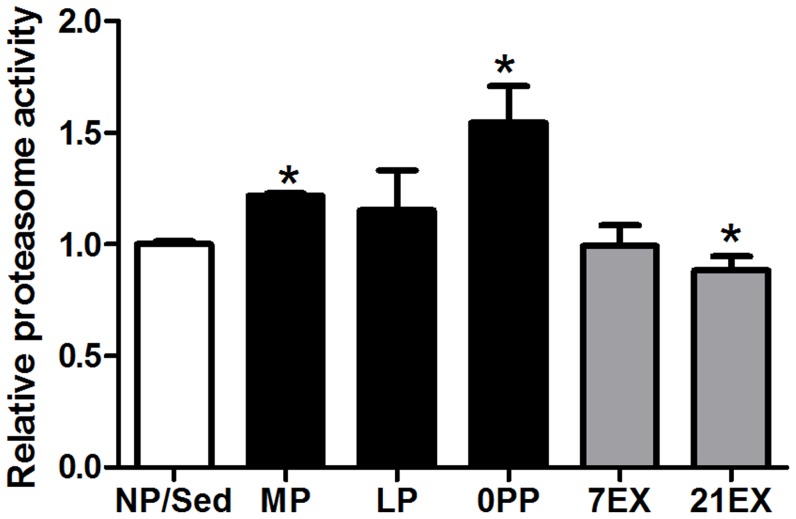
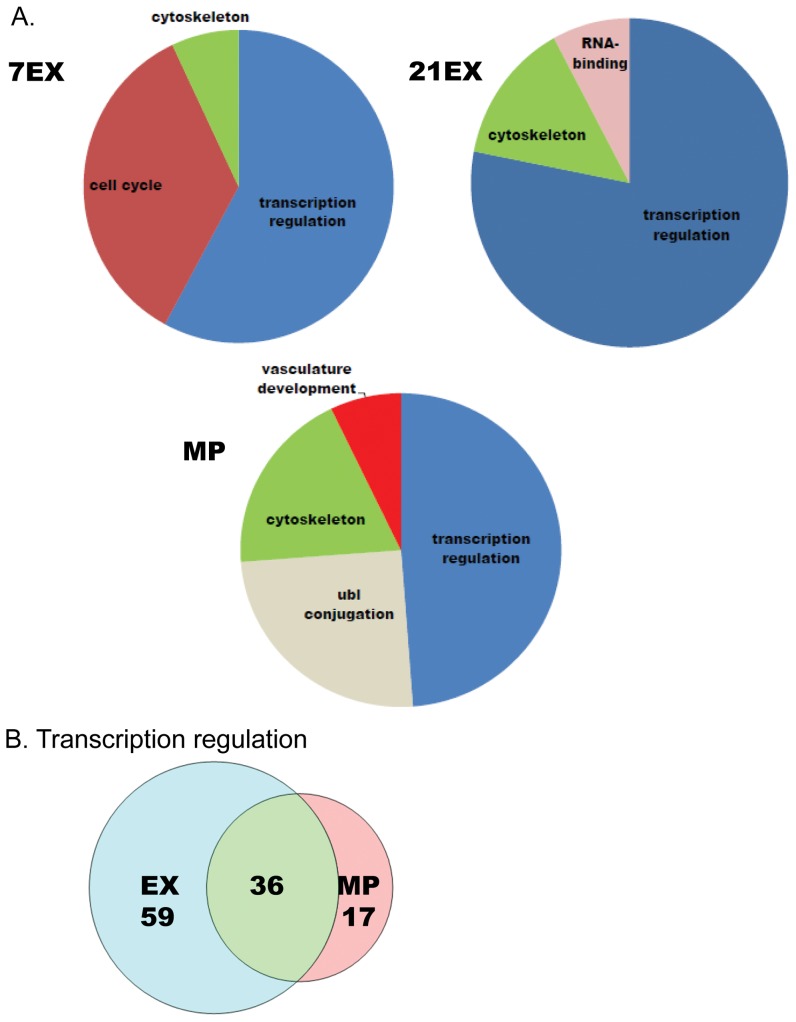
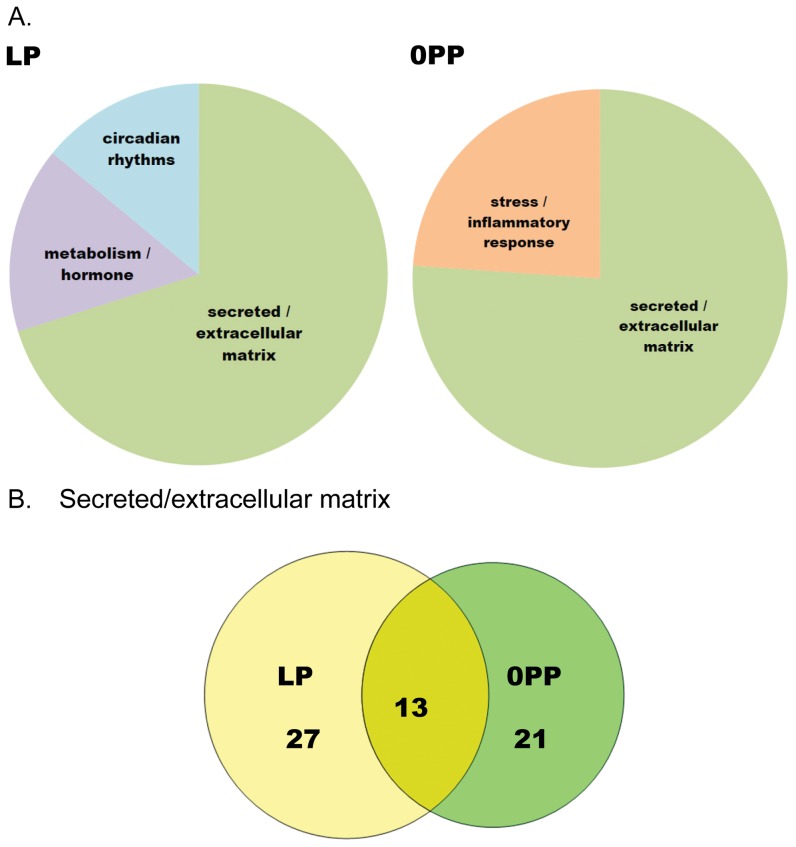
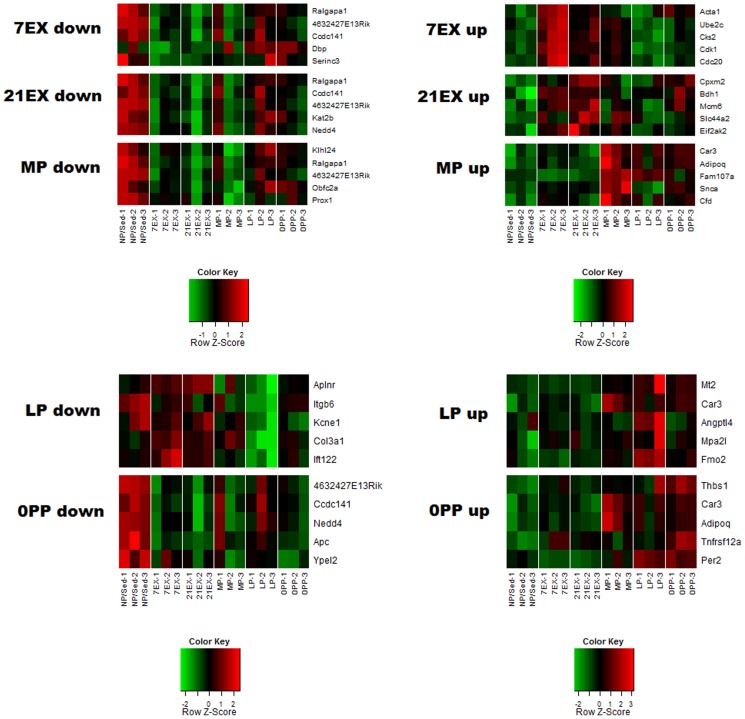
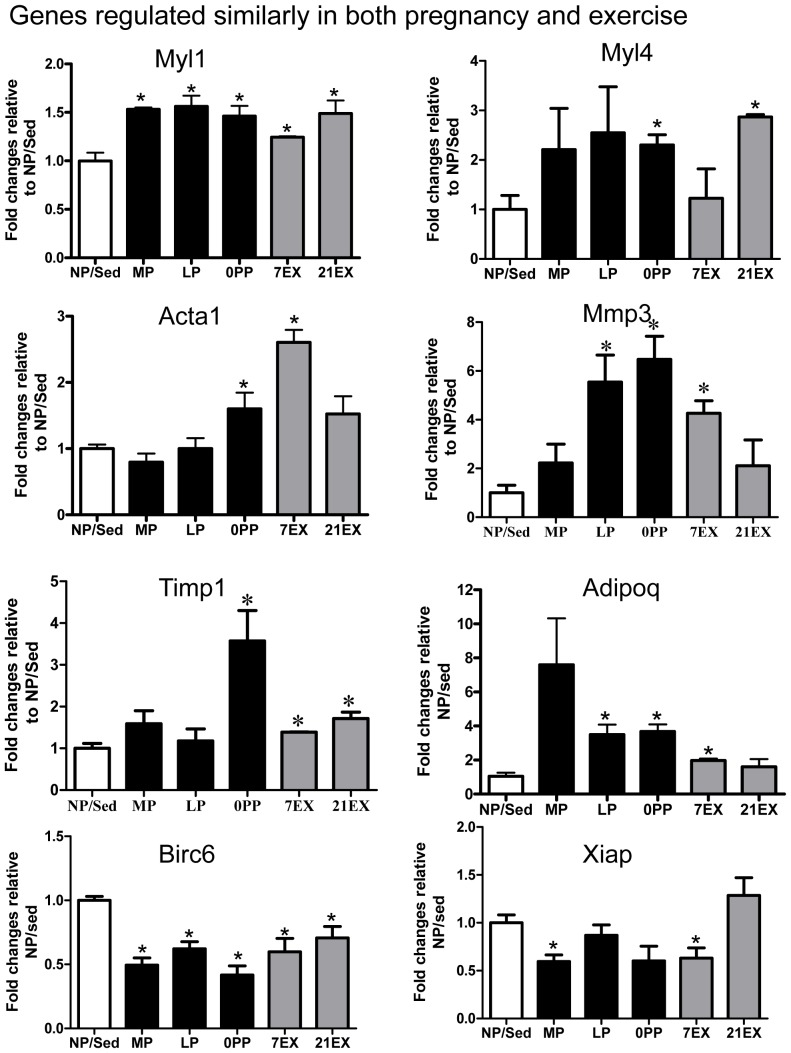
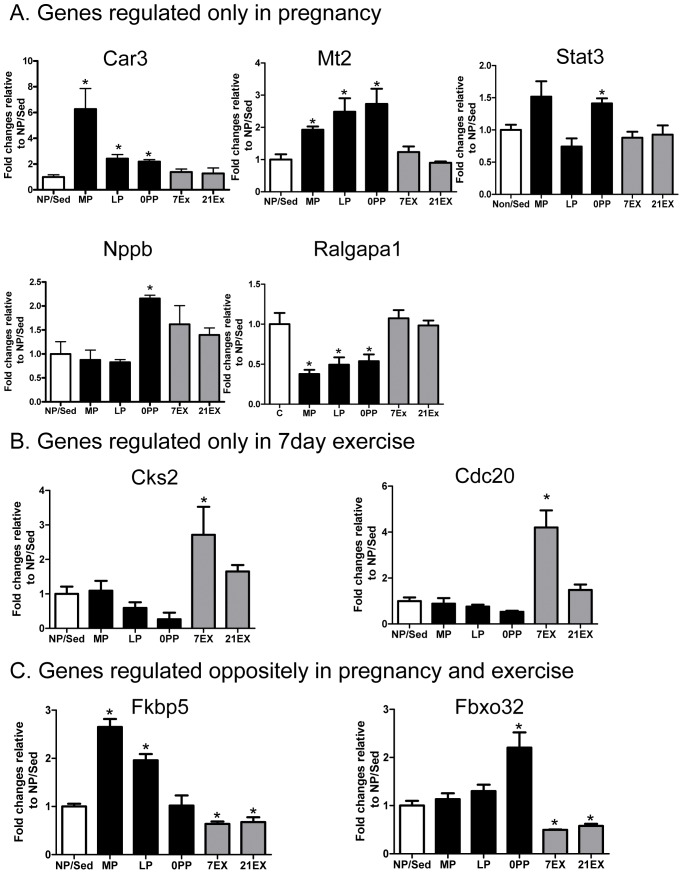
METHODOLOGY/PRINCIPAL FINDINGS: The following groups of female mice were analyzed: non-pregnant diestrus cycle sedentary control, mid-pregnant, late-pregnant, and immediate-postpartum, and animals subjected to 7 and 21 days of voluntary wheel running. Hierarchical clustering analysis shows that while mid-pregnancy and both exercise groups share the closest relationship and similar gene ontology categories, late pregnancy and immediate post-partum are quite different with high representation of secreted/extracellular matrix-related genes. Moreover, pathway-oriented ontological analysis shows that metabolism regulated by cytochrome P450 and chemokine pathways are the most significant signaling pathways regulated in late pregnancy and immediate-postpartum, respectively. Finally, increases in expression of components of the proteasome observed in both mid-pregnancy and immediate-postpartum also result in enhanced proteasome activity. Interestingly, the gene expression profiles did not correlate with the degree of cardiac hypertrophy observed in the animal groups, suggesting that distinct pathways are employed to achieve similar amounts of cardiac hypertrophy.
CONCLUSIONS/SIGNIFICANCE: Our results demonstrate that cardiac adaptation to the later stages of pregnancy is quite distinct from both mid-pregnancy and exercise. Furthermore, it is very dynamic since, by 12 hours post-partum, the heart has already initiated regression of cardiac growth, and 50 genes have changed expression significantly in the immediate-postpartum compared to late-pregnancy. Thus, pregnancy-induced cardiac hypertrophy is a more complex process than exercise-induced cardiac hypertrophy and our data suggest that the mechanisms underlying the two types of hypertrophy have limited overlap.
虽然心脏对妊娠和运动的肥厚反应都被认为是生理过程,但它们发生在完全不同的激素和时间环境中。在这项研究中,我们比较了在运动和妊娠期间左心室组织肥厚进展的不同时间点的全局转录谱。
方法/主要发现:分析了以下组别的雌性小鼠:非妊娠动情周期静息对照组、妊娠中期、妊娠晚期和产后即刻,以及进行 7 天和 21 天自愿轮跑的动物。层次聚类分析表明,妊娠中期和两组运动组之间的关系最密切,且具有相似的基因本体论类别,而妊娠晚期和产后即刻则完全不同,分泌/细胞外基质相关基因的表达水平较高。此外,以途径为导向的本体论分析表明,细胞色素 P450 调节的代谢和趋化因子途径分别是妊娠晚期和产后即刻调节的最重要信号通路。最后,在妊娠中期和产后即刻观察到的蛋白酶体组件表达增加也导致蛋白酶体活性增强。有趣的是,基因表达谱与动物组中观察到的心脏肥厚程度无关,这表明不同的途径用于实现相似程度的心脏肥厚。
结论/意义:我们的结果表明,心脏对妊娠后期的适应与妊娠中期和运动完全不同。此外,它非常动态,因为产后 12 小时,心脏已经开始心脏生长的退化,与妊娠晚期相比,产后即刻有 50 个基因的表达显著改变。因此,妊娠引起的心脏肥厚比运动引起的心脏肥厚更为复杂,我们的数据表明,两种肥厚的机制有有限的重叠。