Department of Marine Sciences, University of South Alabama, Mobile, Alabama, United States of America.
PLoS One. 2012;7(7):e42548. doi: 10.1371/journal.pone.0042548. Epub 2012 Jul 31.
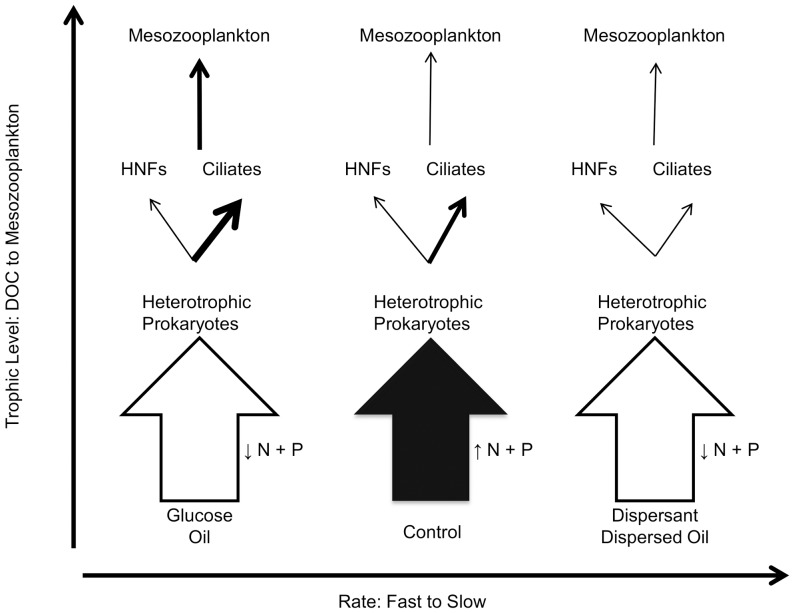
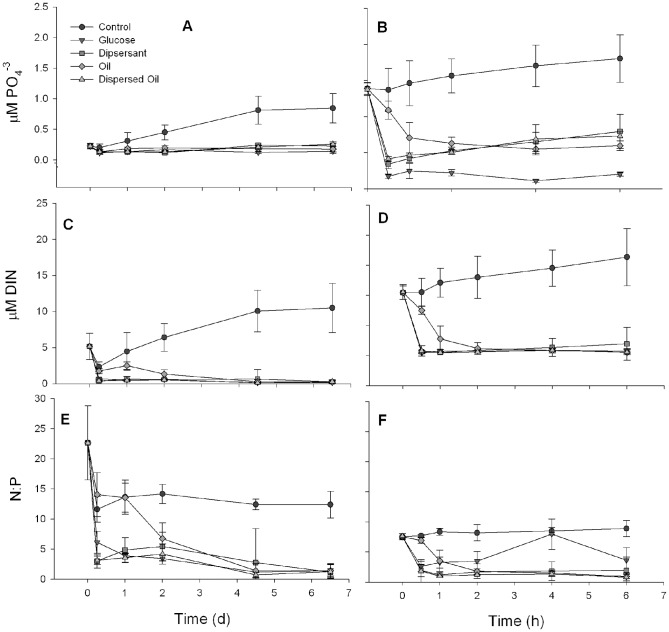
Most of the studies of microbial processes in response to the Deepwater Horizon oil spill focused on the deep water plume, and not on the surface communities. The effects of the crude oil and the application of dispersants on the coastal microbial food web in the northern Gulf of Mexico have not been well characterized even though these regions support much of the fisheries production in the Gulf. A mesocosm experiment was carried out to determine how the microbial community off the coast of Alabama may have responded to the influx of surface oil and dispersants. While the addition of glucose or oil alone resulted in an increase in the biomass of ciliates, suggesting transfer of carbon to higher trophic levels was likely; a different effect was seen in the presence of dispersant. The addition of dispersant or dispersed oil resulted in an increase in the biomass of heterotrophic prokaryotes, but a significant inhibition of ciliates, suggesting a reduction in grazing and decrease in transfer of carbon to higher trophic levels. Similar patterns were observed in two separate experiments with different starting nutrient regimes and microbial communities suggesting that the addition of dispersant and dispersed oil to the northern Gulf of Mexico waters in 2010 may have reduced the flow of carbon to higher trophic levels, leading to a decrease in the production of zooplankton and fish on the Alabama shelf.
大多数研究微生物过程对深海地平线溢油事件的反应都集中在深水羽流上,而不是在表面群落上。尽管这些地区支撑着墨西哥湾大部分的渔业生产,但原油的影响以及在墨西哥湾北部沿岸地区应用分散剂对沿海微生物食物网的影响还没有很好地描述。进行了一项中观实验,以确定阿拉巴马州沿海的微生物群落可能对表面油和分散剂的涌入做出了怎样的反应。虽然单独添加葡萄糖或油会导致纤毛虫生物量增加,表明碳可能转移到更高的营养级;但在存在分散剂的情况下,情况则不同。添加分散剂或分散油会导致异养原核生物生物量增加,但纤毛虫受到显著抑制,表明摄食减少,碳向更高营养级转移减少。在两个具有不同起始营养水平和微生物群落的独立实验中观察到了类似的模式,这表明 2010 年向墨西哥湾北部水域添加分散剂和分散油可能减少了碳向更高营养级的流动,导致阿拉巴马大陆架上浮游动物和鱼类的产量下降。