Department of Chemistry, Rice University, 6100 Main Street, Houston, Texas 77005, United States.
ACS Nano. 2012 Sep 25;6(9):7681-91. doi: 10.1021/nn301135w. Epub 2012 Aug 13.
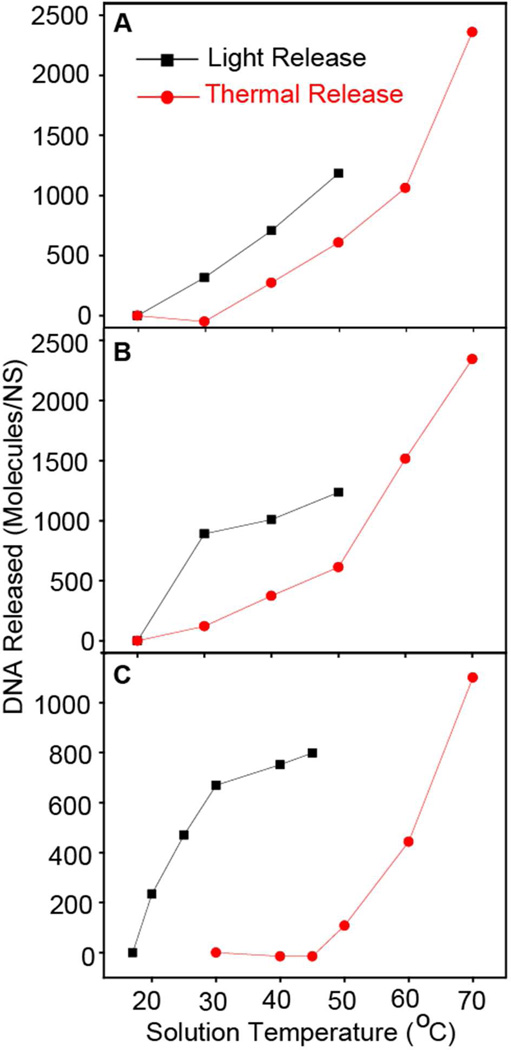
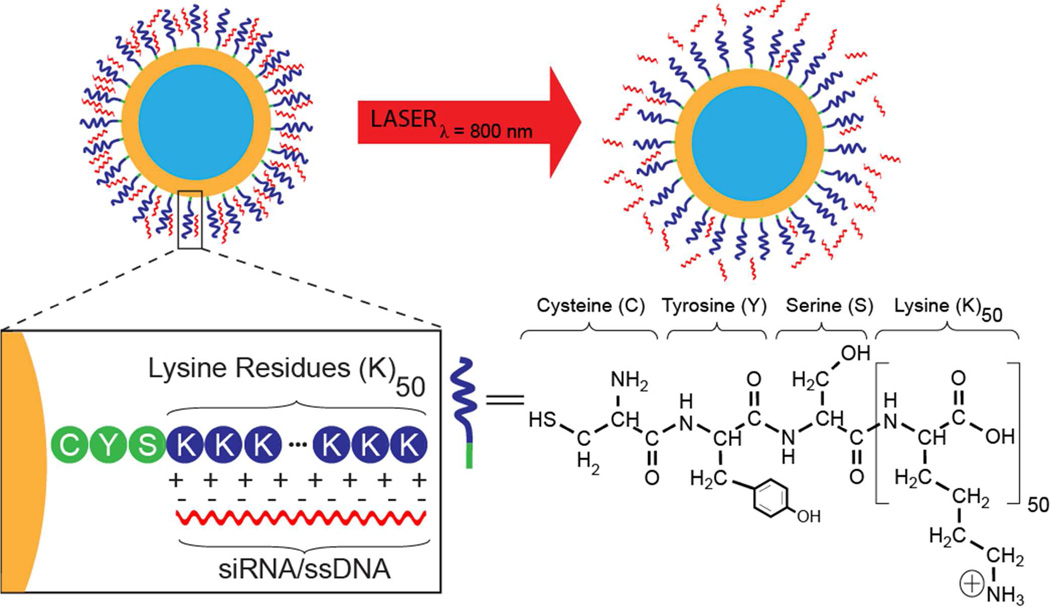
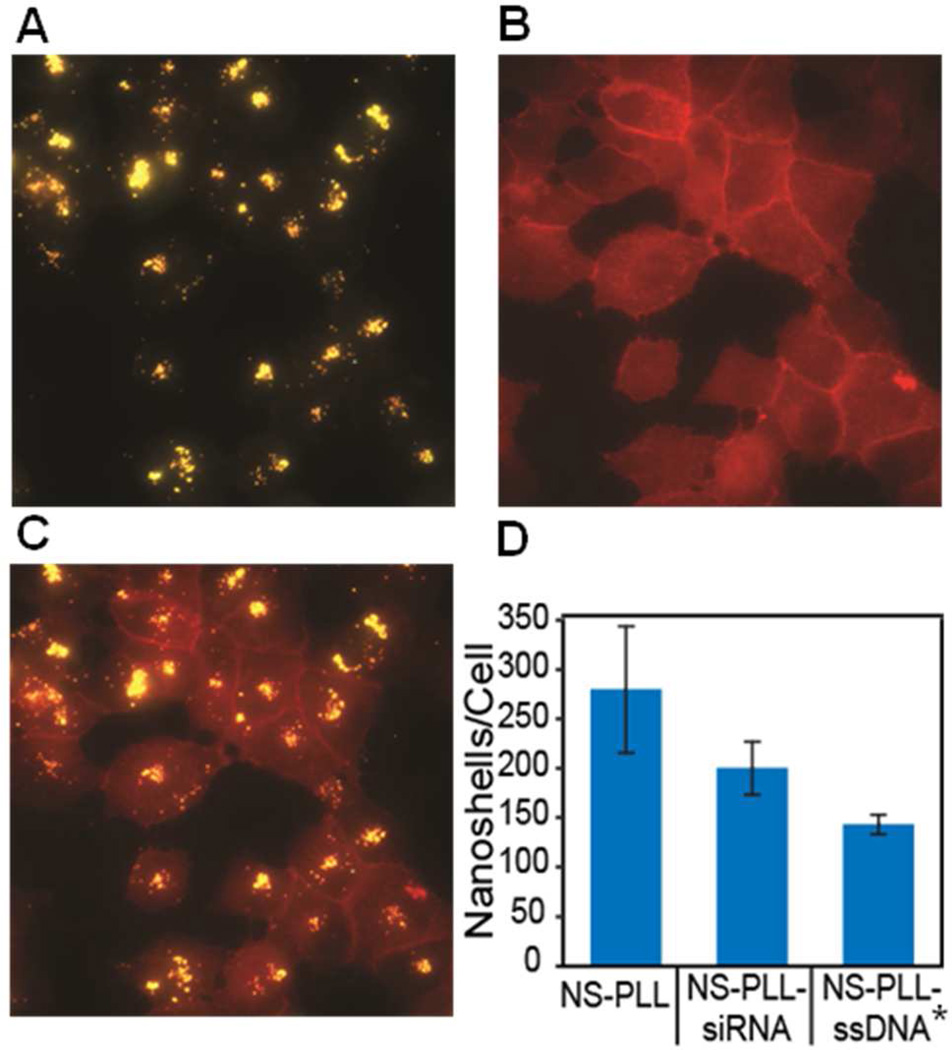
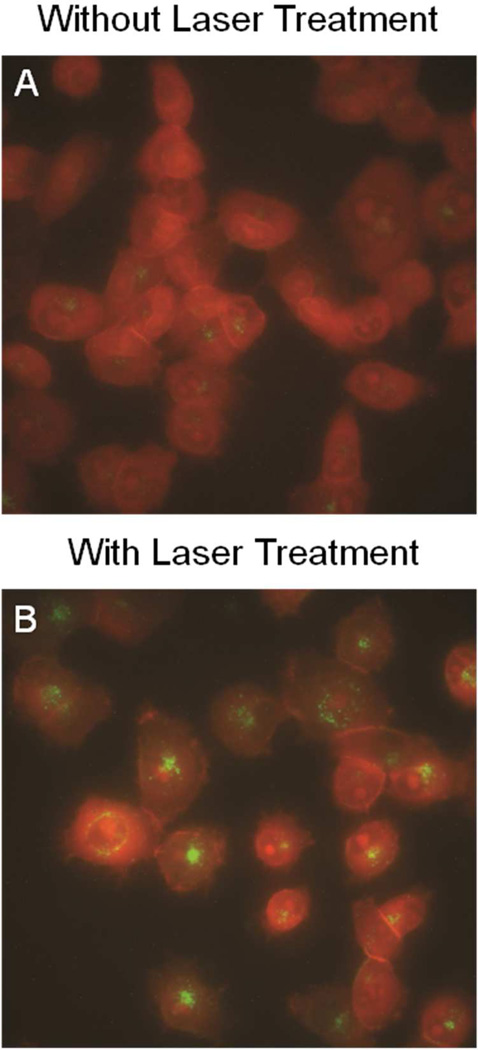
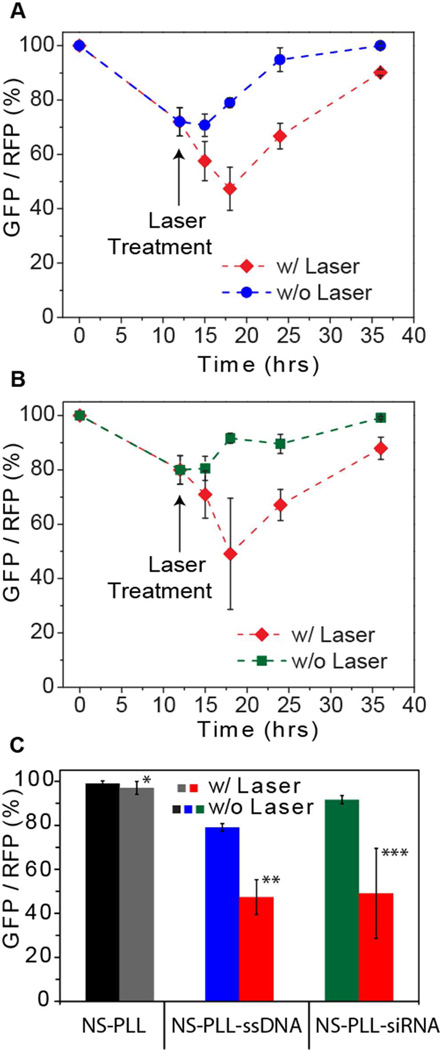
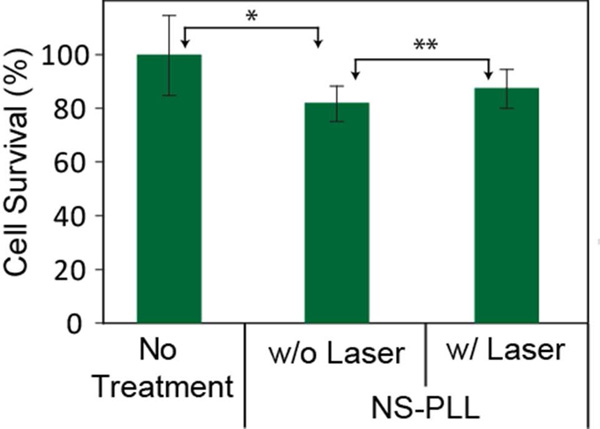
RNA interference (RNAi)--using antisense DNA or RNA oligonucleotides to silence activity of a specific pathogenic gene transcript and reduce expression of the encoded protein--is very useful in dissecting genetic function and holds significant promise as a molecular therapeutic. A major obstacle in achieving gene silencing with RNAi technology is the systemic delivery of therapeutic oligonucleotides. Here we demonstrate an engineered gold nanoshell (NS)-based therapeutic oligonucleotide delivery vehicle, designed to release its cargo on demand upon illumination with a near-infrared (NIR) laser. A poly-L-lysine peptide (PLL) epilayer covalently attached to the NS surface (NS-PLL) is used to capture intact, single-stranded antisense DNA oligonucleotides, or alternatively, double-stranded short-interfering RNA (siRNA) molecules. Controlled release of the captured therapeutic oligonucleotides in each case is accomplished by continuous wave NIR laser irradiation at 800 nm, near the resonance wavelength of the nanoshell. Fluorescently tagged oligonucleotides were used to monitor the time-dependent release process and light-triggered endosomal release. A green fluorescent protein (GFP)-expressing human lung cancer H1299 cell line was used to determine cellular uptake and gene silencing mediated by the NS-PLL carrying GFP gene-specific single-stranded DNA antisense oligonucleotide (AON-GFP), or a double-stranded siRNA (siRNA-GFP), in vitro. Light-triggered delivery resulted in ~47% and ~49% downregulation of the targeted GFP expression by AON-GFP and siRNA-GFP, respectively. Cytotoxicity induced by both the NS-PLL delivery vector and by laser irradiation is minimal, as demonstrated by a XTT cell proliferation assay.
RNA 干扰(RNAi)——使用反义 DNA 或 RNA 寡核苷酸来沉默特定致病基因转录本的活性并降低编码蛋白的表达——在剖析遗传功能方面非常有用,并有望成为一种分子治疗方法。用 RNAi 技术实现基因沉默的主要障碍是治疗性寡核苷酸的全身递送。在这里,我们展示了一种基于工程金纳米壳(NS)的治疗性寡核苷酸递送载体,该载体设计为在近红外(NIR)激光照射下按需释放其货物。共价连接到 NS 表面的聚-L-赖氨酸肽(PLL)外延层(NS-PLL)用于捕获完整的单链反义 DNA 寡核苷酸,或者替代地,双链短干扰 RNA(siRNA)分子。在每种情况下,通过在 800nm 的连续波 NIR 激光照射下实现捕获的治疗性寡核苷酸的连续释放,该波长接近纳米壳的共振波长。用荧光标记的寡核苷酸来监测时间依赖性释放过程和光触发的内体释放。使用绿色荧光蛋白(GFP)表达的人肺癌 H1299 细胞系来确定 NS-PLL 携带 GFP 基因特异性单链 DNA 反义寡核苷酸(AON-GFP)或双链 siRNA(siRNA-GFP)的体外细胞摄取和基因沉默,分别。光触发递送导致靶向 GFP 表达的下调约 47%和 49%,分别由 AON-GFP 和 siRNA-GFP 介导。如 XTT 细胞增殖测定所示,由 NS-PLL 递送载体和激光照射引起的细胞毒性最小。