Division of Global Health, Department of Public Health, Karolinska Institutet, Stockholm, Sweden.
Int J Womens Health. 2012;4:321-31. doi: 10.2147/IJWH.S32670. Epub 2012 Jul 6.
Sierra Leone has one of the highest rates of female genital mutilation (FGM) in the world, and yet little is known about the health consequences of the practice.
To explore whether and what kind of FGM-related health complications girls and women in Sierra Leone experience, and to elucidate their health care-seeking behaviors.
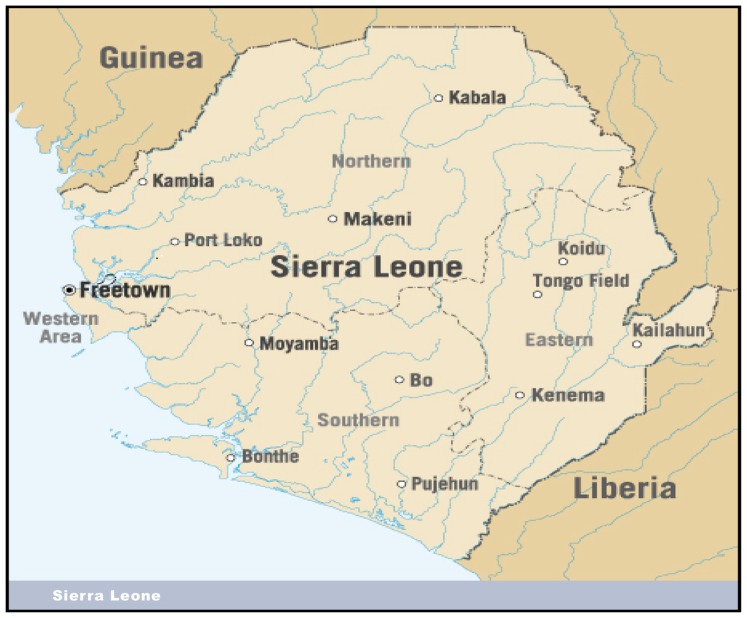
A feasibility study was conducted to test and refine questionnaires and methods used for this study. Thereafter, a cross-section of girls and women (n = 258) attending antenatal care and Well Women Clinics in Bo Town, Bo District, in the southern region and in Makeni Town, Bombali District, in the northern region of Sierra Leone were randomly selected. Participants answered interview-administrated pretested structured questionnaires with open- ended-questions, administrated by trained female personnel.
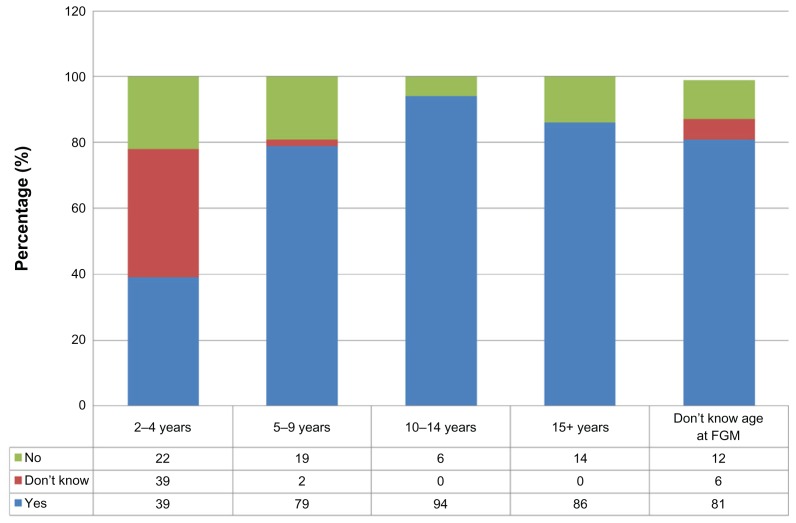
All respondents had undergone FGM, most between 10 and 14 years of age. Complications were reported by 218 respondents (84.5%), the most common ones being excessive bleeding, delay in or incomplete healing, and tenderness. Fever was significantly more often reported by girls who had undergone FGM before 10 years of age compared with those who had undergone the procedure later. Out of those who reported complications, 187 (85.8%) sought treatment, with 89 of them visiting a traditional healer, 75 a Sowei (traditional circumciser), and 16 a health professional.
The high prevalence rate of FGM and the proportion of medical complications show that FGM is a matter for public health concern in Sierra Leone. Girls who undergo FGM before 10 years of age seem to be more vulnerable to serious complications than those who are older at the time of FGM. It is important that health care personnel are aware of, and look for possible complications from FGM, and encourage girls and women to seek medical care for their problems.
探讨塞拉利昂女性生殖器切割(FGM)率极高的情况下,女孩和妇女可能经历的与 FGM 相关的健康并发症,并阐明她们寻求医疗保健的行为。
进行了一项可行性研究,以测试和完善用于本研究的问卷和方法。随后,在塞拉利昂南部博区的博镇和北部邦巴利区的马克尼镇的产前护理和妇女健康诊所,随机选择了 258 名女孩和妇女。参与者回答了由受过培训的女性人员管理的预测试过的结构化问卷,其中包括开放性问题。
所有受访者都接受过 FGM,大多数在 10 至 14 岁之间。218 名受访者(84.5%)报告了并发症,最常见的是过度出血、延迟或不完全愈合和压痛。与 10 岁以后接受该手术的女孩相比,10 岁之前接受 FGM 的女孩发烧的报告更为常见。在报告并发症的人群中,有 187 人(85.8%)寻求治疗,其中 89 人去看了传统治疗师,75 人去看了 Sowei(传统割礼师),16 人去看了卫生专业人员。
FGM 的高流行率和并发症的比例表明,FGM 是塞拉利昂公共卫生关注的问题。10 岁以下接受 FGM 的女孩比 10 岁时接受 FGM 的女孩更容易出现严重并发症。重要的是,医疗保健人员应该意识到 FGM 可能导致的并发症,并鼓励女孩和妇女寻求医疗护理。