Laboratoire Ecologie et Biologie des Interactions, UMR CNRS 7267, Equipe Ecologie Evolution Symbiose, Université de Poitiers, Poitiers, France.
PLoS Pathog. 2012;8(8):e1002844. doi: 10.1371/journal.ppat.1002844. Epub 2012 Aug 2.
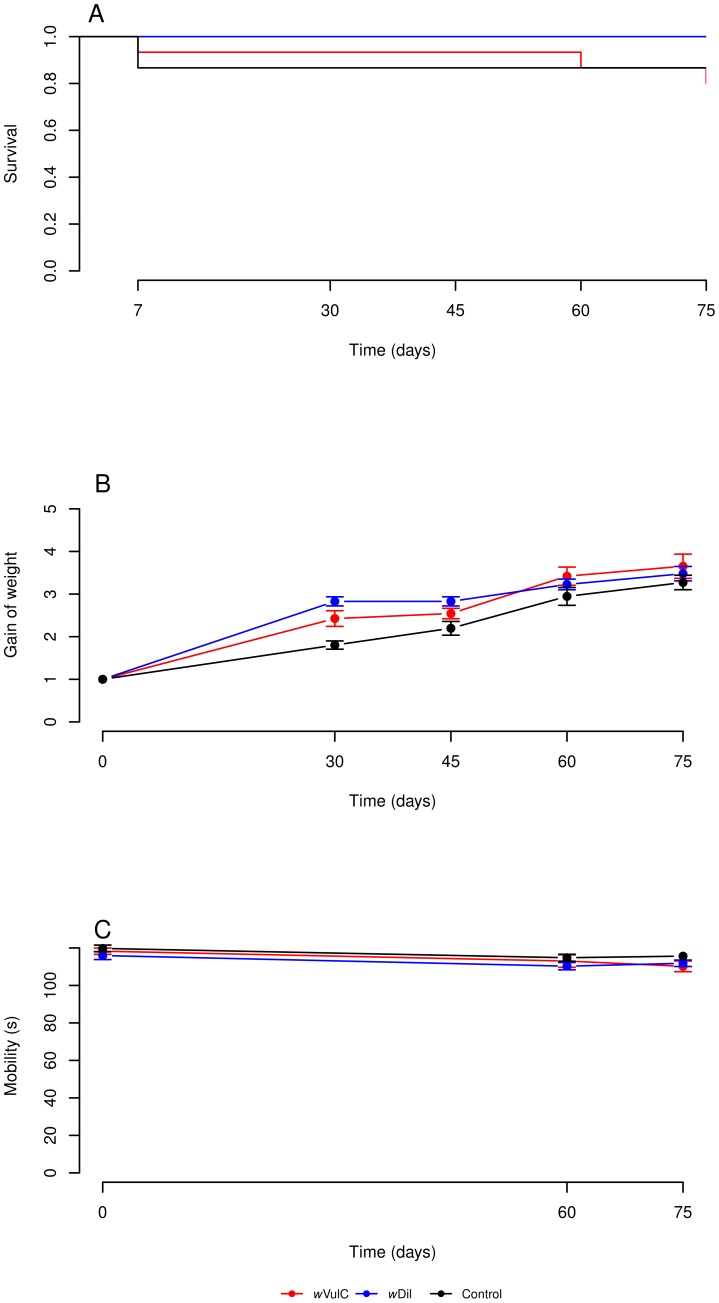
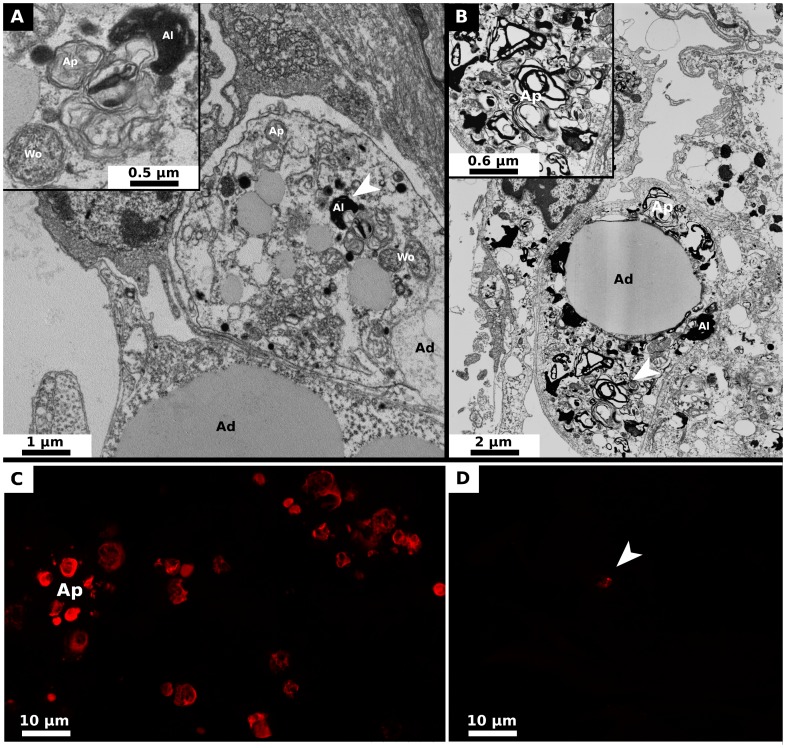
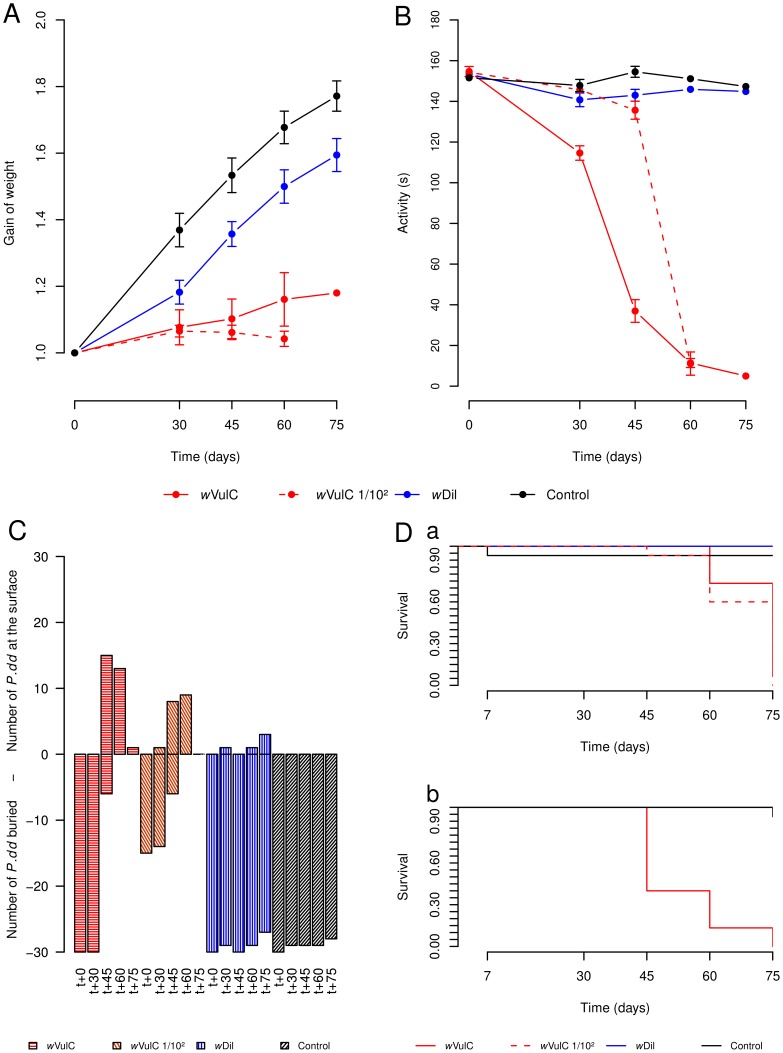
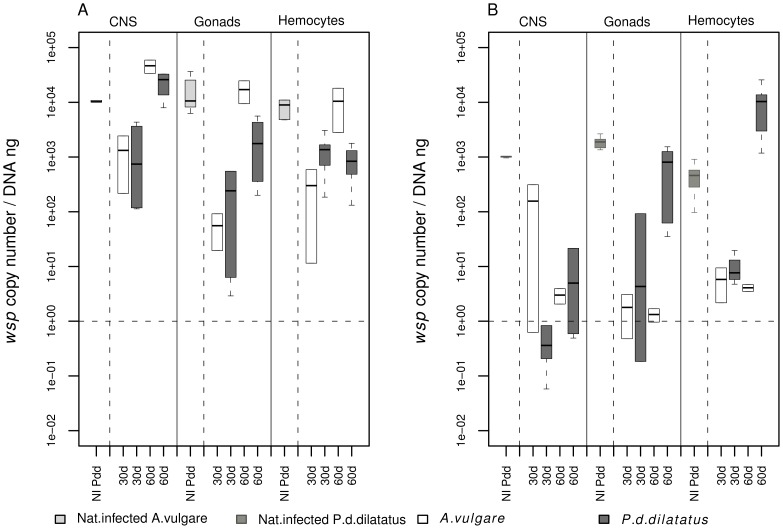
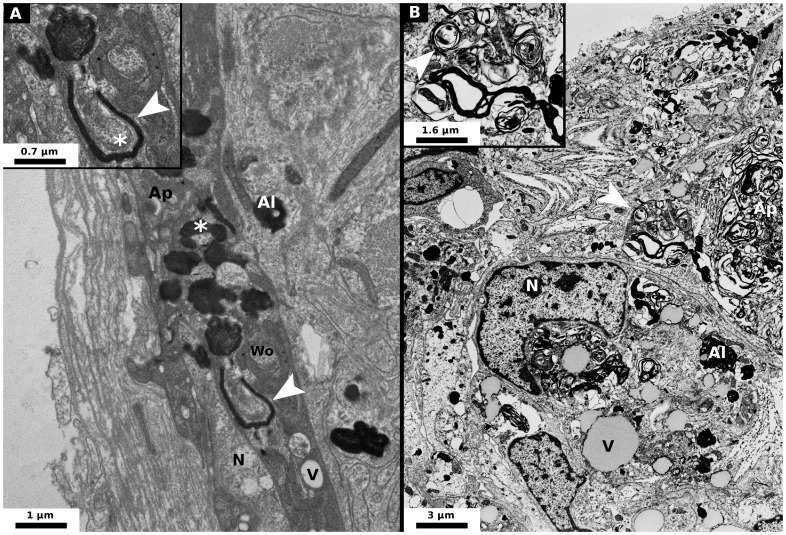
Wolbachia are widespread endosymbionts found in a large variety of arthropods. While these bacteria are generally transmitted vertically and exhibit weak virulence in their native hosts, a growing number of studies suggests that horizontal transfers of Wolbachia to new host species also occur frequently in nature. In transfer situations, virulence variations can be predicted since hosts and symbionts are not adapted to each other. Here, we describe a situation where a Wolbachia strain (wVulC) becomes a pathogen when transfected from its native terrestrial isopod host species (Armadillidium vulgare) to another species (Porcellio d. dilatatus). Such transfer of wVulC kills all recipient animals within 75 days. Before death, animals suffer symptoms such as growth slowdown and nervous system disorders. Neither those symptoms nor mortalities were observed after injection of wVulC into its native host A. vulgare. Analyses of wVulC's densities in main organs including Central Nervous System (CNS) of both naturally infected A. vulgare and transfected P. d. dilatatus and A. vulgare individuals revealed a similar pattern of host colonization suggesting an overall similar resistance of both host species towards this bacterium. However, for only P. d. dilatatus, we observed drastic accumulations of autophagic vesicles and vacuoles in the nerve cells and adipocytes of the CNS from individuals infected by wVulC. The symptoms and mortalities could therefore be explained by this huge autophagic response against wVulC in P. d. dilatatus cells that is not triggered in A. vulgare. Our results show that Wolbachia (wVulC) can lead to a pathogenic interaction when transferred horizontally into species that are phylogenetically close to their native hosts. This change in virulence likely results from the autophagic response of the host, strongly altering its tolerance to the symbiont and turning it into a deadly pathogen.
沃尔巴克氏体是广泛存在于各种节肢动物体内的共生菌。虽然这些细菌通常垂直传播,并在其原生宿主中表现出较弱的毒力,但越来越多的研究表明,沃尔巴克氏体在自然状态下也经常向新的宿主物种水平转移。在转移情况下,由于宿主和共生体彼此不适应,毒力变化是可以预测的。在这里,我们描述了一种情况,即在从其原生陆栖等足目宿主物种(Armadillidium vulgare)转染到另一个物种(Porcellio d. dilatatus)时,一种沃尔巴克氏体菌株(wVulC)成为病原体。这种 wVulC 的转移会导致所有受感染的动物在 75 天内死亡。在死亡之前,动物会出现生长缓慢和神经系统紊乱等症状。在将 wVulC 注射到其原生宿主 A. vulgare 中后,既没有观察到这些症状,也没有观察到死亡。对自然感染的 A. vulgare 和转染的 P. d. dilatatus 和 A. vulgare 个体的主要器官(包括中枢神经系统)中的 wVulC 密度进行分析后发现,这两种宿主的细菌定植模式相似,表明这两种宿主对这种细菌的总体抵抗力相似。然而,只有在 P. d. dilatatus 中,我们观察到感染 wVulC 的个体的神经细胞和脂肪细胞中自噬小体和空泡的大量积累。因此,P. d. dilatatus 中针对 wVulC 的巨大自噬反应可以解释这种症状和死亡率,而在 A. vulgare 中没有触发这种反应。我们的结果表明,当沃尔巴克氏体(wVulC)水平转移到与其原生宿主在系统发育上相近的物种时,可能会导致致病性相互作用。这种毒力的变化可能是由于宿主的自噬反应,强烈改变了宿主对共生体的耐受性,使其成为致命的病原体。