Ernest Gallo Clinic and Research Center, Preclinical Development Emeryville, CA, USA.
Front Mol Neurosci. 2012 Aug 3;5:83. doi: 10.3389/fnmol.2012.00083. eCollection 2012.
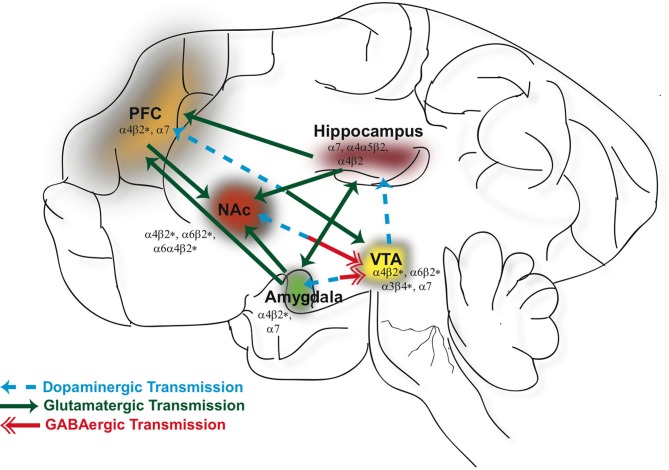
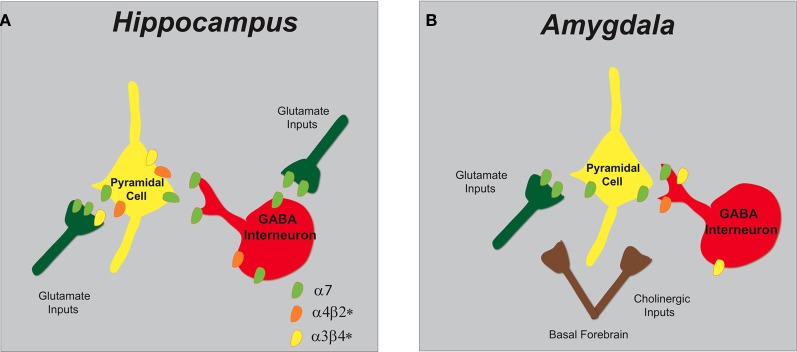
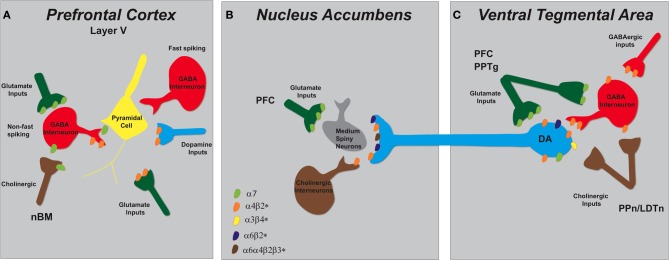
Addictive drugs can activate systems involved in normal reward-related learning, creating long-lasting memories of the drug's reinforcing effects and the environmental cues surrounding the experience. These memories significantly contribute to the maintenance of compulsive drug use as well as cue-induced relapse which can occur even after long periods of abstinence. Synaptic plasticity is thought to be a prominent molecular mechanism underlying drug-induced learning and memories. Ethanol and nicotine are both widely abused drugs that share a common molecular target in the brain, the neuronal nicotinic acetylcholine receptors (nAChRs). The nAChRs are ligand-gated ion channels that are vastly distributed throughout the brain and play a key role in synaptic neurotransmission. In this review, we will delineate the role of nAChRs in the development of ethanol and nicotine addiction. We will characterize both ethanol and nicotine's effects on nAChR-mediated synaptic transmission and plasticity in several key brain areas that are important for addiction. Finally, we will discuss some of the behavioral outcomes of drug-induced synaptic plasticity in animal models. An understanding of the molecular and cellular changes that occur following administration of ethanol and nicotine will lead to better therapeutic strategies.
成瘾药物可以激活与正常奖励相关的学习系统,从而对药物的强化作用以及体验周围的环境线索产生持久的记忆。这些记忆对强迫性药物使用的维持以及即使在长时间戒断后也可能发生的线索诱导复发有重要贡献。突触可塑性被认为是药物引起的学习和记忆的主要分子机制。乙醇和尼古丁都是广泛滥用的药物,它们在大脑中有一个共同的分子靶点,即神经元烟碱型乙酰胆碱受体(nAChRs)。nAChRs 是配体门控离子通道,广泛分布于大脑中,在突触神经传递中起着关键作用。在这篇综述中,我们将阐述 nAChRs 在乙醇和尼古丁成瘾发展中的作用。我们将描述乙醇和尼古丁对几个对成瘾很重要的关键大脑区域的 nAChR 介导的突触传递和可塑性的影响。最后,我们将讨论动物模型中药物诱导的突触可塑性的一些行为结果。对给予乙醇和尼古丁后发生的分子和细胞变化的理解将导致更好的治疗策略。