Centro de Biotecnología y Genómica de Plantas, Universidad Politécnica de Madrid Madrid, Spain.
Front Plant Sci. 2012 Aug 2;3:167. doi: 10.3389/fpls.2012.00167. eCollection 2012.
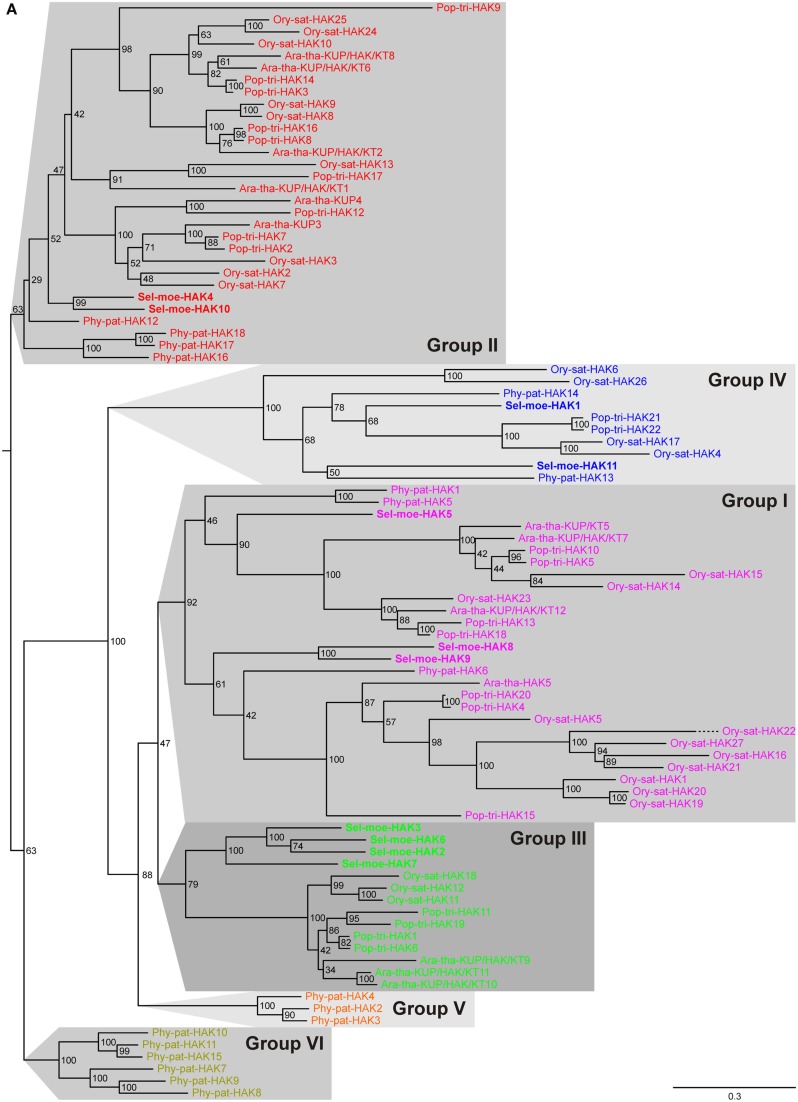
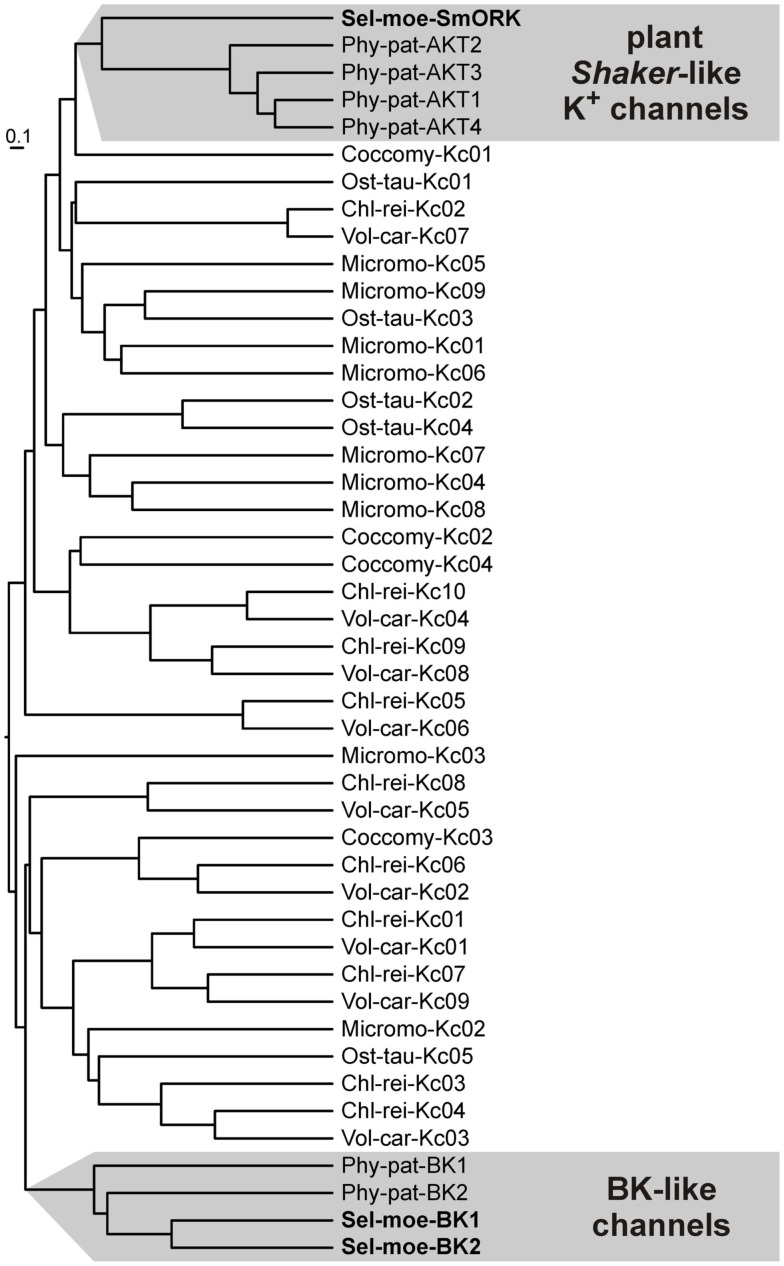
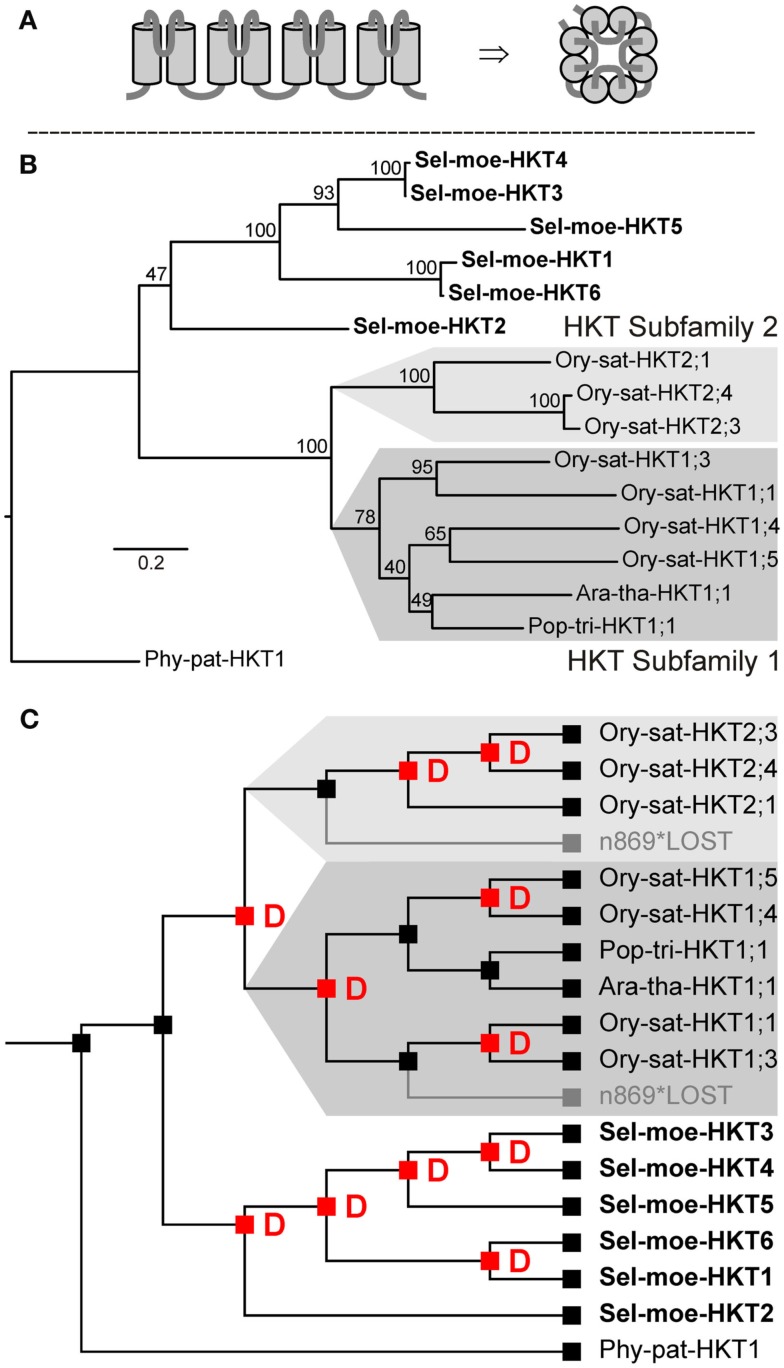
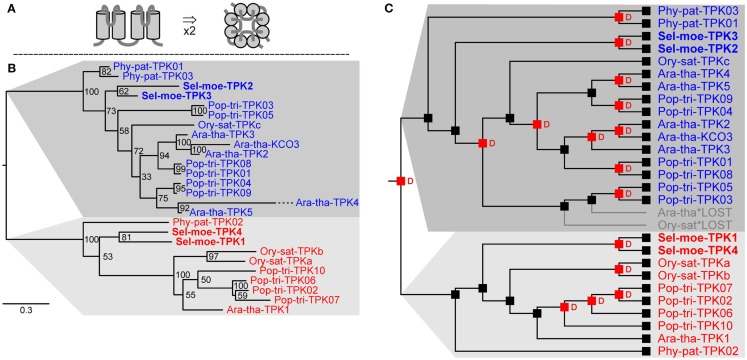
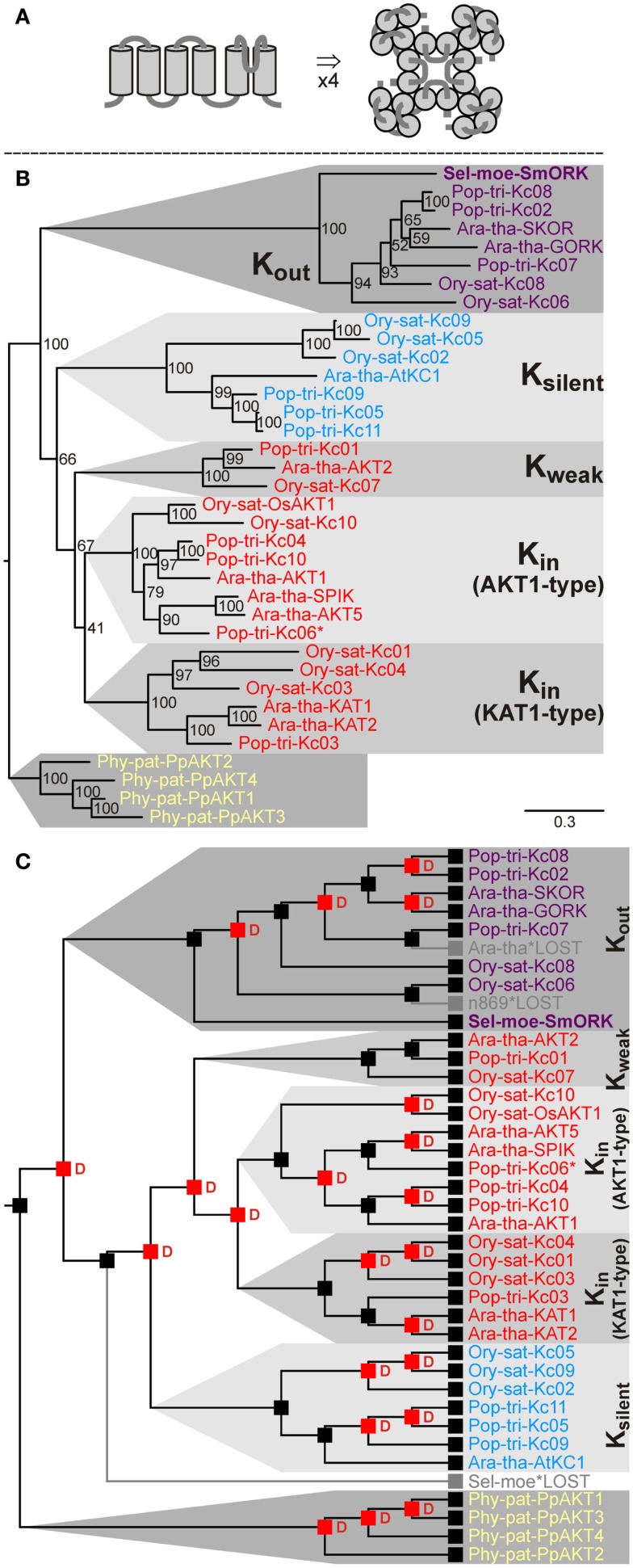
As heritage from early evolution, potassium (K(+)) is absolutely necessary for all living cells. It plays significant roles as stabilizer in metabolism and is important for enzyme activation, stabilization of protein synthesis, and neutralization of negative charges on cellular molecules as proteins and nucleic acids. Land plants even enlarged this spectrum of K(+) utilization after having gone ashore, despite the fact that K(+) is far less available in their new oligotrophic habitats than in sea water. Inevitably, plant cells had to improve and to develop unique transport systems for K(+) accumulation and distribution. In the past two decades a manifold of K(+) transporters from flowering plants has been identified at the molecular level. The recently published genome of the fern ally Selaginella moellendorffii now helps in providing a better understanding on the molecular changes involved in the colonization of land and the development of the vasculature and the seeds. In this article we present an inventory of K(+) transporters of this lycophyte and pigeonhole them together with their relatives from the moss Physcomitrella patens, the monocotyledon Oryza sativa, and two dicotyledonous species, the herbaceous plant Arabidopsis thaliana, and the tree Populus trichocarpa. Interestingly, the transition of green plants from an aqueous to a dry environment coincides with a dramatic reduction in the diversity of voltage-gated potassium channels followed by a diversification on the basis of one surviving K(+) channel class. The first appearance of K(+) release (K(out)) channels in S. moellendorffii that were shown in Arabidopsis to be involved in xylem loading and guard cell closure coincides with the specialization of vascular plants and may indicate an important adaptive step.
作为早期进化的遗产,钾(K(+))对所有活细胞都是绝对必需的。它在新陈代谢中作为稳定剂发挥重要作用,对于酶的激活、蛋白质合成的稳定以及中和细胞分子(如蛋白质和核酸)上的负电荷都很重要。陆地植物在登陆后甚至扩大了 K(+) 的利用范围,尽管 K(+) 在它们新的贫营养栖息地中的含量远远低于海水。不可避免的是,植物细胞必须改进并开发独特的运输系统来积累和分配 K(+)。在过去的二十年中,已从开花植物中在分子水平上鉴定出多种 K(+)转运体。最近发表的蕨类植物卷柏基因组有助于更好地理解陆地殖民化、脉管系统和种子发育过程中涉及的分子变化。在本文中,我们列出了这种石松植物的 K(+)转运体清单,并将它们与来自苔藓植物Physcomitrella patens、单子叶植物水稻 Oryza sativa 以及两种双子叶植物拟南芥 Arabidopsis thaliana 和杨树 Populus trichocarpa 的亲缘关系一起归类。有趣的是,绿色植物从水生环境向干燥环境的转变伴随着电压门控钾通道多样性的急剧减少,随后基于一个幸存的 K(+)通道类群的多样化。在拟南芥中,S. moellendorffii 中首次出现的 K(+)释放(K(out))通道被证明参与木质部装载和保卫细胞关闭,这与维管植物的特化同时出现,可能表明这是一个重要的适应性步骤。