Seattle Children's Hospital Research Institute, Seattle, Washington, United States of America.
PLoS One. 2012;7(8):e41329. doi: 10.1371/journal.pone.0041329. Epub 2012 Aug 2.
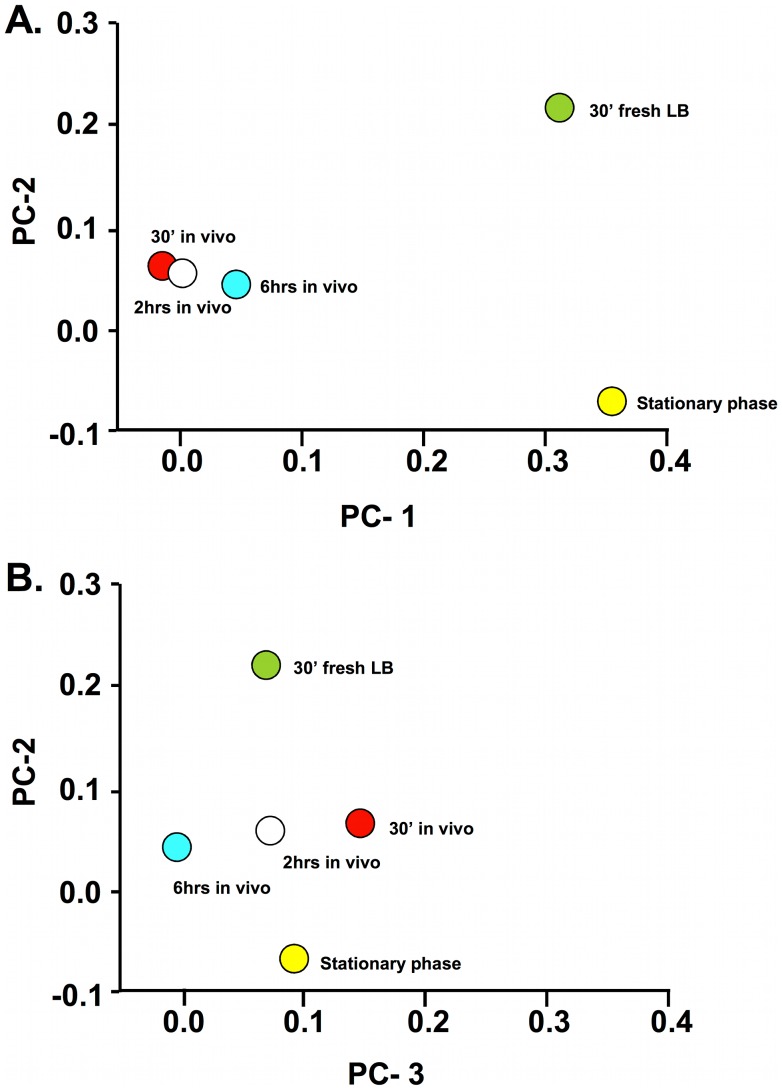
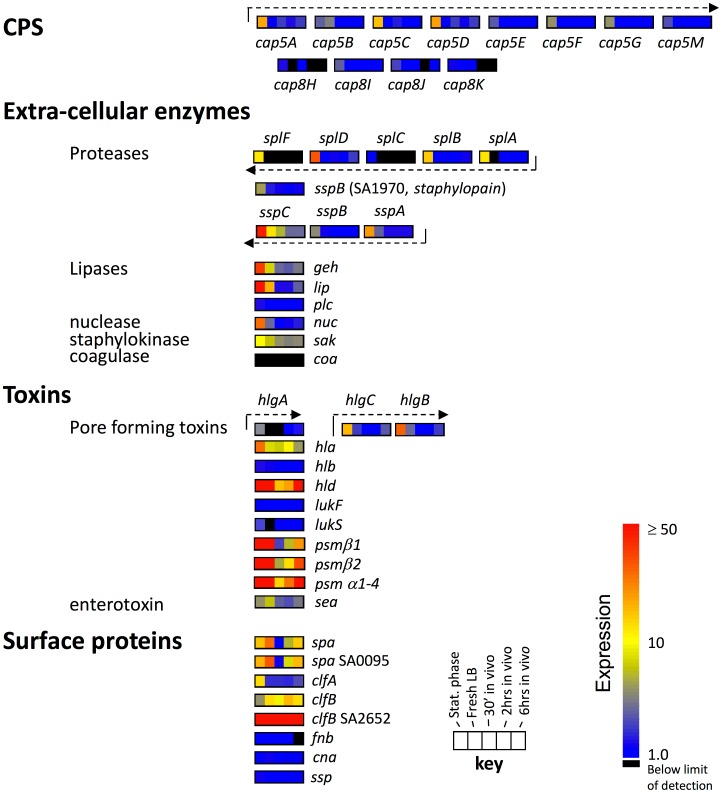
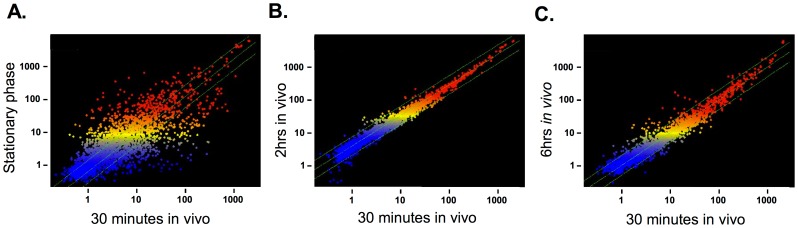
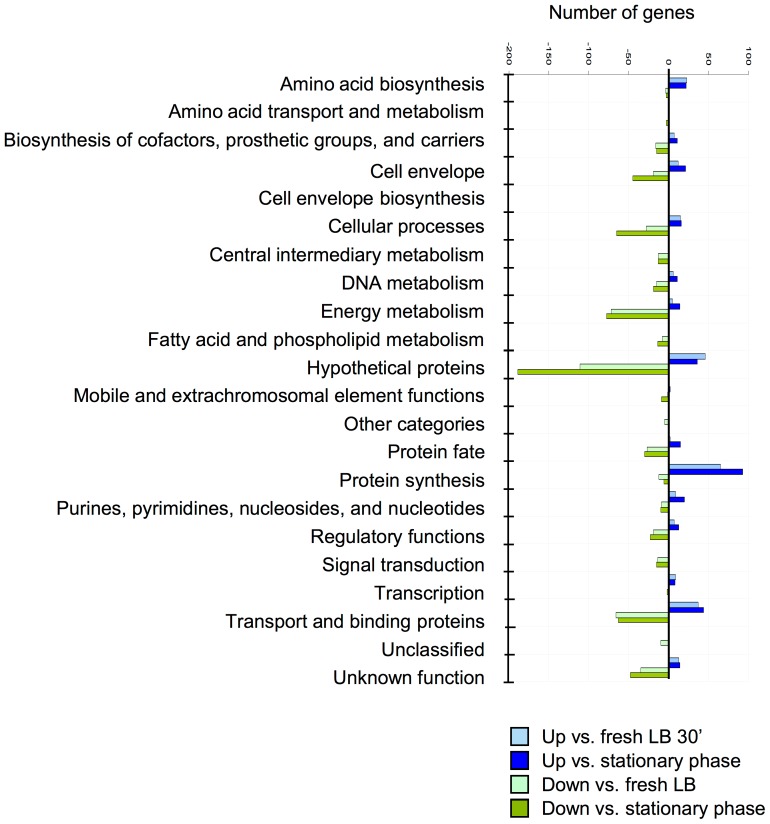
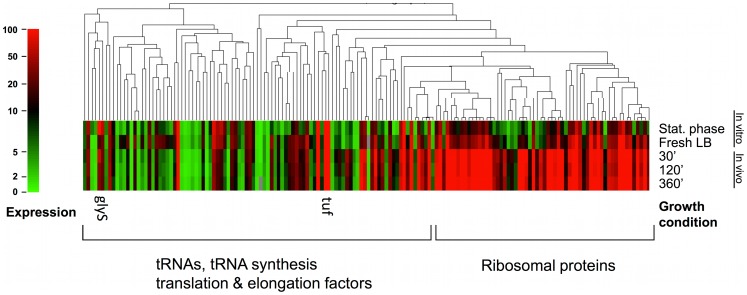
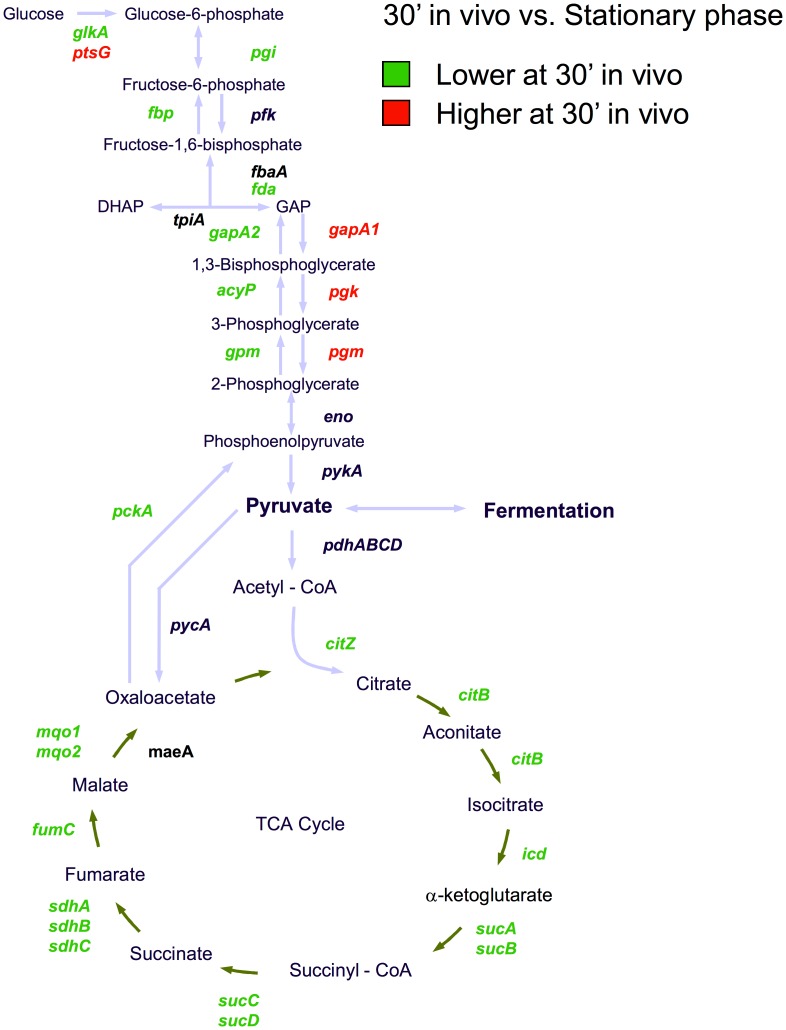
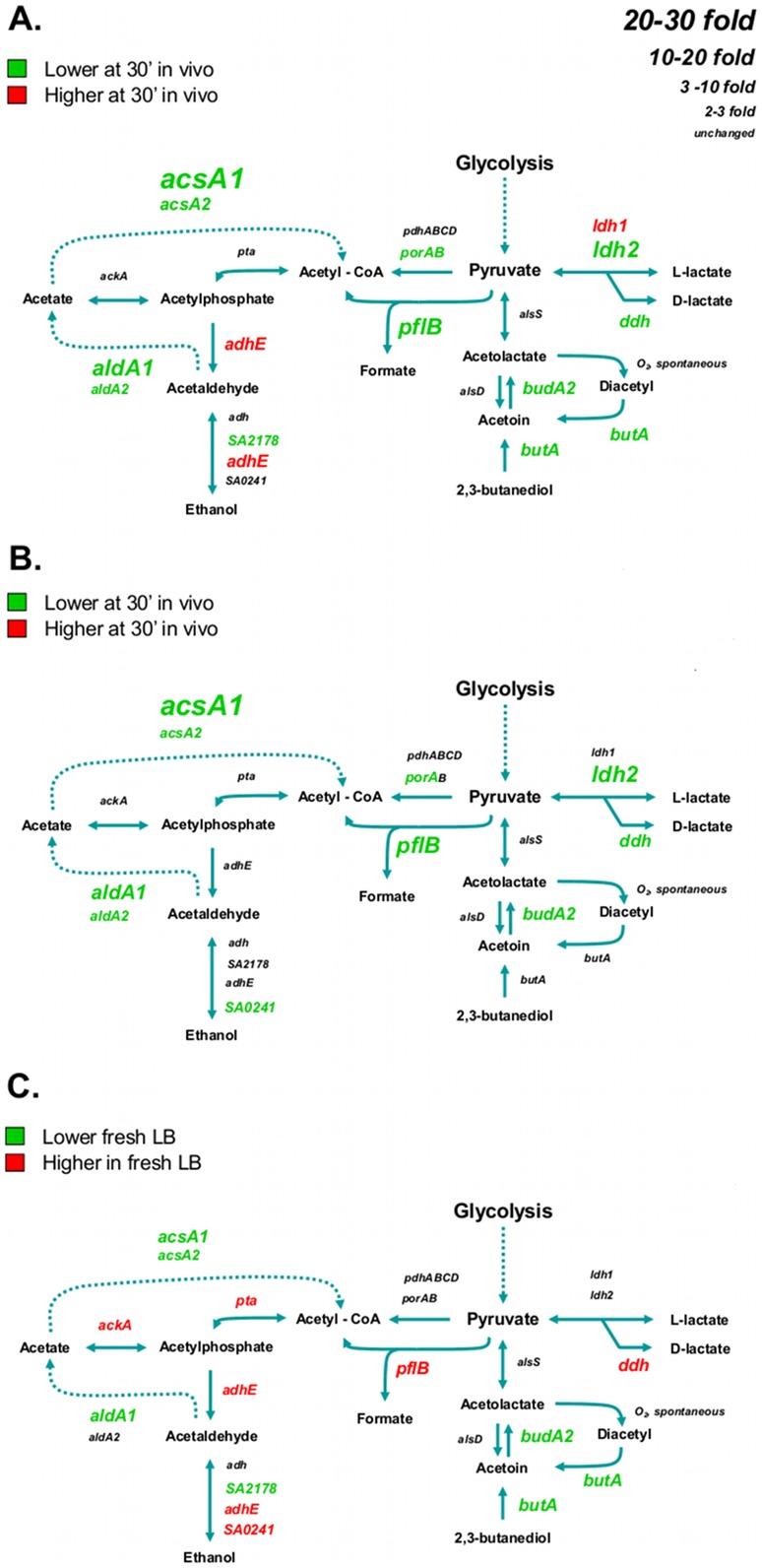
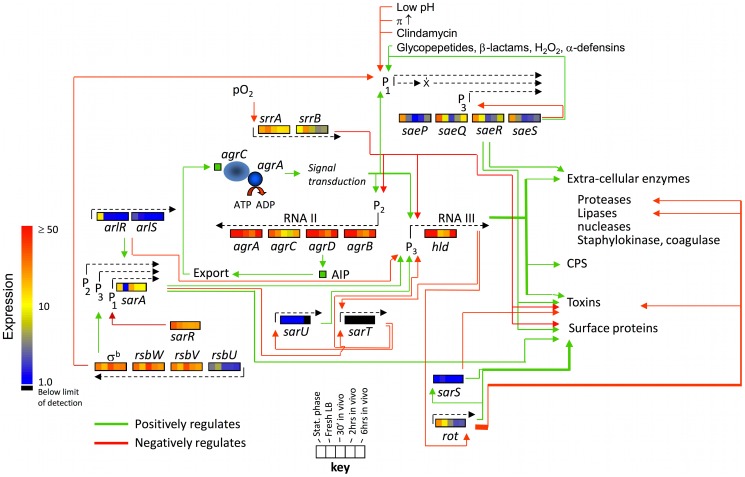
Staphylococcus aureus is a common inhabitant of the human nasopharynx. It is also a cause of life-threatening illness, producing a potent array of virulence factors that enable survival in normally sterile sites. The transformation of S. aureus from commensal to pathogen is poorly understood. We analyzed S. aureus gene expression during adaptation to the lung using a mouse model of S. aureus pneumonia. Bacteria were isolated by bronchoalveolar lavage after residence in vivo for up to 6 hours. S. aureus in vivo RNA transcription was compared by microarray to that of shake flask grown stationary phase and early exponential phase cells. Compared to in vitro conditions, the in vivo transcriptome was dramatically altered within 30 minutes. Expression of central metabolic pathways changed significantly in response to the lung environment. Gluconeogenesis (fbs, pckA) was down regulated, as was TCA cycle and fermentation pathway gene expression. Genes associated with amino acid synthesis, RNA translation and nitrate respiration were upregulated, indicative of a highly active metabolic state during the first 6 hours in the lung. Virulence factors regulated by agr were down regulated in vivo and in early exponential phase compared to stationary phase cells. Over time in vivo, expression of ahpCF, involved in H(2)O(2) scavenging, and uspA, which encodes a universal stress regulator, increased. Transcription of leukotoxic α and β-type phenol-soluble modulins psmα1-4 and psmβ1-2 increased 13 and 8-fold respectively; hld mRNA, encoding δ-hemolysin, was increased 9-fold. These were the only toxins to be significantly upregulated in vivo. These data provide the first complete survey of the S. aureus transcriptome response to the mammalian airway. The results present intriguing contrasts with previous work in other in vitro and in vivo models and provide novel insights into the adaptive and temporal response of S. aureus early in the pathogenesis of pneumonia.
金黄色葡萄球菌是人类鼻咽部的常见寄居菌。它也是一种威胁生命的疾病的病原体,产生了一系列强大的毒力因子,使它能够在通常无菌的部位生存。金黄色葡萄球菌从共生菌到病原体的转变目前还了解甚少。我们使用金黄色葡萄球菌肺炎的小鼠模型分析了金黄色葡萄球菌适应肺部环境时的基因表达情况。将细菌通过支气管肺泡灌洗从体内分离出来,然后在体内培养 6 小时。通过微阵列比较了体内生长的金黄色葡萄球菌 RNA 转录与摇瓶培养的静止期和早期指数生长期细胞的转录。与体外条件相比,30 分钟内体内转录组发生了显著变化。中央代谢途径的表达对肺部环境的变化有明显的响应。糖异生(fbs、pckA)受到下调,三羧酸循环和发酵途径基因的表达也受到下调。与氨基酸合成、RNA 翻译和硝酸盐呼吸相关的基因上调,表明在肺部的前 6 小时内,细胞处于高度活跃的代谢状态。agr 调节的毒力因子在体内和早期指数生长期的表达低于静止期细胞。随着时间的推移,ahpCF(参与 H2O2 清除)和 uspA(编码普遍应激调节剂)的表达增加。编码白细胞毒素α和β型酚溶性调节素 psmα1-4 和 psmβ1-2 的 psmα1-4 和 psmβ1-2 的转录分别增加了 13 倍和 8 倍;编码 δ-溶血素的 hld mRNA 增加了 9 倍。这些是唯一在体内显著上调的毒素。这些数据首次全面调查了金黄色葡萄球菌对哺乳动物气道的转录组反应。结果与之前在其他体外和体内模型中的研究结果形成了有趣的对比,为肺炎发病早期金黄色葡萄球菌的适应性和时程反应提供了新的见解。