Chambers Henry F, Deleo Frank R
Division of Infectious Diseases, Department of Medicine, San Francisco General Hospital, University of California, San Francisco, California 94110, USA.
Nat Rev Microbiol. 2009 Sep;7(9):629-41. doi: 10.1038/nrmicro2200.
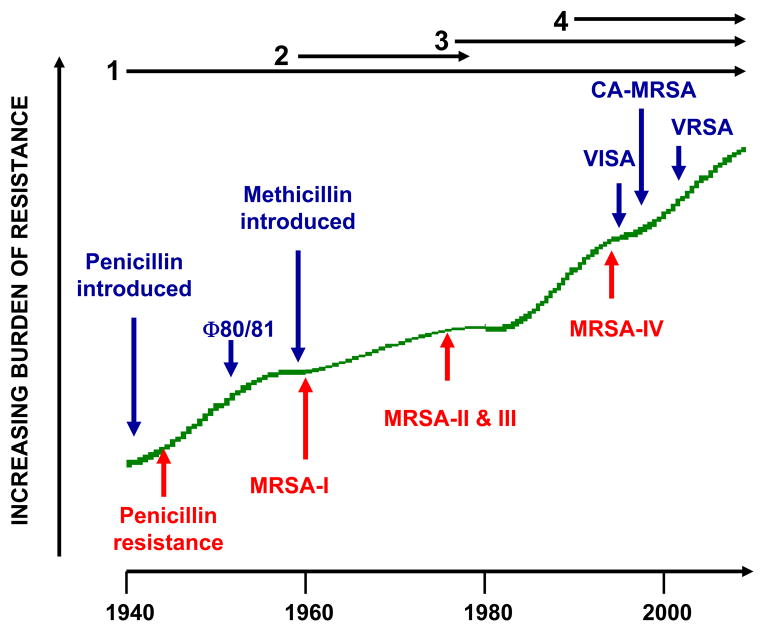
Staphylococcus aureus is notorious for its ability to become resistant to antibiotics. Infections that are caused by antibiotic-resistant strains often occur in epidemic waves that are initiated by one or a few successful clones. Methicillin-resistant S. aureus (MRSA) features prominently in these epidemics. Historically associated with hospitals and other health care settings, MRSA has now emerged as a widespread cause of community infections. Community or community-associated MRSA (CA-MRSA) can spread rapidly among healthy individuals. Outbreaks of CA-MRSA infections have been reported worldwide, and CA-MRSA strains are now epidemic in the United States. Here, we review the molecular epidemiology of the epidemic waves of penicillin- and methicillin-resistant strains of S. aureus that have occurred since 1940, with a focus on the clinical and molecular epidemiology of CA-MRSA.
金黄色葡萄球菌因其对抗生素产生耐药性的能力而臭名昭著。由耐抗生素菌株引起的感染通常以由一个或几个成功克隆引发的流行波形式出现。耐甲氧西林金黄色葡萄球菌(MRSA)在这些流行中尤为突出。MRSA历史上与医院和其他医疗环境相关,现在已成为社区感染的广泛原因。社区或社区相关的MRSA(CA-MRSA)可在健康个体中迅速传播。全球已报道了CA-MRSA感染的暴发,并且CA-MRSA菌株目前在美国呈流行态势。在此,我们回顾自1940年以来发生的青霉素和耐甲氧西林金黄色葡萄球菌菌株流行波的分子流行病学,重点关注CA-MRSA的临床和分子流行病学。