EMBRAPA Recursos Genéticos e Biotecnologia, Parque Estação Biológica, CP 02372 Final W5 Norte, Brasília, DF, Brazil.
BMC Genomics. 2012 Aug 13;13:387. doi: 10.1186/1471-2164-13-387.
Cultivated peanut (Arachis hypogaea) is one of the most widely grown grain legumes in the world, being valued for its high protein and unsaturated oil contents. Worldwide, the major constraints to peanut production are drought and fungal diseases. Wild Arachis species, which are exclusively South American in origin, have high genetic diversity and have been selected during evolution in a range of environments and biotic stresses, constituting a rich source of allele diversity. Arachis stenosperma harbors resistances to a number of pests, including fungal diseases, whilst A. duranensis has shown improved tolerance to water limited stress. In this study, these species were used for the creation of an extensive databank of wild Arachis transcripts under stress which will constitute a rich source for gene discovery and molecular markers development.
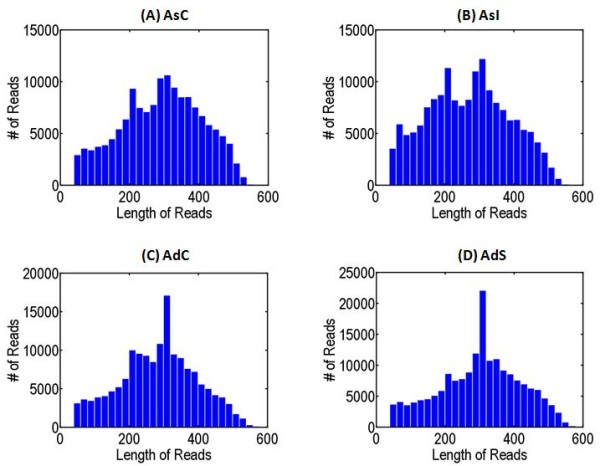
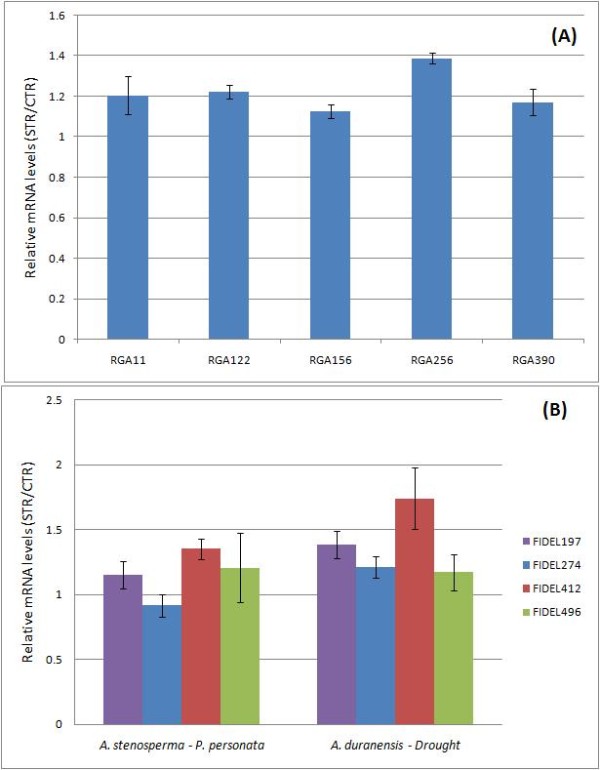
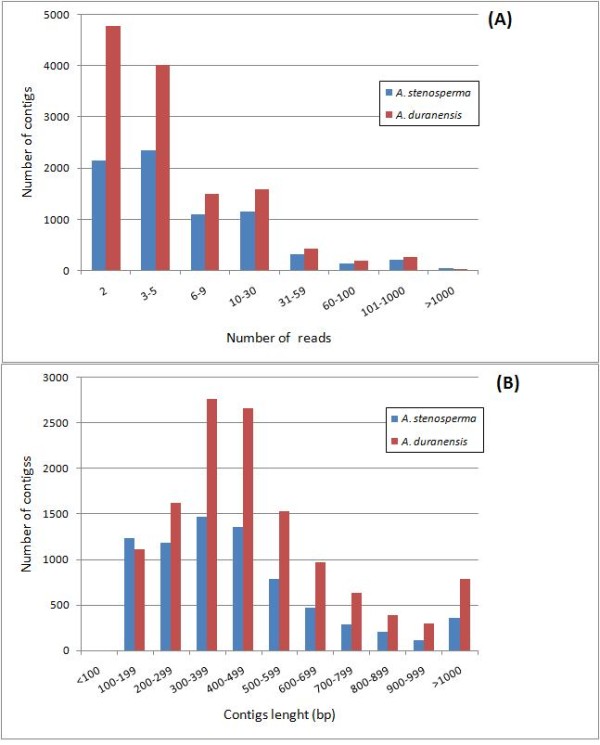
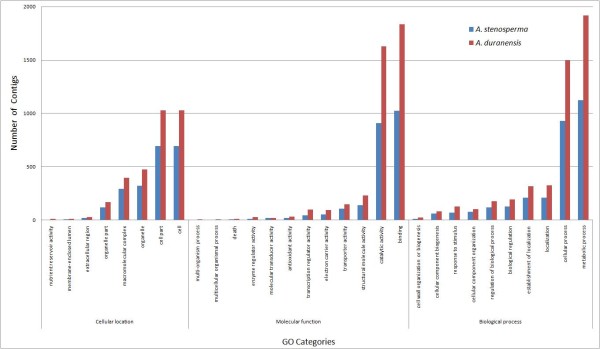
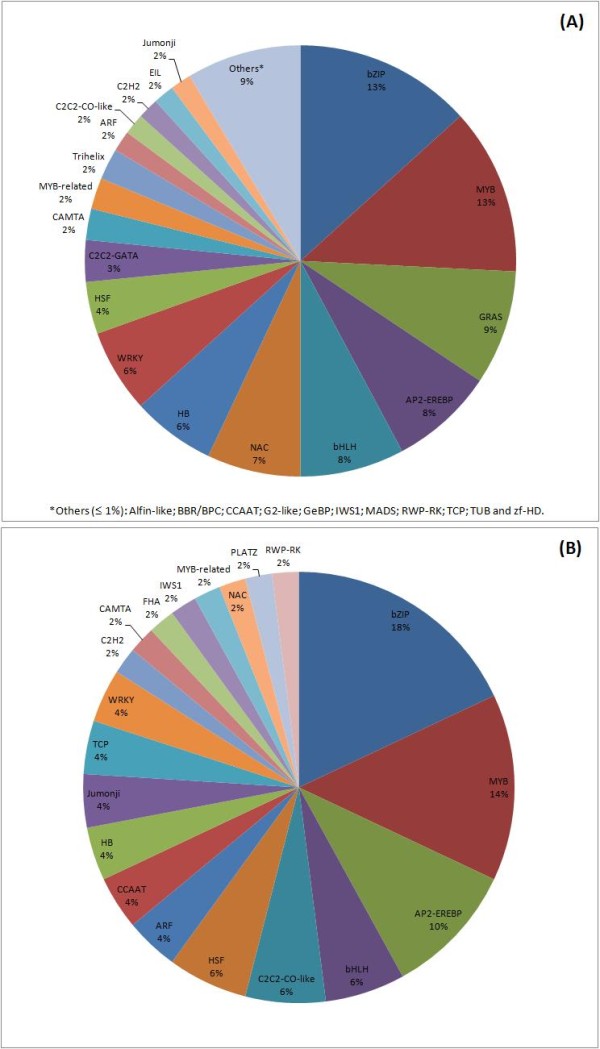
Transcriptome analysis of cDNA collections from A. stenosperma challenged with Cercosporidium personatum (Berk. and M.A. Curtis) Deighton, and A. duranensis submitted to gradual water limited stress was conducted using 454 GS FLX Titanium generating a total of 7.4 x 10(5) raw sequence reads covering 211 Mbp of both genomes. High quality reads were assembled to 7,723 contigs for A. stenosperma and 12,792 for A. duranensis and functional annotation indicated that 95% of the contigs in both species could be appointed to GO annotation categories. A number of transcription factors families and defense related genes were identified in both species. Additionally, the expression of five A. stenosperma Resistance Gene Analogs (RGAs) and four retrotransposon (FIDEL-related) sequences were analyzed by qRT-PCR. This data set was used to design a total of 2,325 EST-SSRs, of which a subset of 584 amplified in both species and 214 were shown to be polymorphic using ePCR.
This study comprises one of the largest unigene dataset for wild Arachis species and will help to elucidate genes involved in responses to biological processes such as fungal diseases and water limited stress. Moreover, it will also facilitate basic and applied research on the genetics of peanut through the development of new molecular markers and the study of adaptive variation across the genus.
栽培花生(Arachis hypogaea)是世界上种植最广泛的豆科粮食作物之一,因其高蛋白和不饱和油含量而备受重视。在全球范围内,花生生产的主要限制因素是干旱和真菌病害。野生花生物种起源于南美洲,具有高度的遗传多样性,在一系列环境和生物胁迫下进化选择,构成了丰富的等位基因多样性来源。Arachis stenosperma 对包括真菌病在内的多种害虫具有抗性,而 A. duranensis 对水分限制胁迫表现出更好的耐受性。在这项研究中,这些物种被用于创建一个广泛的野生花生胁迫转录本数据库,这将成为基因发现和分子标记开发的丰富资源。
使用 454 GS FLX Titanium 对 A. stenosperma 受到 Cercosporidium personatum(Berk. 和 M.A. Curtis)Deighton 挑战和 A. duranensis 逐渐受到水分限制胁迫的 cDNA 文库进行转录组分析,共产生了 7.4 x 10(5)个原始序列读数,覆盖了两个基因组的 211 Mbp。高质量的读数组装成 A. stenosperma 的 7723 个 contigs 和 A. duranensis 的 12792 个 contigs,功能注释表明两个物种的 95%的 contigs可以被分配到 GO 注释类别。在两个物种中都鉴定到了一些转录因子家族和防御相关基因。此外,还通过 qRT-PCR 分析了五个 A. stenosperma 抗性基因类似物(RGAs)和四个反转录转座子(FIDEL 相关)序列的表达。该数据集用于设计总共 2325 个 EST-SSR,其中 584 个在两个物种中扩增,214 个通过 ePCR 显示多态性。
本研究包含了野生花生物种最大的 unigene 数据集之一,有助于阐明参与生物过程(如真菌病和水分限制胁迫)反应的基因。此外,它还将通过开发新的分子标记和研究属内适应性变异,促进花生遗传的基础和应用研究。