Ettwig Katharina F, Speth Daan R, Reimann Joachim, Wu Ming L, Jetten Mike S M, Keltjens Jan T
Department of Microbiology, Institute for Water and Wetland Research, Radboud University Nijmegen, Nijmegen, Netherlands.
Front Microbiol. 2012 Aug 7;3:273. doi: 10.3389/fmicb.2012.00273. eCollection 2012.
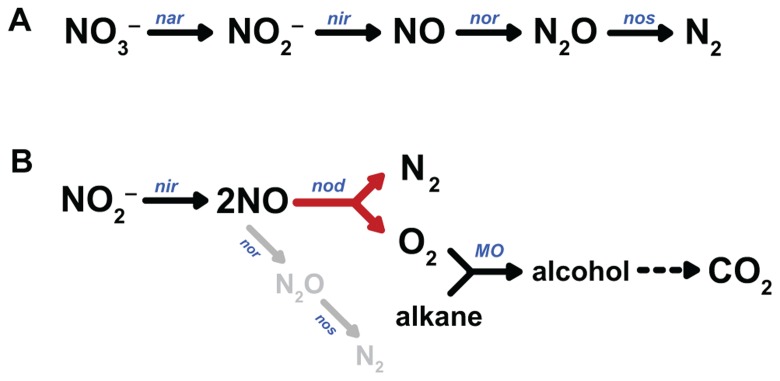
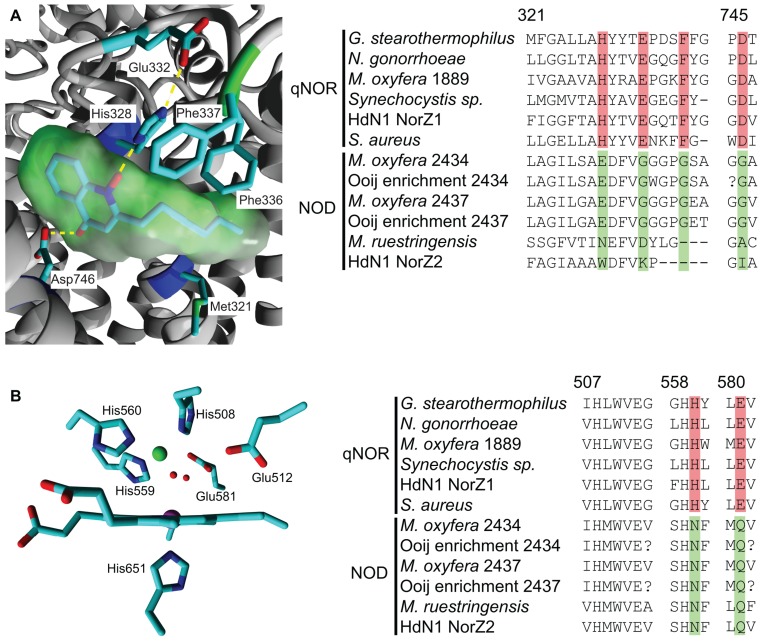
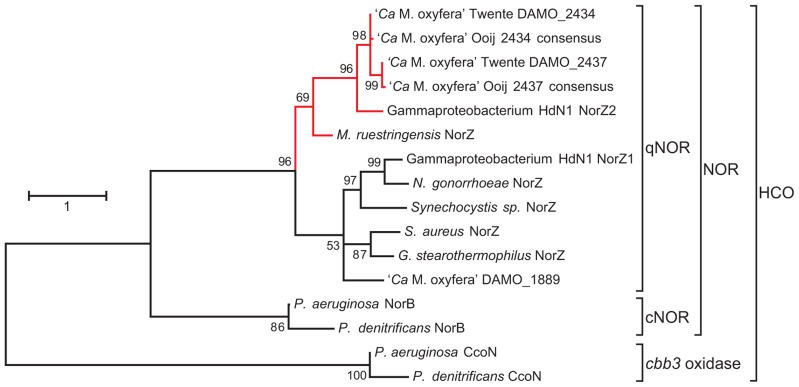
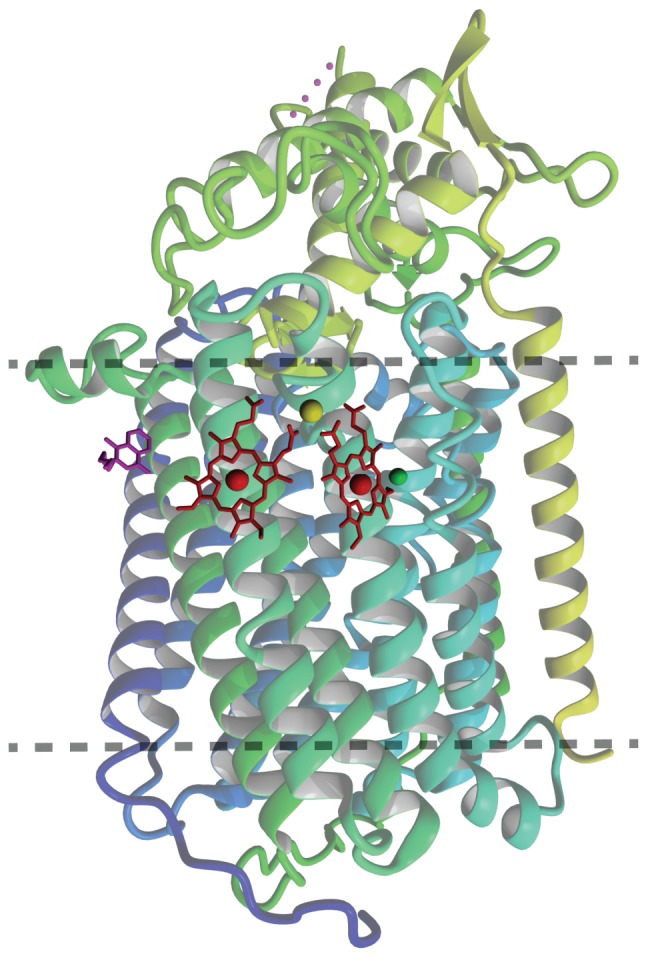
Nitric oxide (NO) and nitrous oxide (N(2)O) are among nature's most powerful electron acceptors. In recent years it became clear that microorganisms can take advantage of the oxidizing power of these compounds to degrade aliphatic and aromatic hydrocarbons. For two unrelated bacterial species, the "NC10" phylum bacterium "Candidatus Methylomirabilis oxyfera" and the γ-proteobacterial strain HdN1 it has been suggested that under anoxic conditions with nitrate and/or nitrite, monooxygenases are used for methane and hexadecane oxidation, respectively. No degradation was observed with nitrous oxide only. Similarly, "aerobic" pathways for hydrocarbon degradation are employed by (per)chlorate-reducing bacteria, which are known to produce oxygen from chlorite [Formula: see text]. In the anaerobic methanotroph M. oxyfera, which lacks identifiable enzymes for nitrogen formation, substrate activation in the presence of nitrite was directly associated with both oxygen and nitrogen formation. These findings strongly argue for the role of NO, or an oxygen species derived from it, in the activation reaction of methane. Although oxygen generation elegantly explains the utilization of "aerobic" pathways under anoxic conditions, the underlying mechanism is still elusive. In this perspective, we review the current knowledge about intra-aerobic pathways, their potential presence in other organisms, and identify candidate enzymes related to quinol-dependent NO reductases (qNORs) that might be involved in the formation of oxygen.
一氧化氮(NO)和一氧化二氮(N₂O)是自然界中最强有力的电子受体。近年来,越来越清楚的是,微生物可以利用这些化合物的氧化能力来降解脂肪族和芳香族烃类。对于两种不相关的细菌物种,即“NC10”门细菌“‘假定甲基米拉氏菌属嗜氧菌’(Candidatus Methylomirabilis oxyfera)”和γ-变形菌菌株HdN1,有人提出在有硝酸盐和/或亚硝酸盐的缺氧条件下,单加氧酶分别用于甲烷和十六烷的氧化。仅使用一氧化二氮时未观察到降解。同样,(过)氯酸盐还原细菌采用“好氧”的烃类降解途径,已知这些细菌能从亚氯酸盐中产生氧气[公式:见原文]。在缺乏可识别的氮形成酶的厌氧甲烷氧化菌嗜氧菌中,亚硝酸盐存在下的底物活化与氧气和氮的形成直接相关。这些发现有力地证明了NO或其衍生的氧物种在甲烷活化反应中的作用。尽管氧气生成很好地解释了在缺氧条件下“好氧”途径的利用,但潜在机制仍然难以捉摸。从这个角度出发,我们综述了关于内好氧途径的现有知识、它们在其他生物体中的潜在存在情况,并确定了与喹啉依赖性NO还原酶(qNORs)相关的可能参与氧气形成的候选酶。