Department of Biomedical Engineering, University of California at Irvine, 3020 Gross Hall, 845 Health Sciences Road, Irvine, CA 92697, USA.
Integr Biol (Camb). 2012 Oct;4(10):1223-36. doi: 10.1039/c2ib20171b.
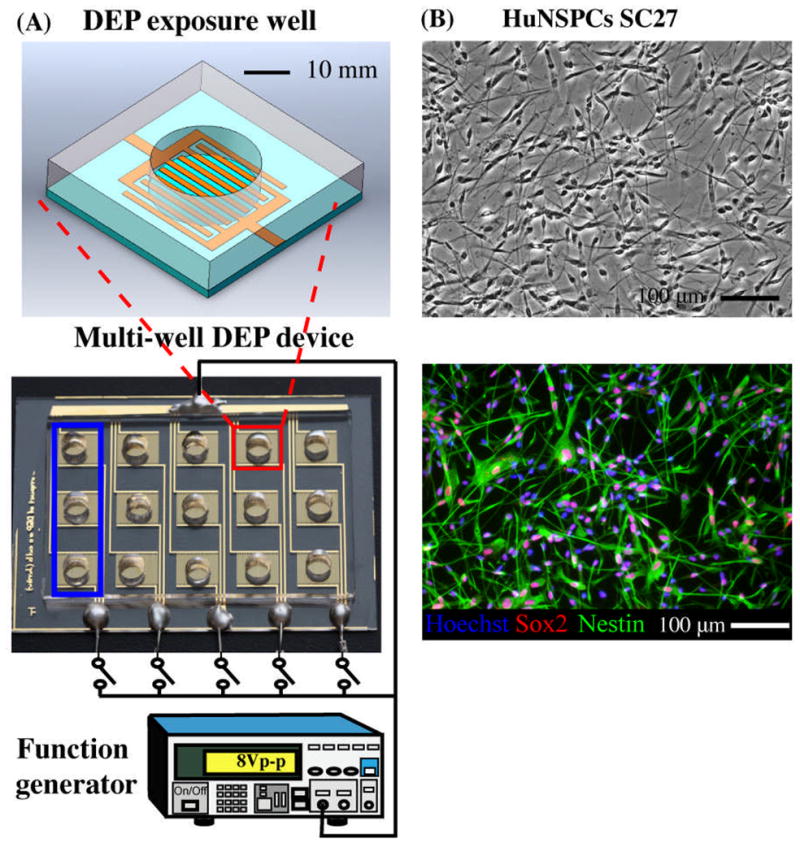
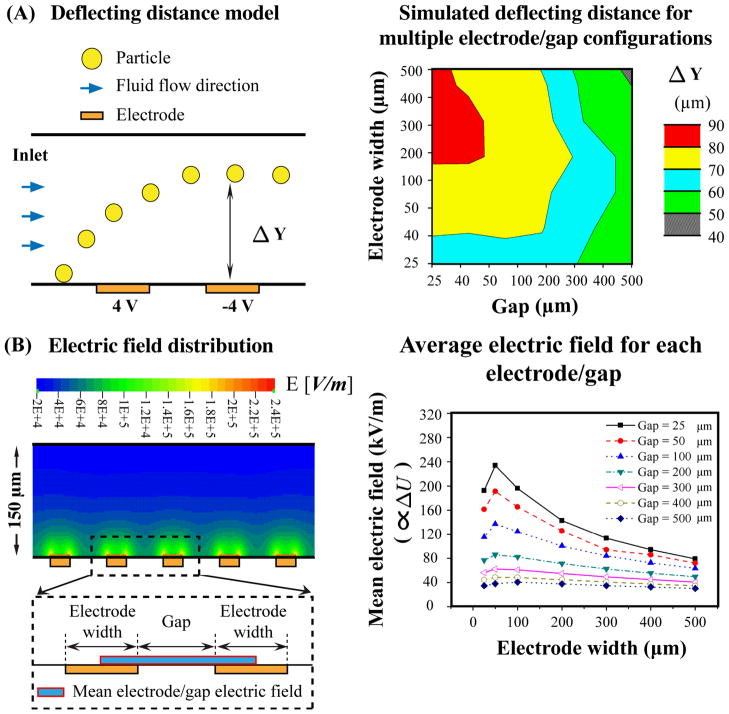
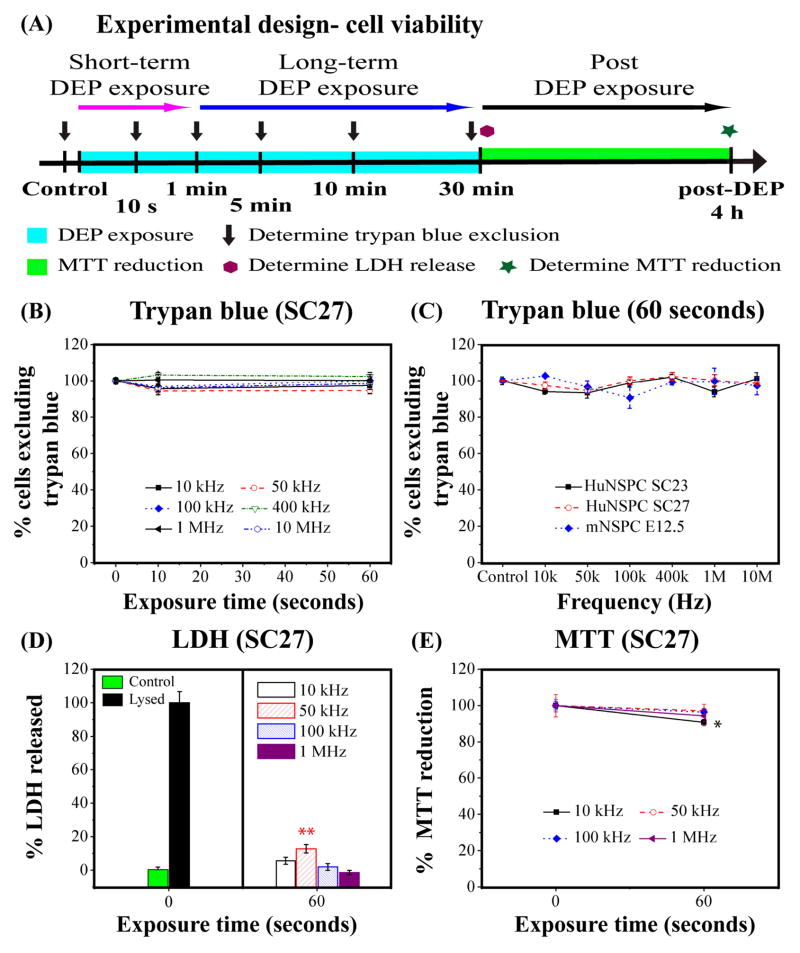
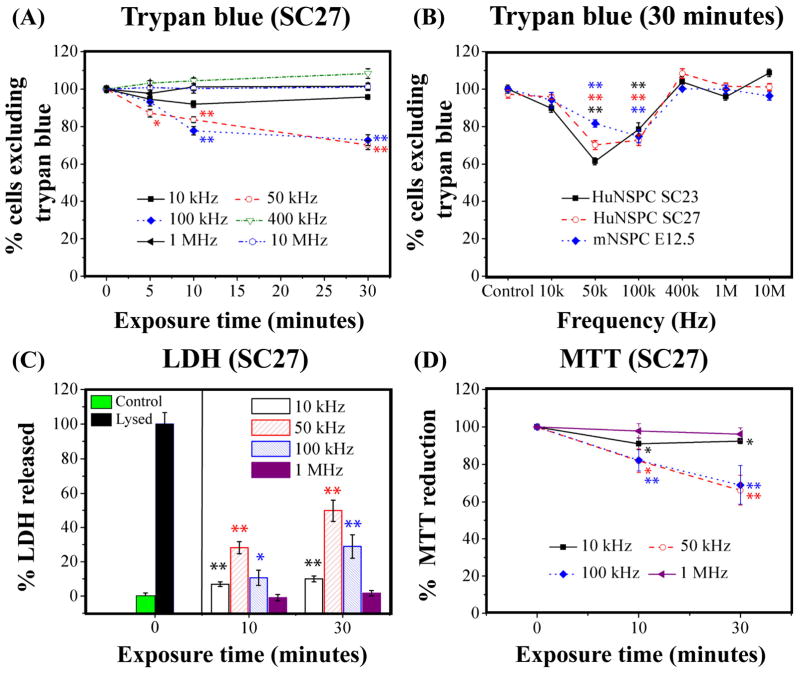
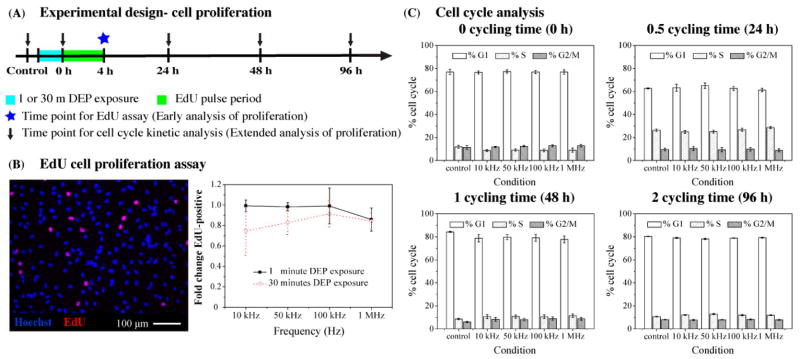
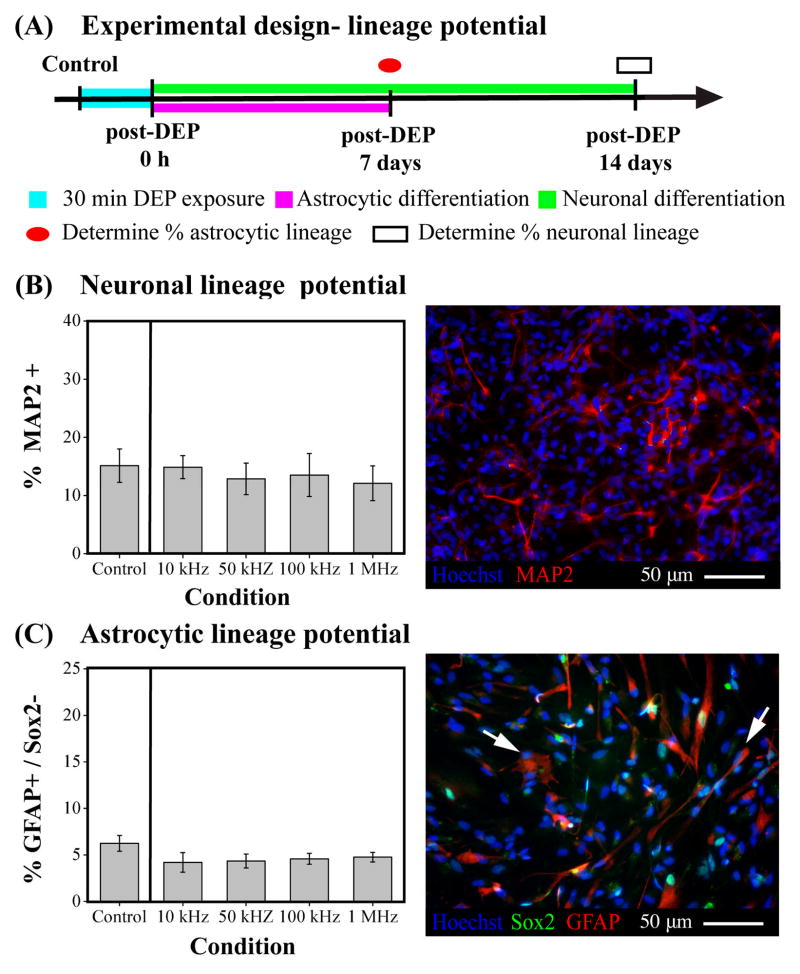
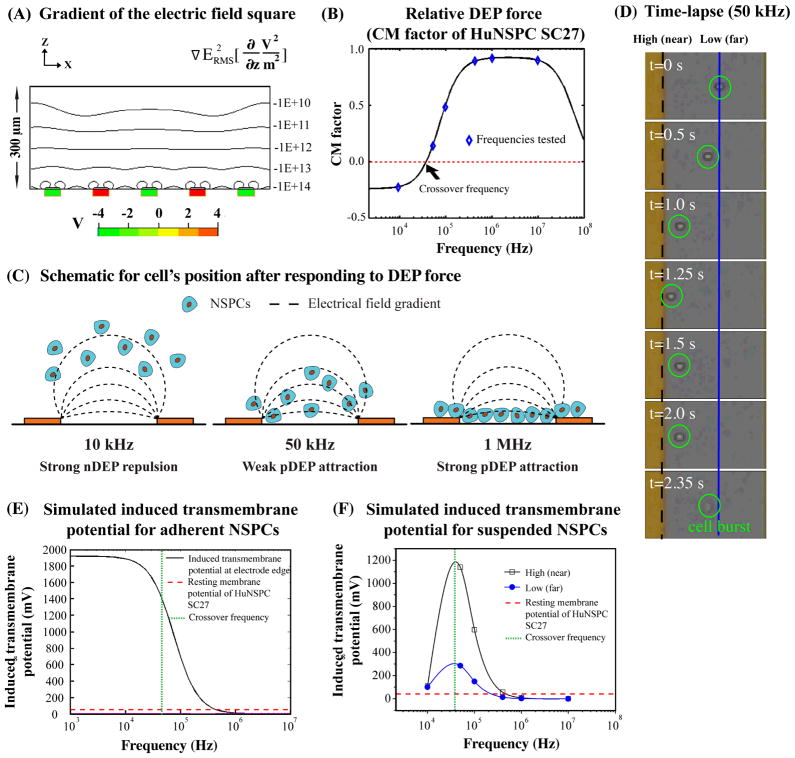
The integration of microscale engineering, microfluidics, and AC electrokinetics such as dielectrophoresis has generated novel microsystems that enable quantitative analysis of cellular phenotype, function, and physiology. These systems are increasingly being used to assess diverse cell types, such as stem cells, so it becomes critical to thoroughly evaluate whether the systems themselves impact cell function. For example, engineered microsystems have been utilized to investigate neural stem/progenitor cells (NSPCs), which are of interest due to their potential to treat CNS disease and injury. Analysis by dielectrophoresis (DEP) microsystems determined that unlabeled NSPCs with distinct fate potential have previously unrecognized distinguishing electrophysiological characteristics, suggesting that NSPCs could be isolated by DEP microsystems without the use of cell type specific labels. To gauge the potential impact of DEP sorting on NSPCs, we investigated whether electric field exposure of varying times affected survival, proliferation, or fate potential of NSPCs in suspension. We found short-term DEP exposure (1 min or less) had no effect on NSPC survival, proliferation, or fate potential revealed by differentiation. Moreover, NSPC proliferation (measured by DNA synthesis and cell cycle kinetics) and fate potential were not altered by any length of DEP exposure (up to 30 min). However, lengthy exposure (>5 min) to frequencies near the crossover frequency (50-100 kHz) led to decreased survival of NSPCs (maximum ∼30% cell loss after 30 min). Based on experimental observations and mathematical simulations of cells in suspension, we find that frequencies near the crossover frequency generate an induced transmembrane potential that results in cell swelling and rupture. This is in contrast to the case for adherent cells since negative DEP frequencies lower than the crossover frequency generate the highest induced transmembrane potential and damage for these cells. We clarify contrasting effects of DEP on adherent and suspended cells, which are related to the cell position within the electric field and the strength of the electric field at specific distances from the electrodes. Modeling of electrode configurations predicts optimal designs to induce cell movement by DEP while limiting the induced transmembrane potential. We find DEP electric fields are not harmful to stem cells in suspension at short exposure times, thus providing a basis for developing DEP-based applications for stem cells.
微尺度工程、微流控和交流电动力学(如介电泳)的融合产生了新型微系统,使细胞表型、功能和生理学的定量分析成为可能。这些系统越来越多地被用于评估各种细胞类型,如干细胞,因此彻底评估这些系统本身是否会影响细胞功能变得至关重要。例如,工程微系统已被用于研究神经干细胞/祖细胞(NSPCs),由于它们具有治疗中枢神经系统疾病和损伤的潜力,因此引起了人们的兴趣。介电泳(DEP)微系统的分析表明,具有不同命运潜力的未标记 NSPCs 具有以前未被认识到的电生理特征,这表明可以使用 DEP 微系统而不使用细胞类型特异性标记来分离 NSPCs。为了评估 DEP 分选对 NSPCs 的潜在影响,我们研究了不同时间的电场暴露是否会影响悬浮 NSPCs 的存活、增殖或命运潜力。我们发现,短期 DEP 暴露(1 分钟或更短时间)对 NSPC 的存活、增殖或分化所揭示的命运潜力没有影响。此外,任何长度的 DEP 暴露(最长 30 分钟)都不会改变 NSPC 的增殖(通过 DNA 合成和细胞周期动力学测量)和命运潜力。然而,长时间(>5 分钟)暴露于接近交叉频率(50-100 kHz)的频率会导致 NSPC 存活减少(30 分钟后最大约 30%的细胞损失)。基于悬浮细胞的实验观察和数学模拟,我们发现,接近交叉频率的频率会产生诱导的跨膜电位,导致细胞肿胀和破裂。这与贴壁细胞的情况形成对比,因为低于交叉频率的负 DEP 频率会为这些细胞产生最高的诱导跨膜电位和损伤。我们澄清了 DEP 对贴壁和悬浮细胞的对比影响,这与细胞在电场中的位置以及距电极特定距离处电场的强度有关。电极配置的建模预测了通过 DEP 诱导细胞运动而同时限制诱导跨膜电位的最佳设计。我们发现,在短时间暴露下,悬浮细胞中的 DEP 电场对干细胞没有危害,从而为开发基于 DEP 的干细胞应用提供了基础。