Slominski Andrzej T, Zmijewski Michal A, Skobowiat Cezary, Zbytek Blazej, Slominski Radomir M, Steketee Jeffery D
University of Tennessee Health Science Center, Department of Pathology and Laboratory Medicine, Memphhis, TN, USA.
Adv Anat Embryol Cell Biol. 2012;212:v, vii, 1-115. doi: 10.1007/978-3-642-19683-6_1.
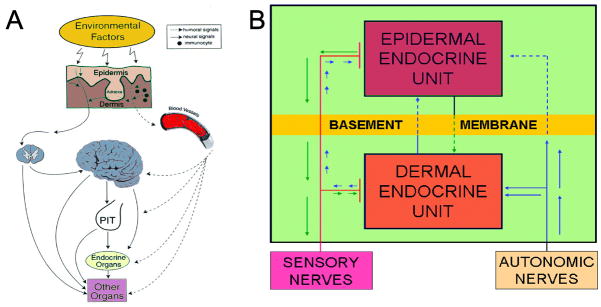
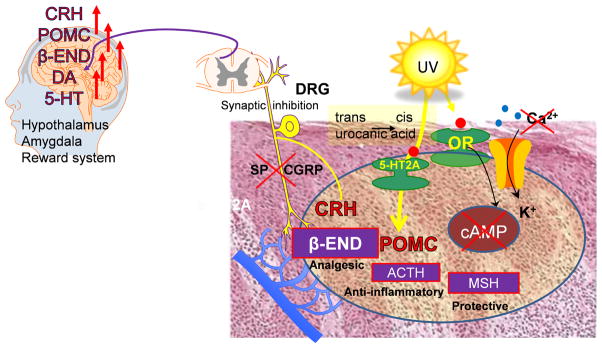
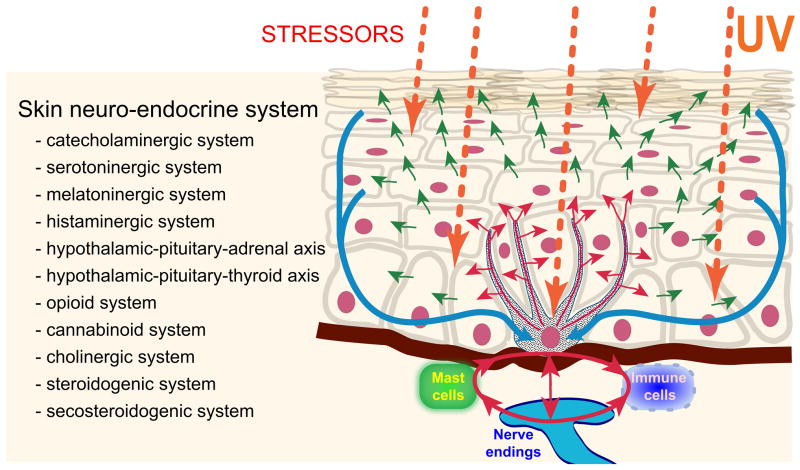
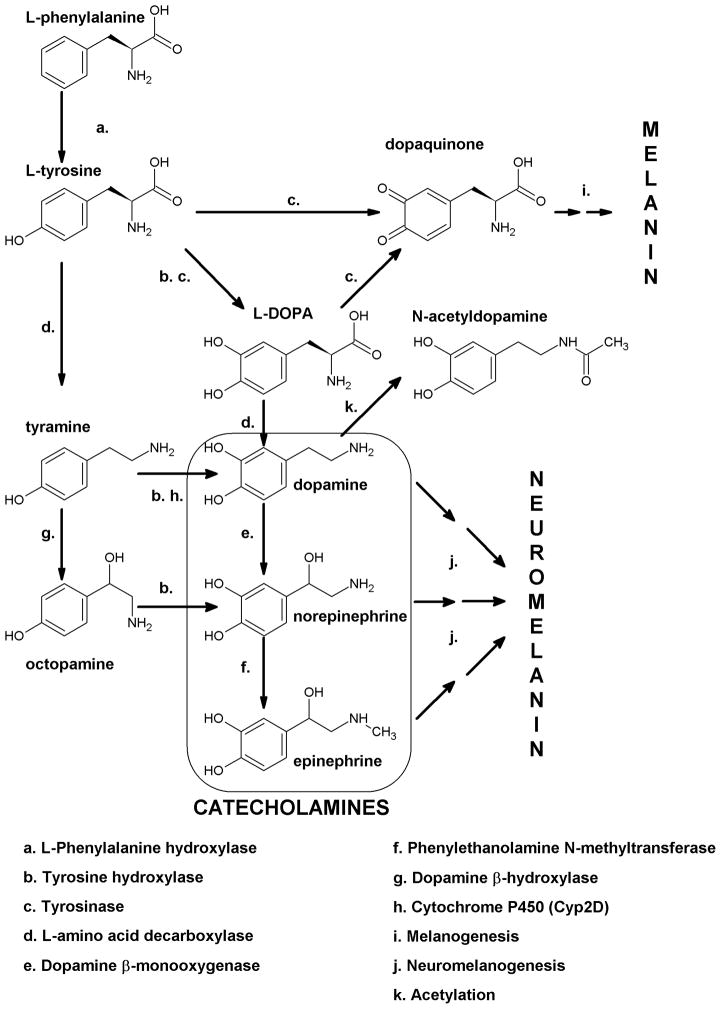
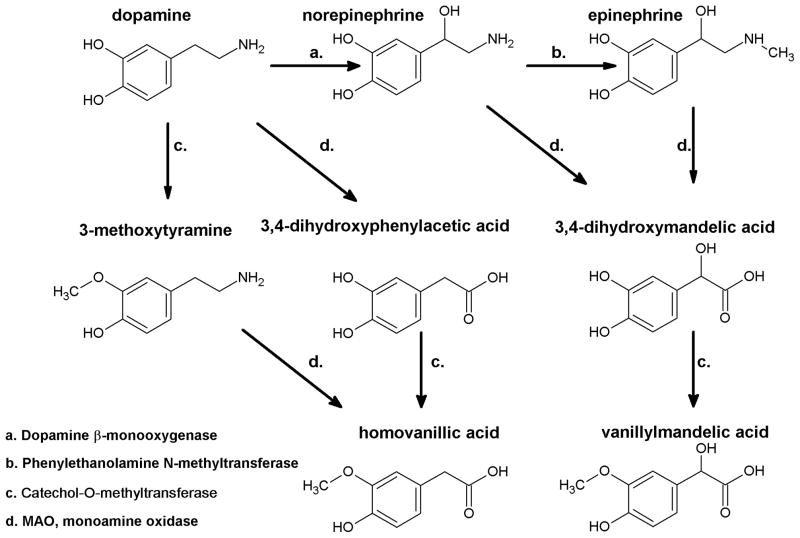
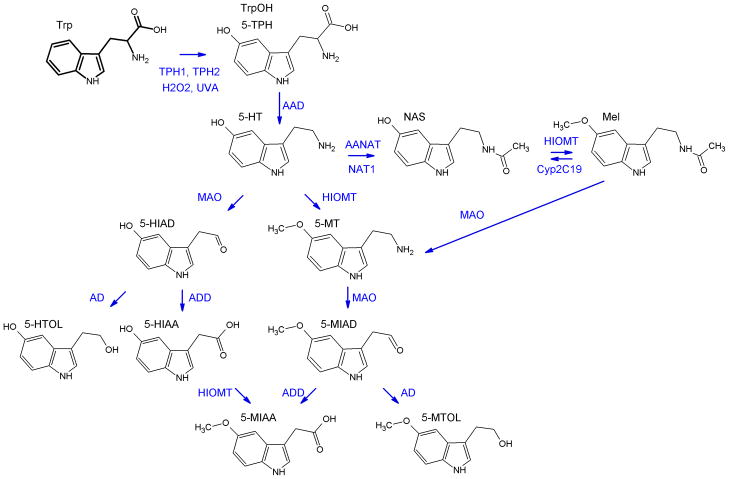
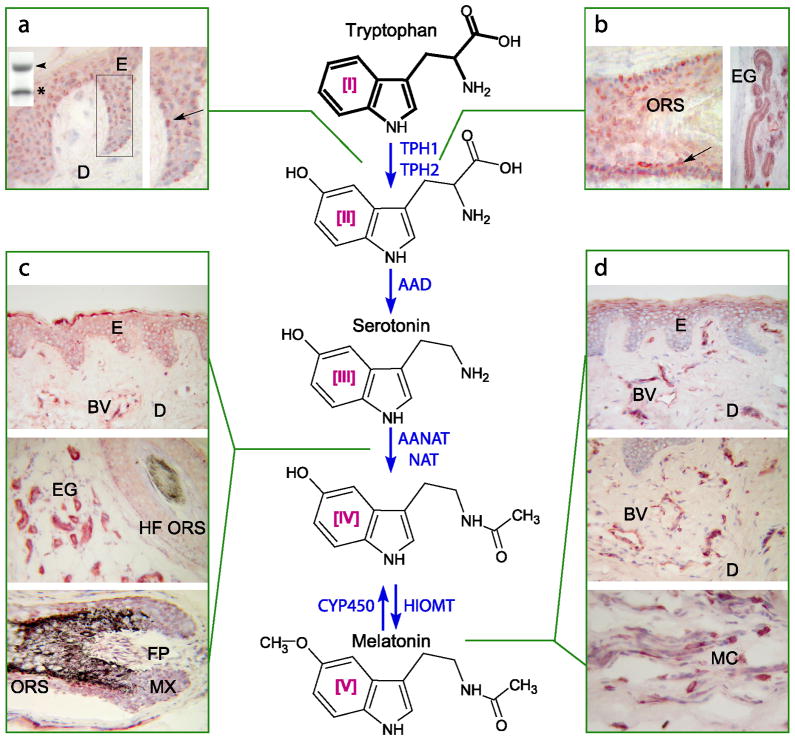
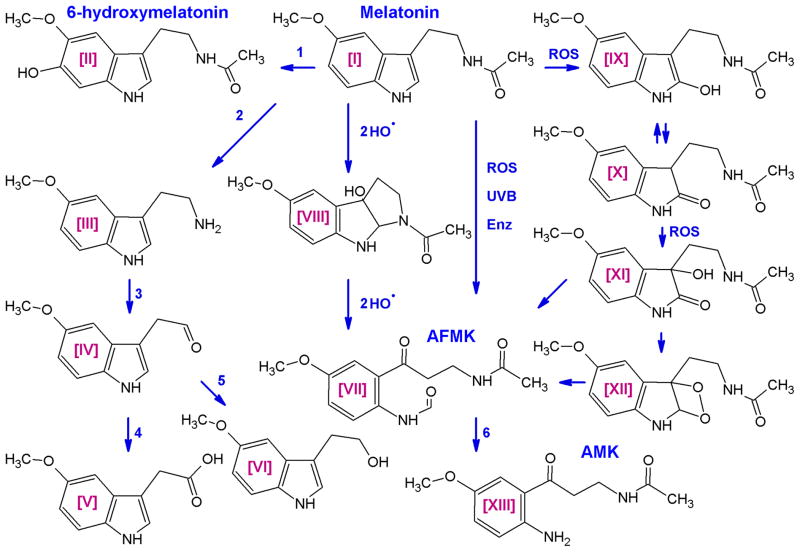
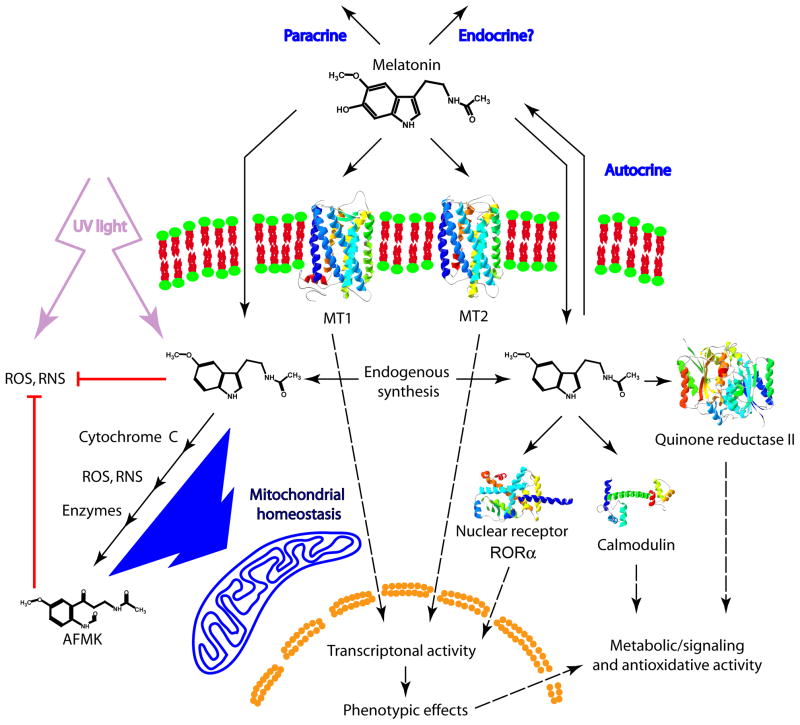
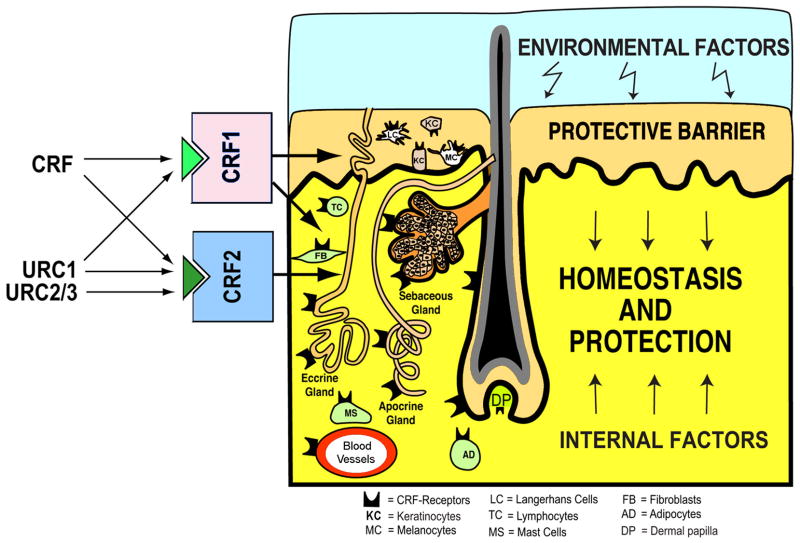
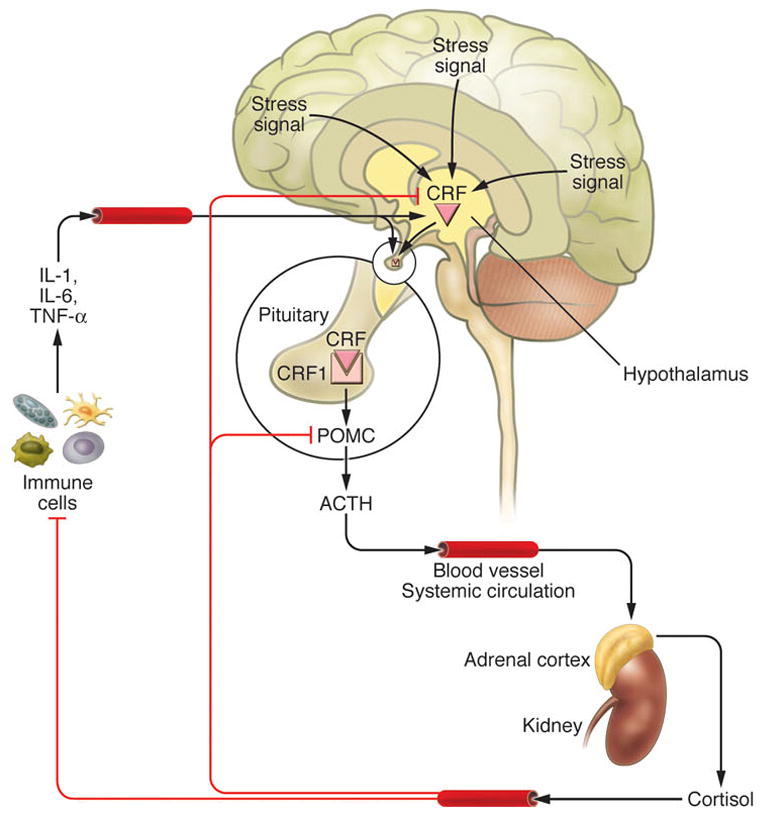
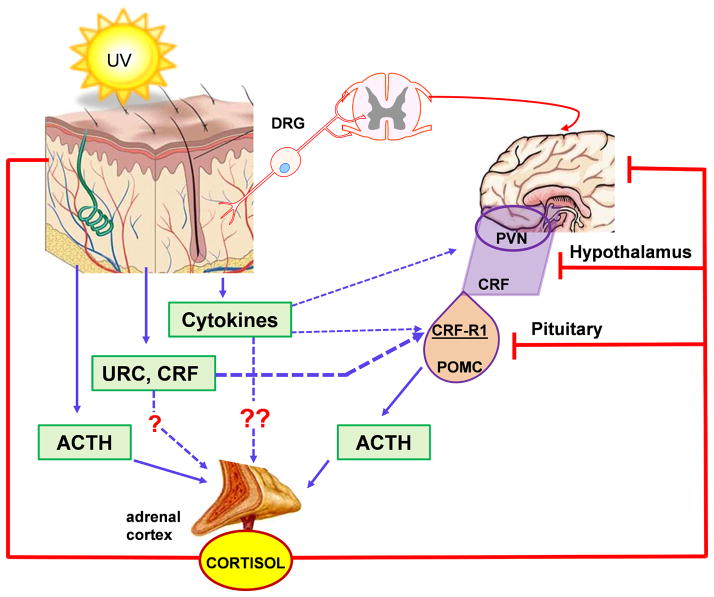
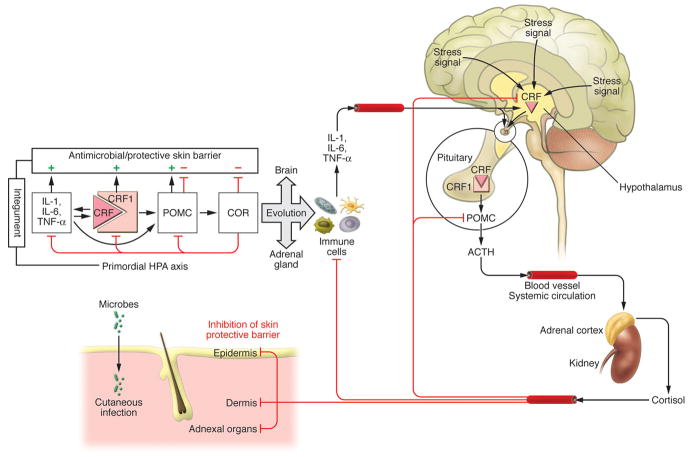
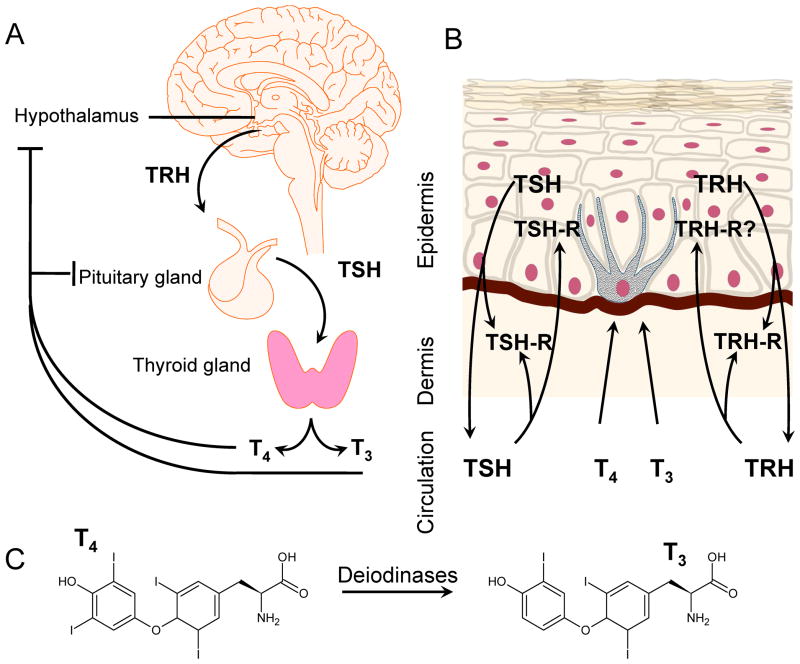
Skin, the body's largest organ, is strategically located at the interface with the external environment where it detects, integrates, and responds to a diverse range of stressors including solar radiation. It has already been established that the skin is an important peripheral neuro-endocrine-immune organ that is tightly networked to central regulatory systems. These capabilities contribute to the maintenance of peripheral homeostasis. Specifically, epidermal and dermal cells produce and respond to classical stress neurotransmitters, neuropeptides, and hormones. Such production is stimulated by ultraviolet radiation (UVR), biological factors (infectious and noninfectious), and other physical and chemical agents. Examples of local biologically active products are cytokines, biogenic amines (catecholamines, histamine, serotonin, and N-acetyl-serotonin), melatonin, acetylocholine, neuropeptides including pituitary (proopiomelanocortin-derived ACTH, beta-endorphin or MSH peptides, thyroid-stimulating hormone) and hypothalamic (corticotropin-releasing factor and related urocortins, thyroid-releasing hormone) hormones as well as enkephalins and dynorphins, thyroid hormones, steroids (glucocorticoids, mineralocorticoids, sex hormones, 7-delta steroids), secosteroids, opioids, and endocannabinoids. The production of these molecules is hierarchical, organized along the algorithms of classical neuroendocrine axes such as hypothalamic-pituitary-adrenal axis (HPA), hypothalamic-thyroid axis (HPT), serotoninergic, melatoninergic, catecholaminergic, cholinergic, steroid/secosteroidogenic, opioid, and endocannbinoid systems. Dysregulation of these axes or of communication between them may lead to skin and/ or systemic diseases. These local neuroendocrine networks are also addressed at restricting maximally the effect of noxious environmental agents to preserve local and consequently global homeostasis. Moreover, the skin-derived factors/systems can also activate cutaneous nerve endings to alert the brain on changes in the epidermal or dermal environments, or alternatively to activate other coordinating centers by direct (spinal cord) neurotransmission without brain involvement. Furthermore, rapid and reciprocal communications between epidermal and dermal and adnexal compartments are also mediated by neurotransmission including antidromic modes of conduction. In conclusion, skin cells and skin as an organ coordinate and/or regulate not only peripheral but also global homeostasis.
皮肤是人体最大的器官,位于与外部环境的交界处,在此处它能检测、整合并应对包括太阳辐射在内的各种应激源。皮肤是一个重要的外周神经 - 内分泌 - 免疫器官,与中枢调节系统紧密相连,这一点已经得到证实。这些功能有助于维持外周稳态。具体而言,表皮和真皮细胞会产生并对经典应激神经递质、神经肽和激素做出反应。紫外线辐射(UVR)、生物因素(传染性和非传染性)以及其他物理和化学因子均可刺激此类物质的产生。局部生物活性产物包括细胞因子、生物胺(儿茶酚胺、组胺、血清素和N - 乙酰血清素)、褪黑素、乙酰胆碱、神经肽,包括垂体(源自阿黑皮素原的促肾上腺皮质激素、β - 内啡肽或促黑素细胞激素肽、促甲状腺激素)和下丘脑(促肾上腺皮质激素释放因子及相关的尿皮质素、促甲状腺激素释放激素)激素,以及脑啡肽和强啡肽、甲状腺激素、类固醇(糖皮质激素、盐皮质激素、性激素、7 - δ类固醇)、维生素D、阿片类物质和内源性大麻素。这些分子的产生具有层次性,沿着经典神经内分泌轴的算法进行组织,如下丘脑 - 垂体 - 肾上腺轴(HPA)、下丘脑 - 甲状腺轴(HPT)、血清素能、褪黑素能、儿茶酚胺能、胆碱能、类固醇/维生素D生成、阿片类和内源性大麻素系统。这些轴的失调或它们之间的通讯异常可能导致皮肤和/或全身性疾病。这些局部神经内分泌网络还致力于最大程度地限制有害环境因素的影响,以维持局部乃至整体的稳态。此外,皮肤衍生的因子/系统还可激活皮肤神经末梢,向大脑警示表皮或真皮环境的变化,或者通过直接(脊髓)神经传递激活其他协调中心而无需大脑参与。此外,表皮、真皮和附属器之间快速且相互的通讯也通过包括逆向传导模式在内的神经传递来介导。总之,皮肤细胞以及作为一个器官的皮肤不仅协调和/或调节外周稳态,还调节整体稳态。