Department of Pathology and Laboratory Medicine, University of Tennessee, Memphis, TN, USA.
Pigment Cell Melanoma Res. 2012 Jan;25(1):14-27. doi: 10.1111/j.1755-148X.2011.00898.x. Epub 2011 Sep 2.
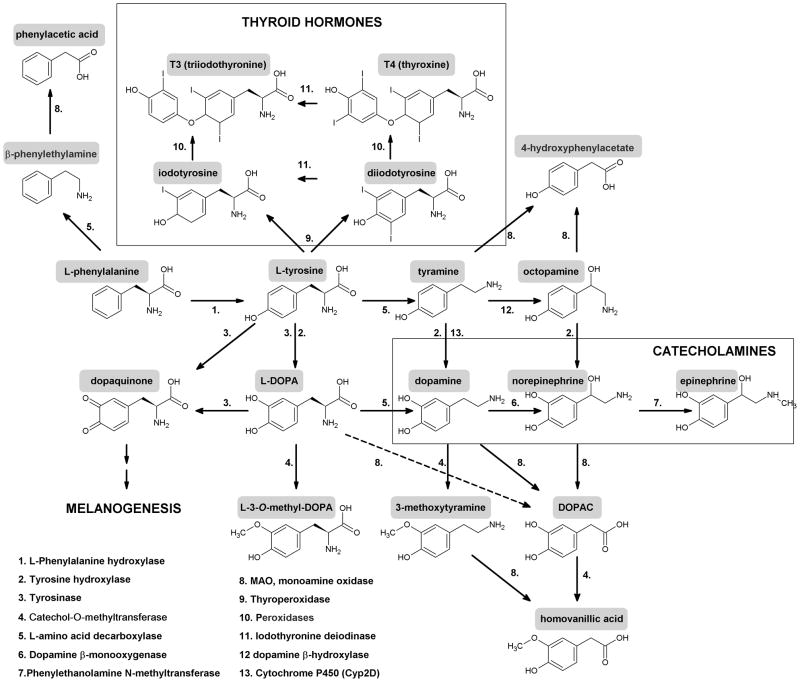
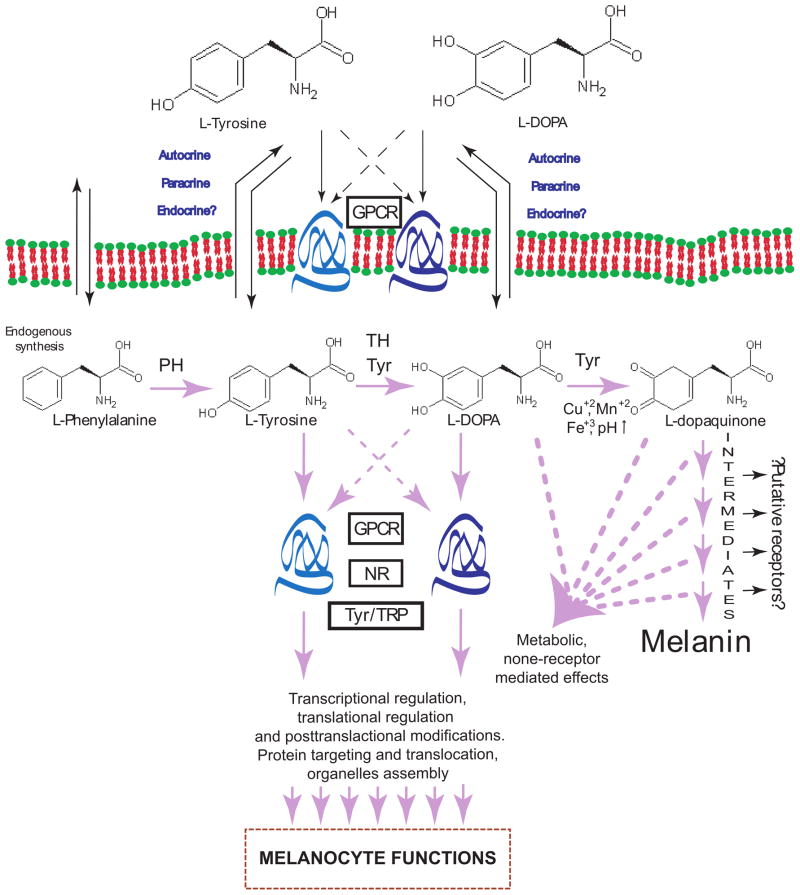
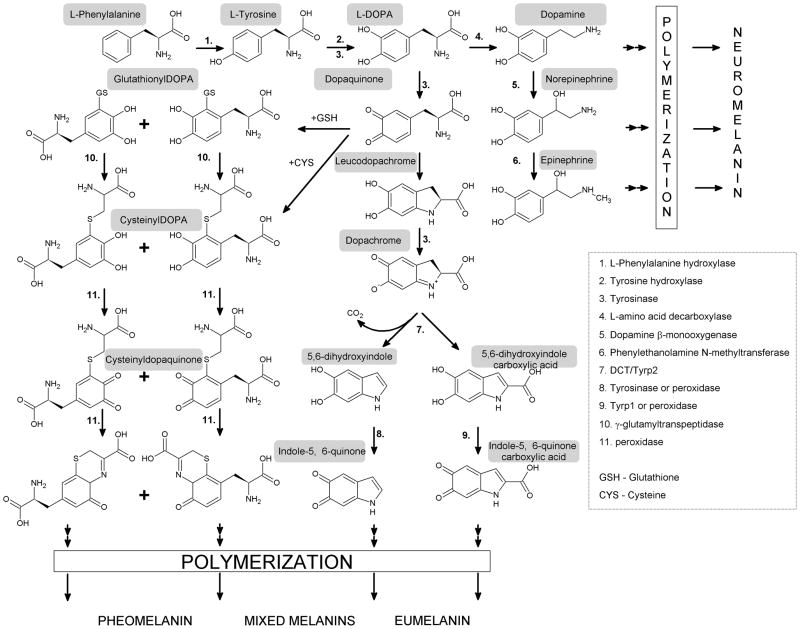
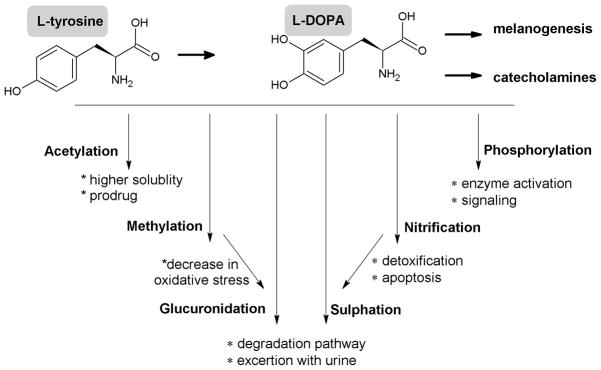
There is evidence that L-tyrosine and L-dihydroxyphenylalanine (L-DOPA), besides serving as substrates and intermediates of melanogenesis, are also bioregulatory agents acting not only as inducers and positive regulators of melanogenesis but also as regulators of other cellular functions. These can be mediated through action on specific receptors or through non-receptor-mediated mechanisms. The substrate induced (L-tyrosine and/or L-DOPA) melanogenic pathway would autoregulate itself as well as regulate the melanocyte functions through the activity of its structural or regulatory proteins and through intermediates of melanogenesis and melanin itself. Dissection of regulatory and autoregulatory elements of this process may elucidate how substrate-induced autoregulatory pathways have evolved from prokaryotic or simple eukaryotic organisms to complex systems in vertebrates. This could substantiate an older theory proposing that receptors for amino acid-derived hormones arose from the receptors for those amino acids, and that nuclear receptors evolved from primitive intracellular receptors binding nutritional factors or metabolic intermediates.
有证据表明,L-酪氨酸和 L-二羟基苯丙氨酸(L-DOPA)不仅是黑色素生成的底物和中间产物,还是生物调节剂,不仅作为黑色素生成的诱导剂和正调节剂,而且还作为其他细胞功能的调节剂。这些可以通过作用于特定的受体或通过非受体介导的机制来实现。底物诱导的(L-酪氨酸和/或 L-DOPA)黑色素生成途径将通过其结构或调节蛋白的活性以及通过黑色素生成和黑色素本身的中间产物来自我调节以及调节黑素细胞功能。对这个过程的调节和自调节元件的剖析可以阐明,底物诱导的自调节途径是如何从原核或简单真核生物进化到脊椎动物的复杂系统的。这可以证实一个更古老的理论,即氨基酸衍生激素的受体是从那些氨基酸的受体演变而来的,而核受体是从结合营养因子或代谢中间产物的原始细胞内受体进化而来的。