Department of Pharmacology, UCL School of Pharmacy, University College London, 29-39 Brunswick Square, London, UK.
Hum Mol Genet. 2012 Nov 15;21(22):4966-79. doi: 10.1093/hmg/dds342. Epub 2012 Aug 16.
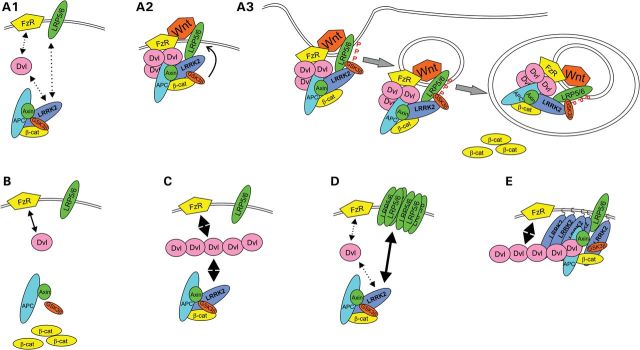
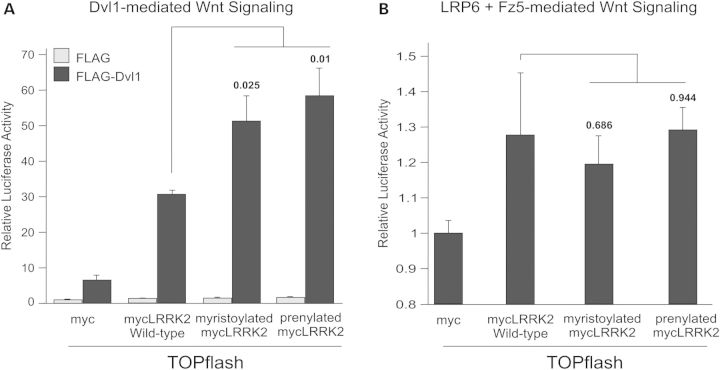
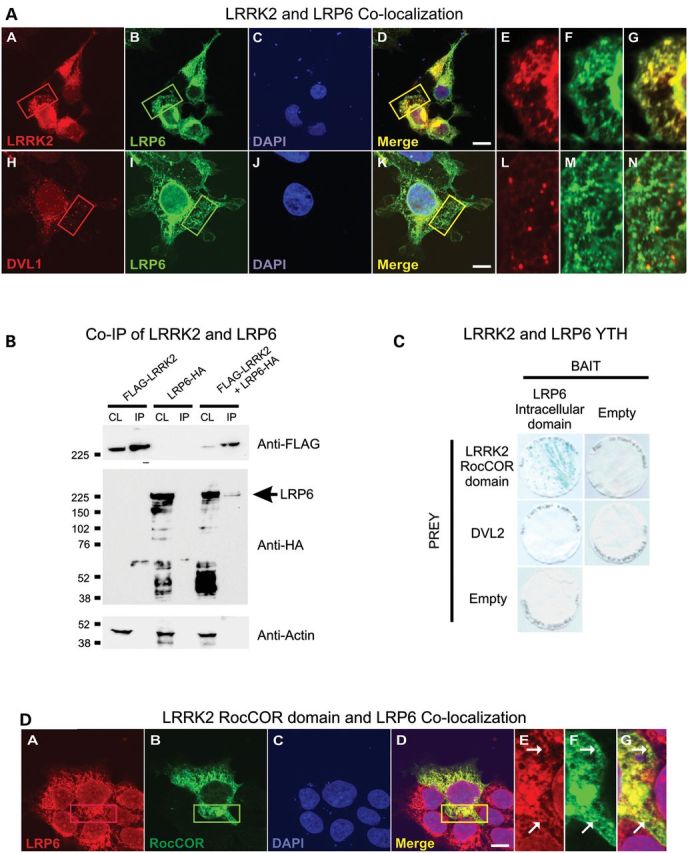
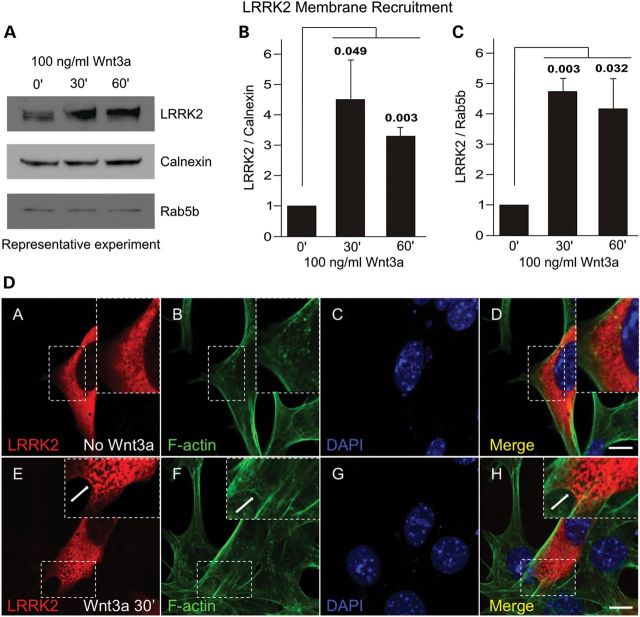
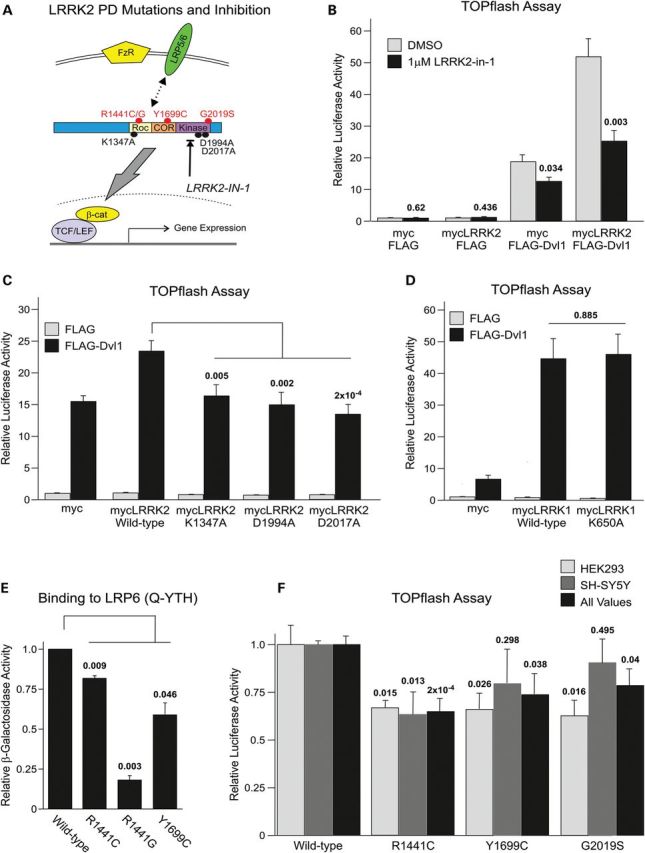
Mutations in PARK8, encoding leucine-rich repeat kinase 2 (LRRK2), are a frequent cause of Parkinson's disease (PD). Nonetheless, the physiological role of LRRK2 remains unclear. Here, we demonstrate that LRRK2 participates in canonical Wnt signaling as a scaffold. LRRK2 interacts with key Wnt signaling proteins of the β-catenin destruction complex and dishevelled proteins in vivo and is recruited to membranes following Wnt stimulation, where it binds to the Wnt co-receptor low-density lipoprotein receptor-related protein 6 (LRP6) in cellular models. LRRK2, therefore, bridges membrane and cytosolic components of Wnt signaling. Changes in LRRK2 expression affects pathway activity, while pathogenic LRRK2 mutants reduce both signal strength and the LRRK2-LRP6 interaction. Thus, decreased LRRK2-mediated Wnt signaling caused by reduced binding to LRP6 may underlie the neurodegeneration observed in PD. Finally, a newly developed LRRK2 kinase inhibitor disrupted Wnt signaling to a similar extent as pathogenic LRRK2 mutations. The use of LRRK2 kinase inhibition to treat PD may therefore need reconsideration.
LRRK2 基因编码富亮氨酸重复激酶 2(LRRK2)的突变是帕金森病(PD)的常见病因。然而,LRRK2 的生理作用仍不清楚。在这里,我们证明了 LRRK2 作为支架参与经典的 Wnt 信号转导。LRRK2 在体内与 β-连环蛋白降解复合物和盘基网柄菌蛋白的关键 Wnt 信号蛋白相互作用,并在 Wnt 刺激后被招募到膜上,在细胞模型中与 Wnt 共受体低密度脂蛋白受体相关蛋白 6(LRP6)结合。因此,LRRK2 将 Wnt 信号的膜和胞质成分连接起来。LRRK2 表达的变化会影响途径活性,而致病性 LRRK2 突变会降低信号强度和 LRRK2-LRP6 相互作用。因此,LRRK2 与 LRP6 结合减少导致 Wnt 信号转导减少,可能是 PD 中观察到的神经退行性变的基础。最后,一种新开发的 LRRK2 激酶抑制剂对 Wnt 信号的干扰程度与致病性 LRRK2 突变相似。因此,用 LRRK2 激酶抑制治疗 PD 需要重新考虑。