Laboratory of Functional Biology, Kagawa School of Pharmaceutical Sciences, Tokushima Bunri University, Sanuki, Japan.
PLoS One. 2012;7(8):e43151. doi: 10.1371/journal.pone.0043151. Epub 2012 Aug 10.
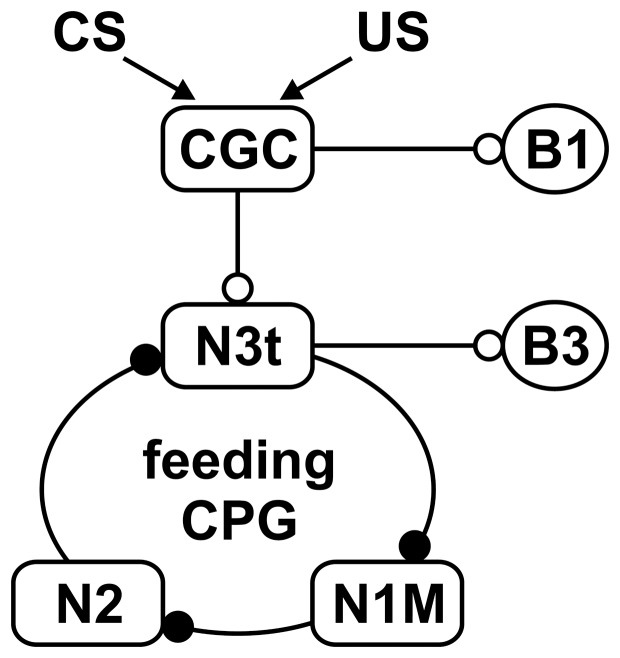
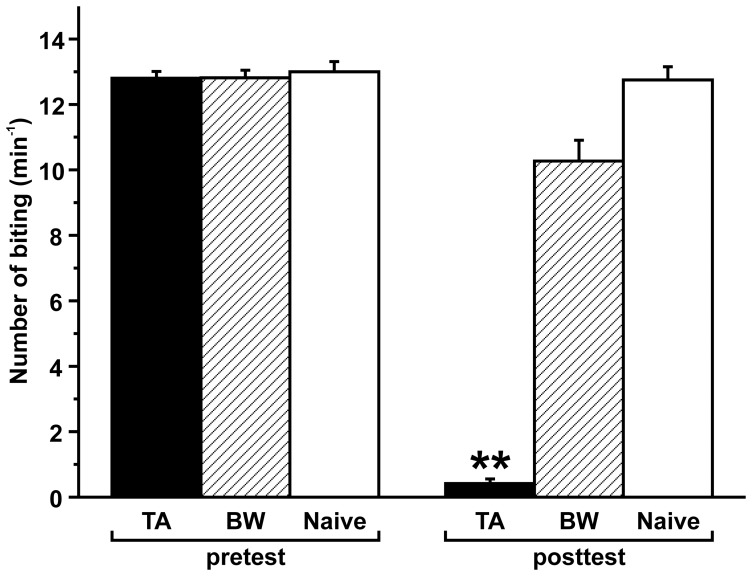
The pond snail Lymnaea stagnalis can maintain a conditioned taste aversion (CTA) as a long-term memory. Previous studies have shown that the inhibitory postsynaptic potential (IPSP) evoked in the neuron 1 medial (N1M) cell by activation of the cerebral giant cell (CGC) in taste aversion-trained snails was larger and lasted longer than that in control snails. The N1M cell is one of the interneurons in the feeding central pattern generator (CPG), and the CGC is a key regulatory neuron for the feeding CPG.
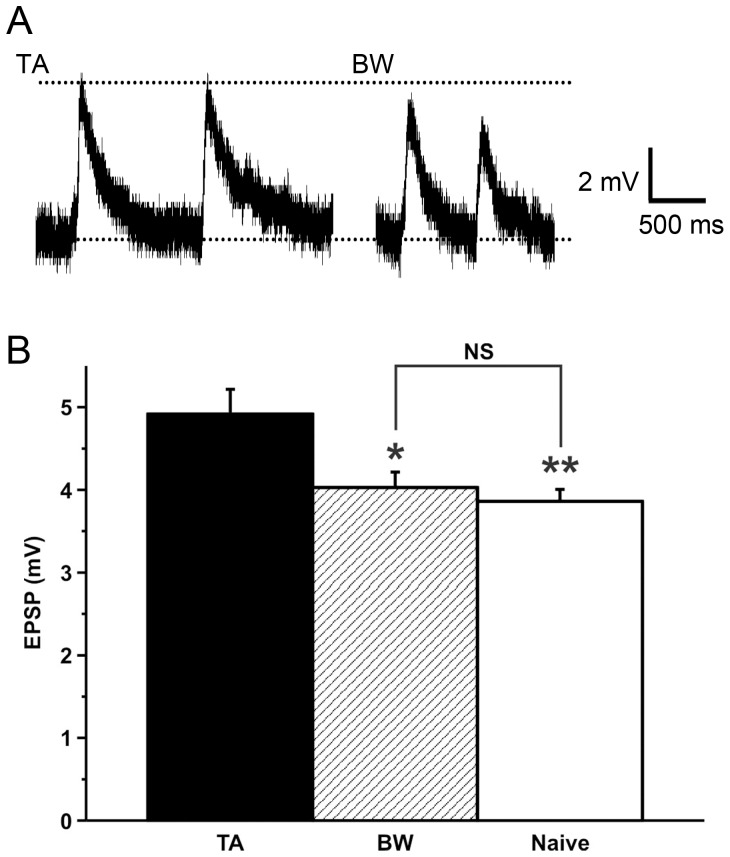
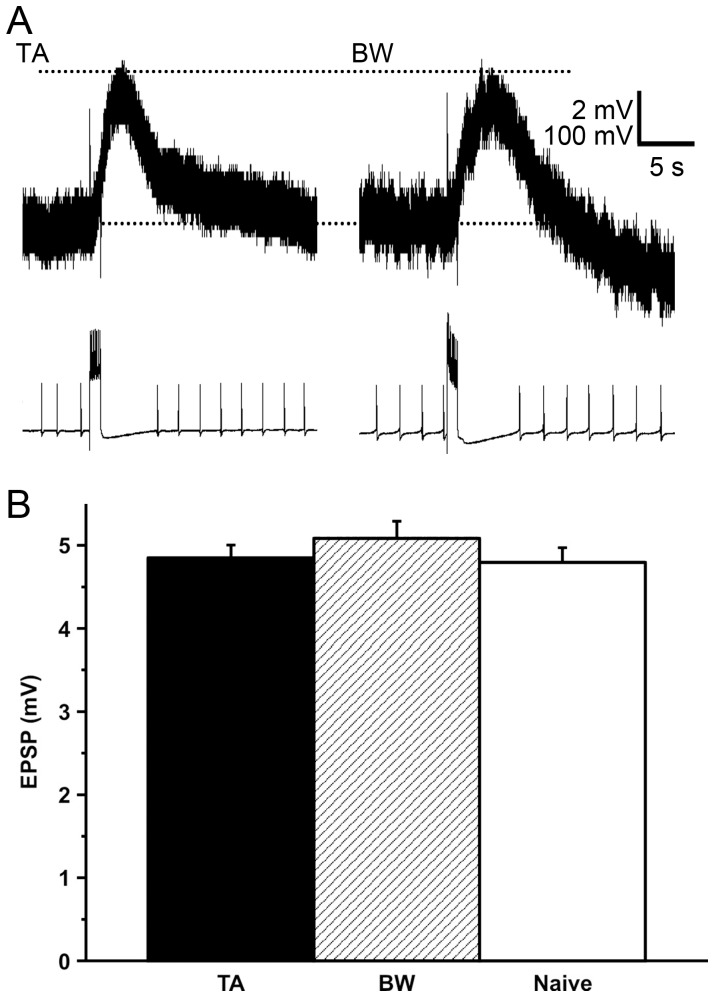
METHODOLOGY/PRINCIPLE FINDINGS: Previous studies have suggested that the neural circuit between the CGC and the N1M cell consists of two synaptic connections: (1) the excitatory connection from the CGC to the neuron 3 tonic (N3t) cell and (2) the inhibitory connection from the N3t cell to the N1M cell. However, because the N3t cell is too small to access consistently by electrophysiological methods, in the present study the synaptic inputs from the CGC to the N3t cell and those from the N3t cell to the N1M cell were monitored as the monosynaptic excitatory postsynaptic potential (EPSP) recorded in the large B1 and B3 motor neurons, respectively. The evoked monosynaptic EPSPs of the B1 motor neurons in the brains isolated from the taste aversion-trained snails were identical to those in the control snails, whereas the spontaneous monosynaptic EPSPs of the B3 motor neurons were significantly enlarged.
CONCLUSION/SIGNIFICANCE: These results suggest that, after taste aversion training, the monosynaptic inputs from the N3t cell to the following neurons including the N1M cell are specifically facilitated. That is, one of the memory traces for taste aversion remains as an increase in neurotransmitter released from the N3t cell. We thus conclude that the N3t cell suppresses the N1M cell in the feeding CPG, in response to the conditioned stimulus in Lymnaea CTA.
圆田螺(Lymnaea stagnalis)可以将条件味觉厌恶(CTA)作为长期记忆来维持。先前的研究表明,在味觉厌恶训练后的田螺中,激活脑巨细胞(CGC)后在神经元 1 中(N1M)细胞中诱发的抑制性突触后电位(IPSP)比对照田螺中的更大且持续时间更长。N1M 细胞是摄食中央模式发生器(CPG)中的中间神经元之一,CGC 是摄食 CPG 的关键调节神经元。
方法/原理发现:先前的研究表明,CGC 和 N1M 细胞之间的神经回路由两个突触连接组成:(1)来自 CGC 到神经元 3 紧张(N3t)细胞的兴奋性连接,以及(2)来自 N3t 细胞到 N1M 细胞的抑制性连接。然而,由于 N3t 细胞太小,无法通过电生理方法持续访问,因此在本研究中,从 CGC 到 N3t 细胞的突触输入以及从 N3t 细胞到 N1M 细胞的突触输入分别作为在大型 B1 和 B3 运动神经元中记录的单突触兴奋性突触后电位(EPSP)进行监测。从味觉厌恶训练后的田螺脑中分离出的 B1 运动神经元诱发的单突触 EPSP与对照田螺中的相同,而 B3 运动神经元的自发单突触 EPSP 则显著增大。
结论/意义:这些结果表明,味觉厌恶训练后,N3t 细胞到包括 N1M 细胞在内的后续神经元的单突触输入被特异性促进。也就是说,味觉厌恶的记忆痕迹之一是 N3t 细胞释放的神经递质增加。因此,我们得出结论,N3t 细胞在 Lymnaea CTA 中响应条件刺激,抑制摄食 CPG 中的 N1M 细胞。