DNA-protein interactions unit, School of Biochemistry, University of Bristol, Bristol BS8 1TD, UK.
Nucleic Acids Res. 2012 Nov 1;40(20):10408-16. doi: 10.1093/nar/gks775. Epub 2012 Aug 16.
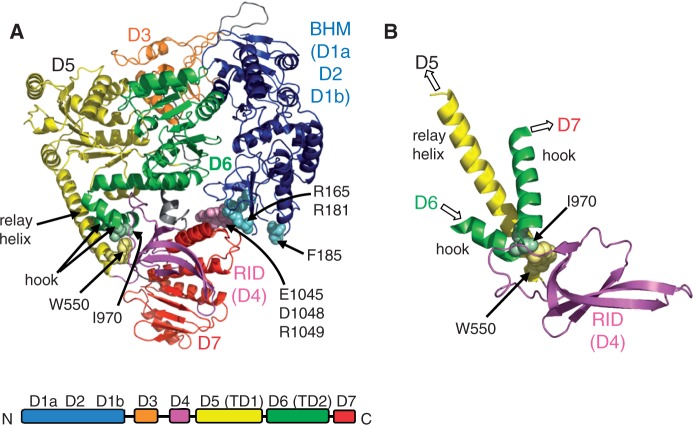
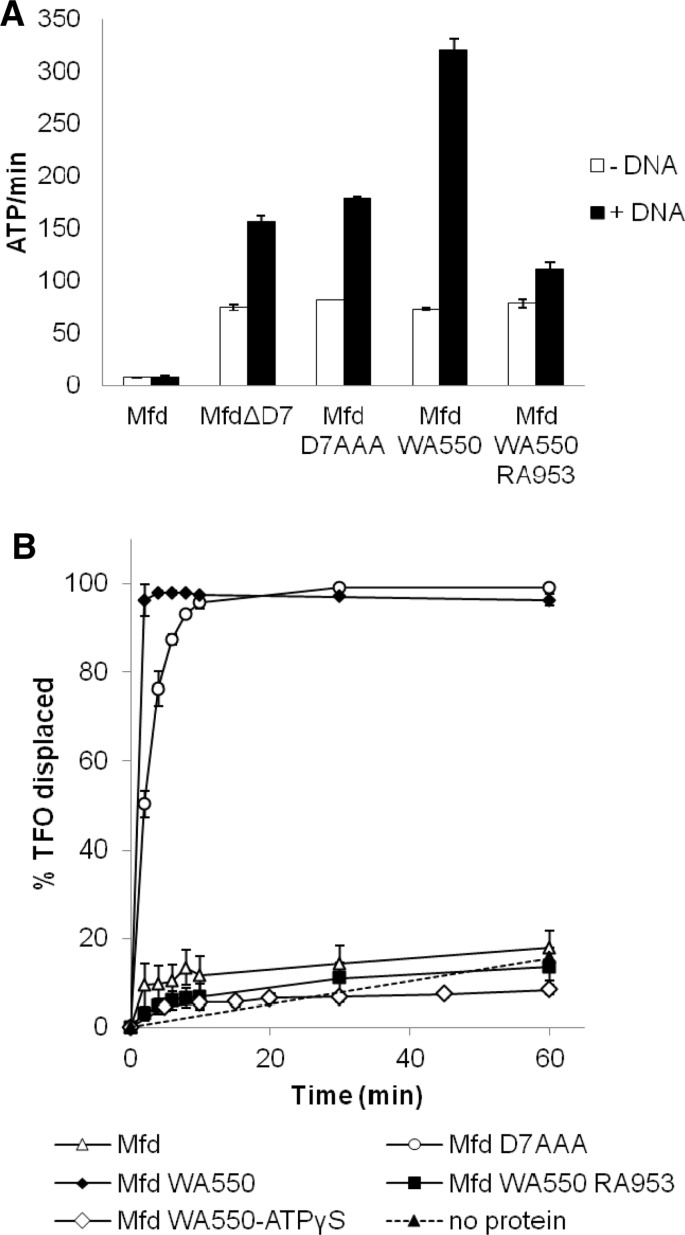
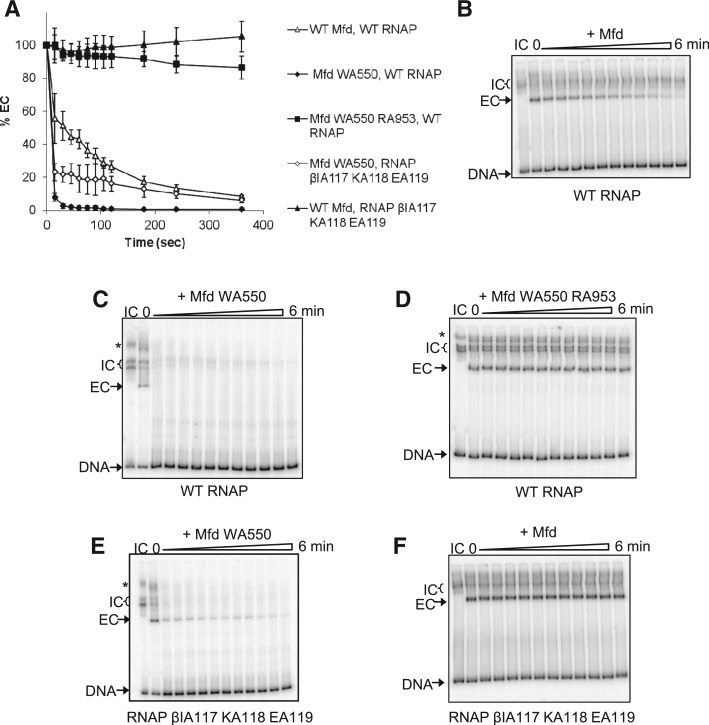
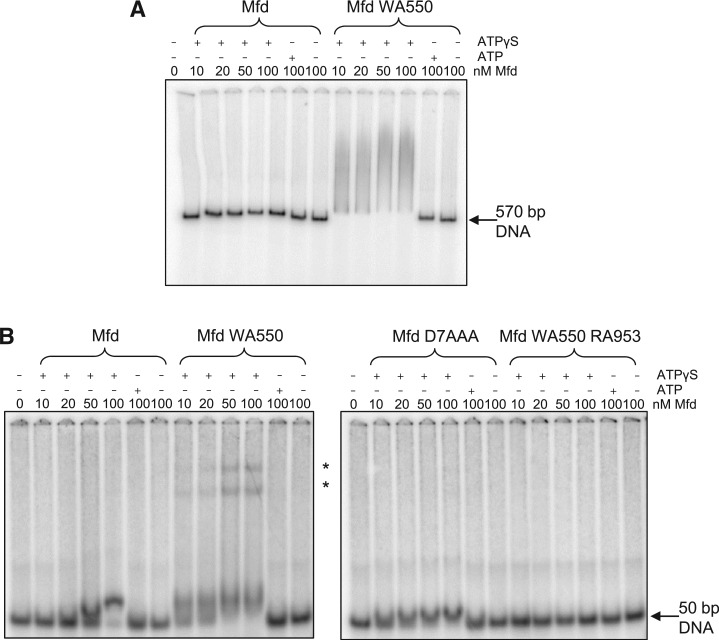
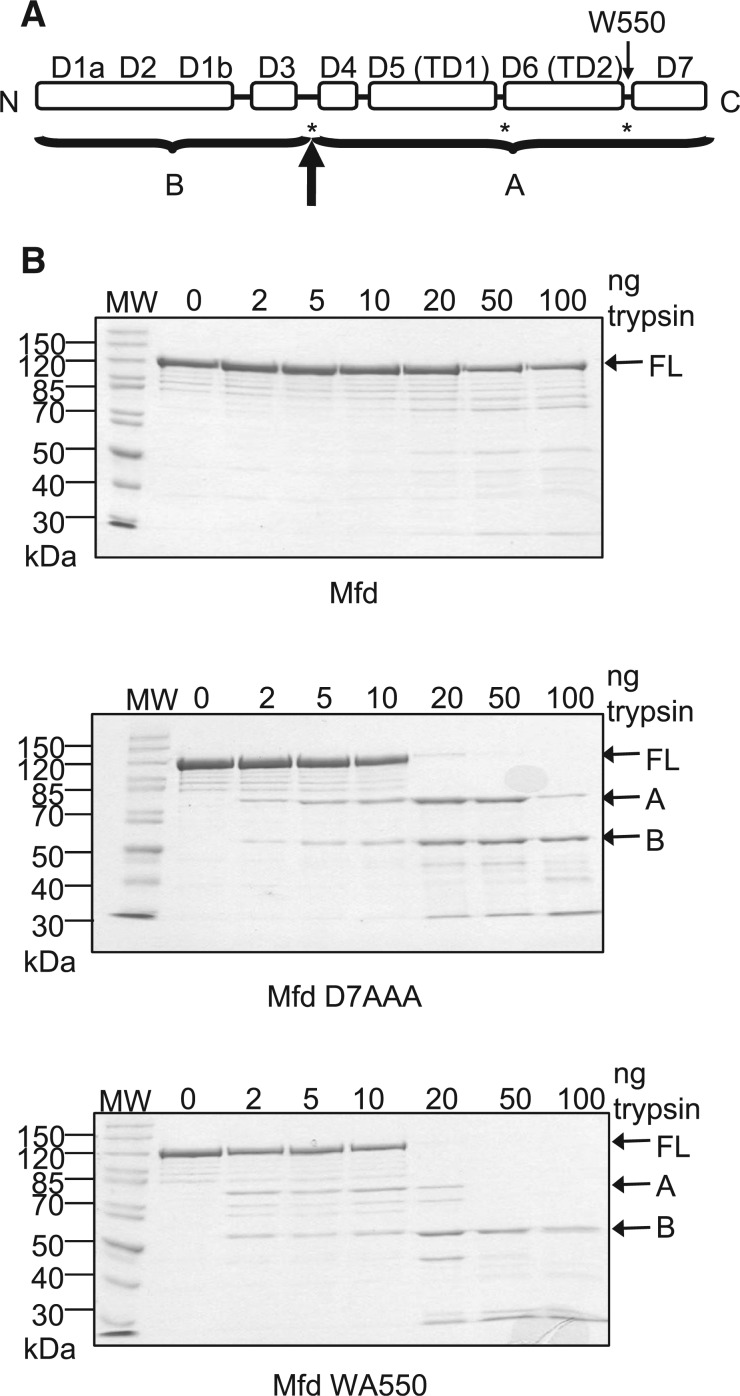
ATP-dependent nucleic acid helicases and translocases play essential roles in many aspects of DNA and RNA biology. In order to ensure that these proteins act only in specific contexts, their activity is often regulated by intramolecular contacts and interaction with partner proteins. We have studied the bacterial Mfd protein, which is an ATP-dependent DNA translocase that relocates or displaces transcription ECs in a variety of cellular contexts. When bound to RNAP, Mfd exhibits robust ATPase and DNA translocase activities, but when released from its substrate these activities are repressed by autoinhibitory interdomain contacts. In this work, we have identified an interface within the Mfd protein that is important for regulating the activity of the protein, and whose disruption permits Mfd to act indiscriminately at transcription complexes that lack the usual determinants of Mfd specificity. Our results indicate that regulation of Mfd occurs through multiple nodes, and that activation of Mfd may be a multi-stage process.
ATP 依赖的核酸解旋酶和转位酶在 DNA 和 RNA 生物学的许多方面发挥着重要作用。为了确保这些蛋白质仅在特定环境中发挥作用,它们的活性通常受到分子内接触和与伴侣蛋白相互作用的调节。我们研究了细菌 Mfd 蛋白,它是一种 ATP 依赖的 DNA 转位酶,可在多种细胞环境中转录 ECs。当与 RNAP 结合时,Mfd 表现出强大的 ATPase 和 DNA 转位酶活性,但当从其底物中释放出来时,这些活性被自动抑制的域间接触所抑制。在这项工作中,我们确定了 Mfd 蛋白内一个对调节其活性很重要的界面,其破坏允许 Mfd 在缺乏 Mfd 特异性通常决定因素的转录复合物上不加区别地发挥作用。我们的结果表明,Mfd 的调节是通过多个节点进行的,而 Mfd 的激活可能是一个多阶段的过程。