Laboratory of Neuropsychology, The University of Hong Kong, Hong Kong, China.
PLoS One. 2012;7(8):e40054. doi: 10.1371/journal.pone.0040054. Epub 2012 Aug 15.
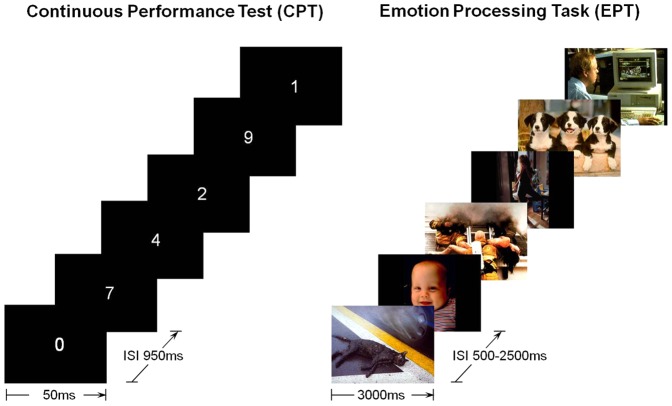
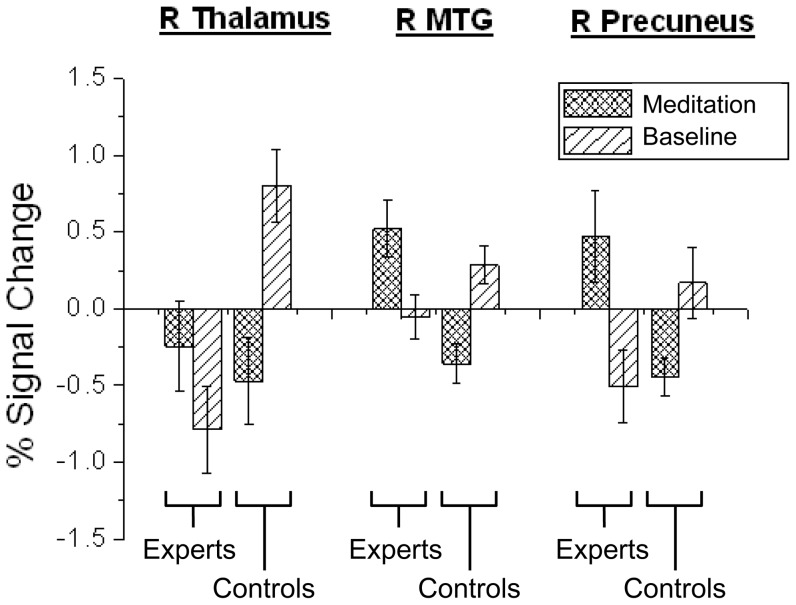
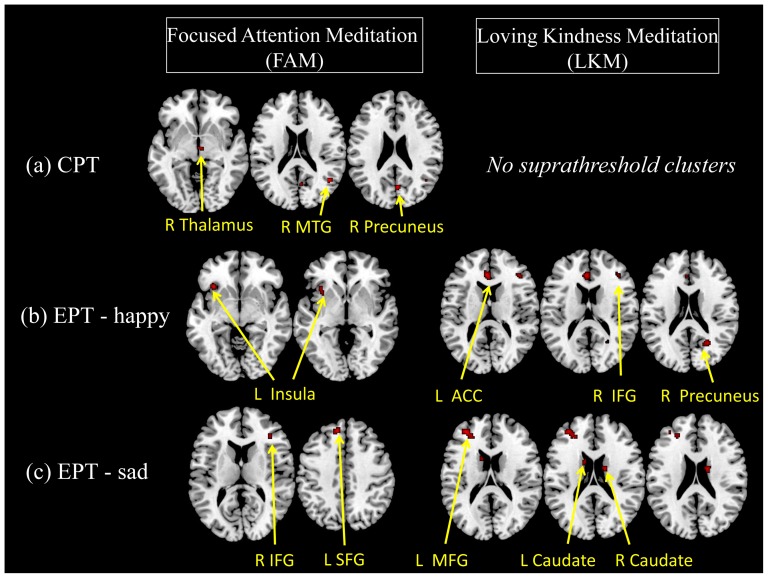
This study examined the dissociable neural effects of ānāpānasati (focused-attention meditation, FAM) and mettā (loving-kindness meditation, LKM) on BOLD signals during cognitive (continuous performance test, CPT) and affective (emotion-processing task, EPT, in which participants viewed affective pictures) processing. Twenty-two male Chinese expert meditators (11 FAM experts, 11 LKM experts) and 22 male Chinese novice meditators (11 FAM novices, 11 LKM novices) had their brain activity monitored by a 3T MRI scanner while performing the cognitive and affective tasks in both meditation and baseline states. We examined the interaction between state (meditation vs. baseline) and expertise (expert vs. novice) separately during LKM and FAM, using a conjunction approach to reveal common regions sensitive to the expert meditative state. Additionally, exclusive masking techniques revealed distinct interactions between state and group during LKM and FAM. Specifically, we demonstrated that the practice of FAM was associated with expertise-related behavioral improvements and neural activation differences in attention task performance. However, the effect of state LKM meditation did not carry over to attention task performance. On the other hand, both FAM and LKM practice appeared to affect the neural responses to affective pictures. For viewing sad faces, the regions activated for FAM practitioners were consistent with attention-related processing; whereas responses of LKM experts to sad pictures were more in line with differentiating emotional contagion from compassion/emotional regulation processes. Our findings provide the first report of distinct neural activity associated with forms of meditation during sustained attention and emotion processing.
本研究考察了 ānāpānasati(专注冥想,FAM)和 mettā(慈爱冥想,LKM)对认知(连续性能测试,CPT)和情感(情绪处理任务,EPT,参与者观看情感图片)处理过程中大脑 BOLD 信号的可分离神经效应。22 名男性中国专业冥想者(11 名 FAM 专家,11 名 LKM 专家)和 22 名男性中国新手冥想者(11 名 FAM 新手,11 名 LKM 新手)在执行认知和情感任务时通过 3T MRI 扫描仪监测大脑活动,在冥想和基线状态下进行。我们分别在 LKM 和 FAM 中检查了状态(冥想与基线)和专业知识(专家与新手)之间的相互作用,使用联合方法揭示对专家冥想状态敏感的共同区域。此外,独特的掩蔽技术在 LKM 和 FAM 期间揭示了状态和组之间的独特相互作用。具体来说,我们证明了 FAM 的实践与注意力任务表现的专业相关行为改善和神经激活差异有关。然而,LKM 冥想的状态效应并没有延续到注意力任务表现。另一方面,FAM 和 LKM 的实践似乎都影响了对情感图片的神经反应。对于观看悲伤的面孔,FAM 从业者激活的区域与注意力相关的处理一致;而 LKM 专家对悲伤图片的反应更符合将情绪传染与同情/情绪调节过程区分开来。我们的研究结果首次报告了在持续注意力和情绪处理过程中与冥想形式相关的不同神经活动。