Center for Global Health and Diseases, Case Western Reserve University, Cleveland, OH, USA.
Malar J. 2012 Aug 21;11:287. doi: 10.1186/1475-2875-11-287.
The 19 kDa C-terminal region of Plasmodium falciparum Merozoite Surface Protein-1 is a known target of naturally acquired humoral immunity and a malaria vaccine candidate. MSP-119 has four predominant haplotypes resulting in amino acid changes labelled EKNG, QKNG, QTSR and ETSR. IgG antibodies directed against all four variants have been detected, but it is not known if these variant specific antibodies are associated with haplotype-specific protection from infection.
Blood samples from 201 healthy Kenyan adults and children who participated in a 12-week treatment time-to-infection study were evaluated. Venous blood drawn at baseline (week 0) was examined for functional and serologic antibodies to MSP-119 and MSP-142 variants. MSP-119 haplotypes were detected by a multiplex PCR assay at baseline and weekly throughout the study. Generalized linear models controlling for age, baseline MSP-119 haplotype and parasite density were used to determine the relationship between infecting P. falciparum MSP-119 haplotype and variant-specific antibodies.
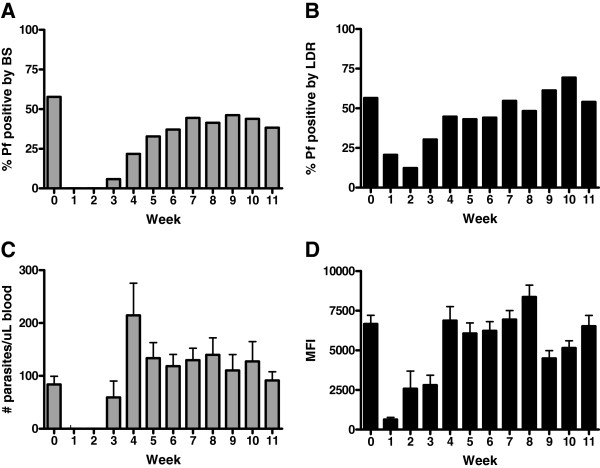
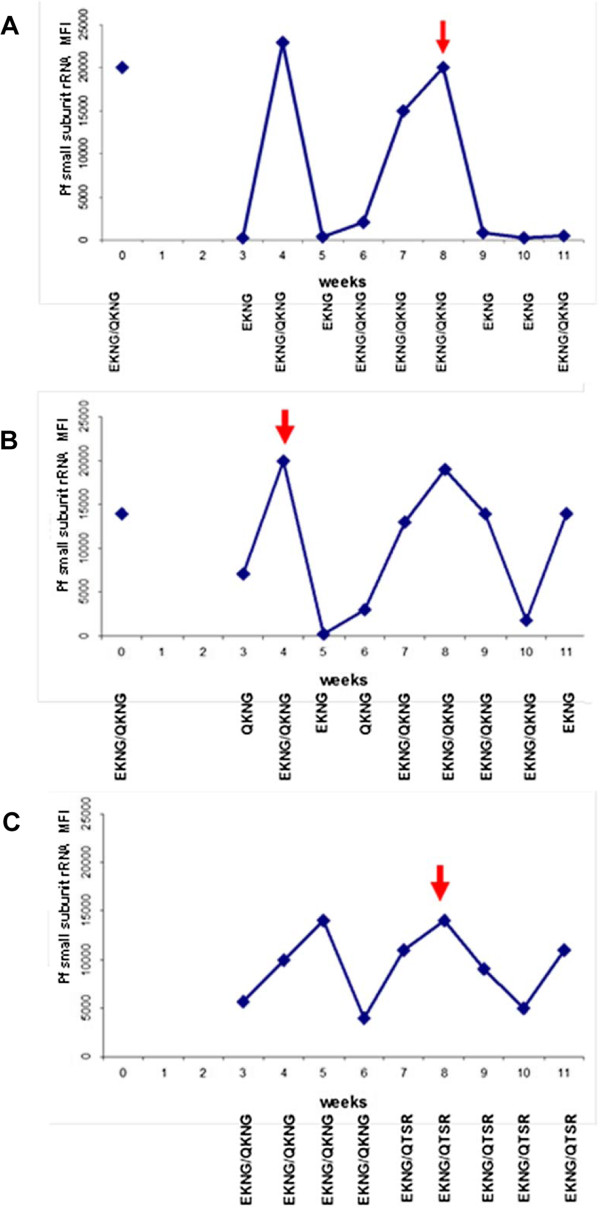
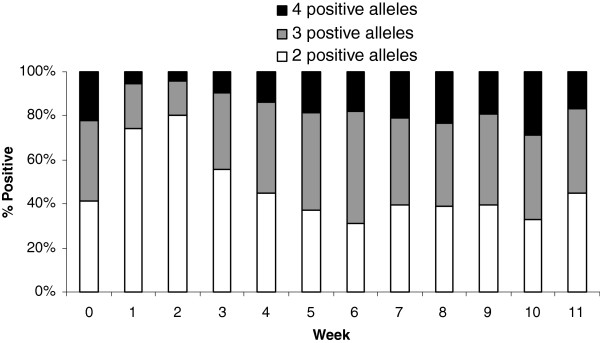
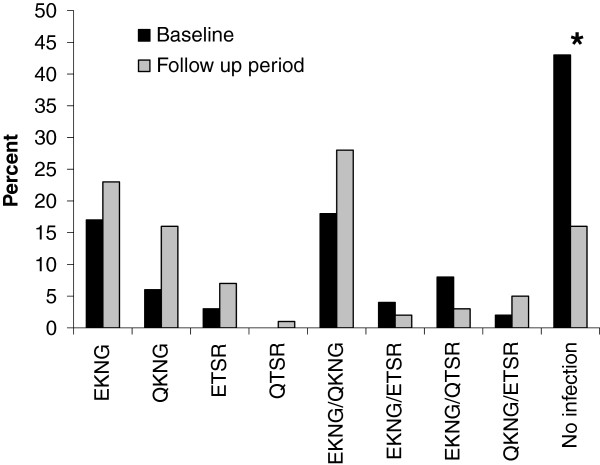
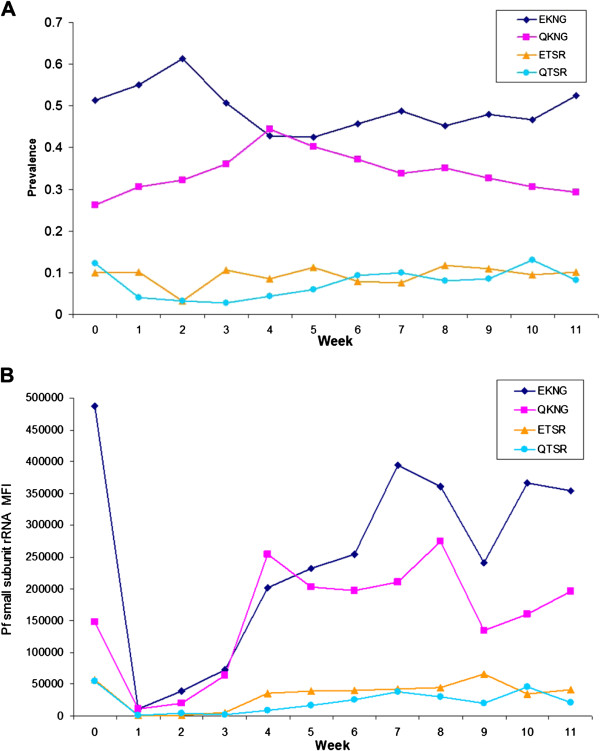
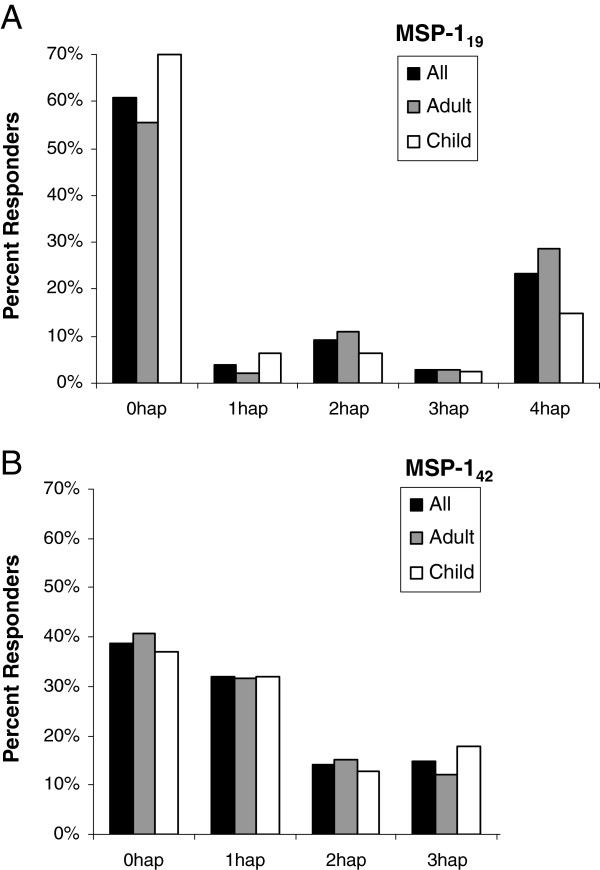
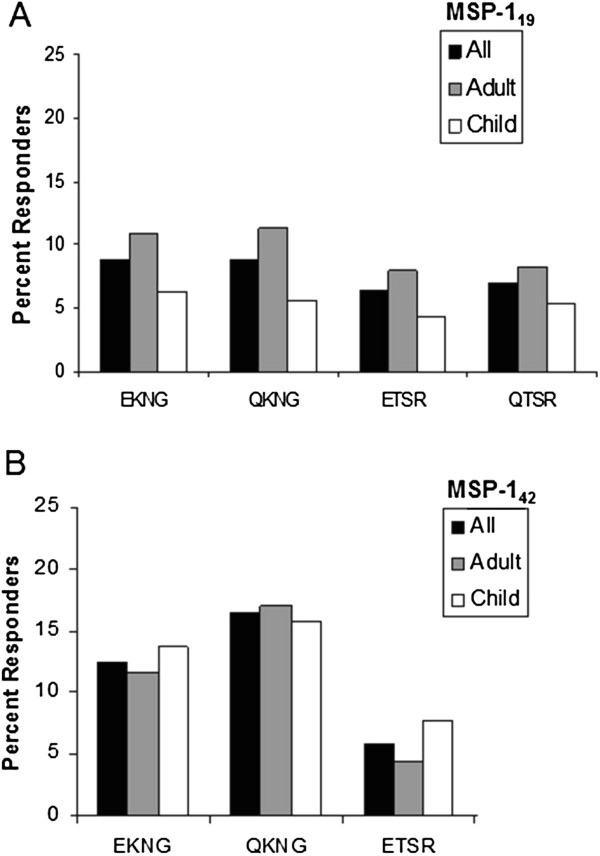
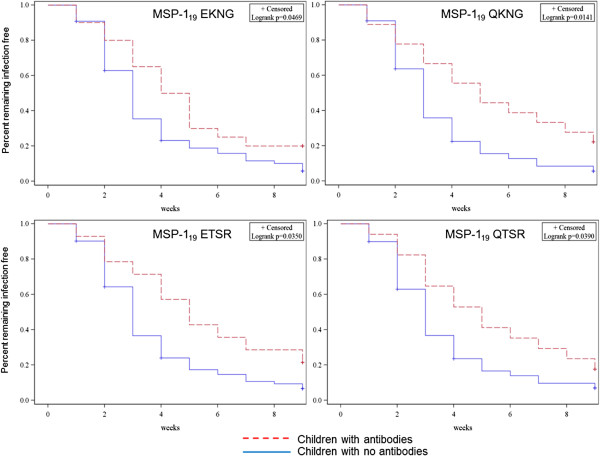
A total of 964 infections resulting in 1,533 MSP-119 haplotypes detected were examined. The most common haplotypes were EKNG and QKNG, followed by ETSR and QTSR. Children had higher parasite densities, greater complexity of infection (>1 haplotype), and more frequent changes in haplotypes over time compared to adults. Infecting MSP-119 haplotype at baseline (week 0) had no influence on haplotypes detected over the subsequent 11 weeks among children or adults. Children but not adults with MSP-119 and some MSP-142 variant antibodies detected by serology at baseline had delayed time-to-infection. There was no significant association of variant-specific serology or functional antibodies at baseline with infecting haplotype at baseline or during 11 weeks of follow up among children or adults.
Variant transcending IgG antibodies to MSP-119 are associated with protection from infection in children, but not adults. These data suggest that inclusion of more than one MSP-119 variant may not be required in a malaria blood stage vaccine.
恶性疟原虫裂殖子表面蛋白-1 的 19kDa C 末端区域是天然获得性体液免疫的已知靶标,也是疟疾疫苗的候选物。MSP-119 有四个主要的单倍型,导致氨基酸变化标记为 EKNG、QKNG、QTSR 和 ETSR。已检测到针对所有四个变体的 IgG 抗体,但尚不清楚这些变体特异性抗体是否与感染的单倍型特异性保护有关。
对 201 名参加为期 12 周治疗时间到感染研究的肯尼亚健康成年人和儿童的血液样本进行评估。在基线(第 0 周)抽取静脉血,检测 MSP-119 和 MSP-142 变体的功能和血清抗体。在基线和整个研究期间每周通过多重 PCR 检测 MSP-119 单倍型。使用广义线性模型控制年龄、基线 MSP-119 单倍型和寄生虫密度,以确定感染恶性疟原虫 MSP-119 单倍型与变体特异性抗体之间的关系。
共检测到 964 次感染,导致检测到 1533 种 MSP-119 单倍型。最常见的单倍型是 EKNG 和 QKNG,其次是 ETSR 和 QTSR。与成年人相比,儿童的寄生虫密度更高、感染复杂性更大(>1 个单倍型)、单倍型随时间变化更频繁。儿童基线(第 0 周)的感染 MSP-119 单倍型对随后 11 周内检测到的单倍型没有影响。儿童而非成年人在基线时具有 MSP-119 和一些 MSP-142 变体抗体的血清学检测结果表明,感染时间延迟。在儿童或成年人中,基线时变体特异性血清学或功能抗体与基线或 11 周随访期间的感染单倍型均无显著相关性。
对 MSP-119 的变体超越 IgG 抗体与儿童感染的保护有关,但与成年人无关。这些数据表明,在疟疾血阶段疫苗中可能不需要包含多个 MSP-119 变体。