Institute for the Environment, Brunel University, Uxbridge, Middlesex, United Kingdom.
PLoS One. 2012;7(8):e43606. doi: 10.1371/journal.pone.0043606. Epub 2012 Aug 17.
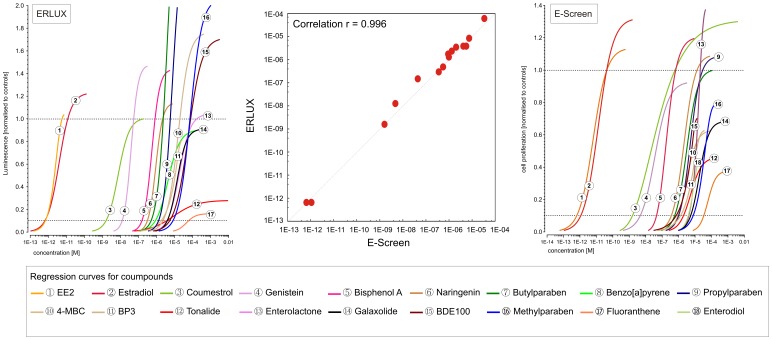
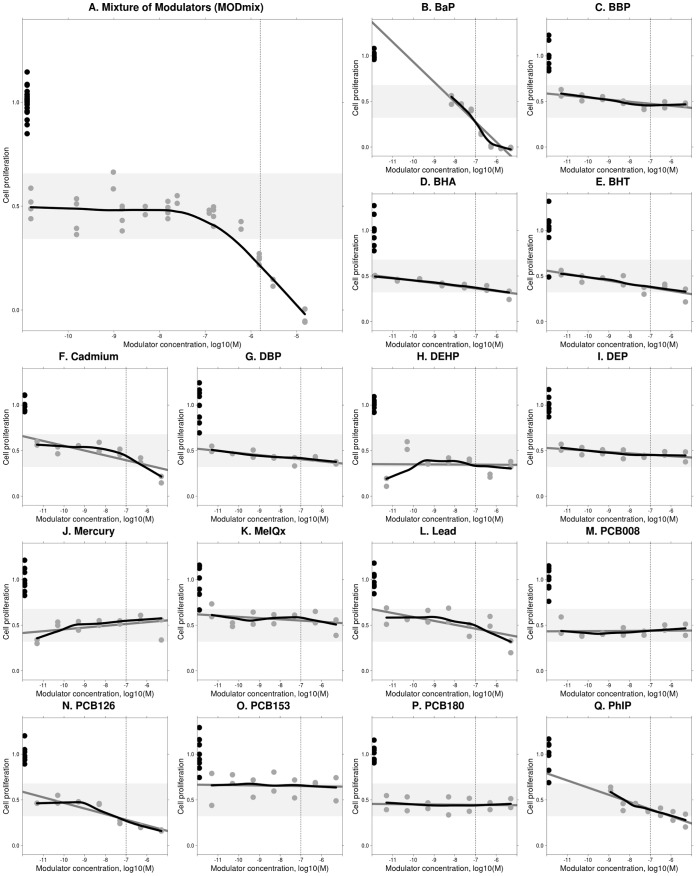
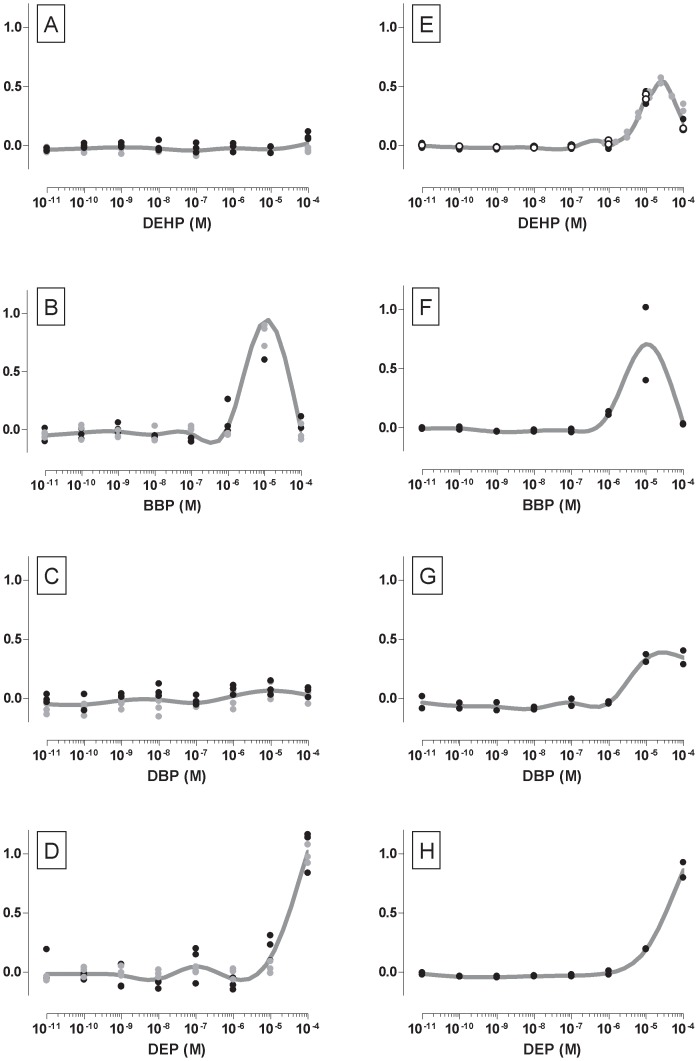
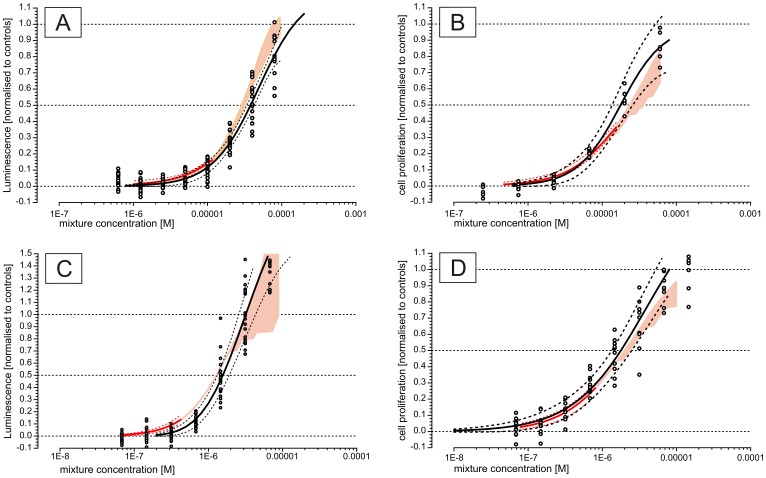
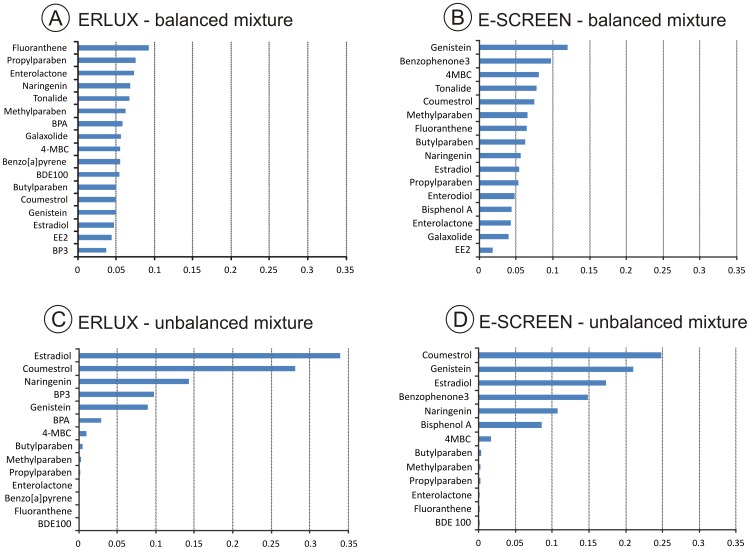
A growing body of experimental evidence indicates that the in vitro effects of mixtures of estrogenic chemicals can be well predicted from the estrogenicity of their components by the concentration addition (CA) concept. However, some studies have observed small deviations from CA. Factors affecting the presence or observation of deviations could include: the type of chemical tested; number of mixture components; mixture design; and assay choice. We designed mixture experiments that address these factors, using mixtures with high numbers of components, chemicals from diverse chemical groups, assays with different in vitro endpoints and different mixture designs and ratios. Firstly, the effects of mixtures composed of up to 17 estrogenic chemicals were examined using estrogenicity assays with reporter-gene (ERLUX) and cell proliferation (ESCREEN) endpoints. Two mixture designs were used: 1) a 'balanced' design with components present in proportion to a common effect concentration (e.g. an EC(10)) and 2) a 'non-balanced' design with components in proportion to potential human tissue concentrations. Secondly, the individual and simultaneous ability of 16 potential modulator chemicals (each with minimal estrogenicity) to influence the assay outcome produced by a reference mixture of estrogenic chemicals was examined. Test chemicals included plasticizers, phthalates, metals, PCBs, phytoestrogens, PAHs, heterocyclic amines, antioxidants, UV filters, musks, PBDEs and parabens. In all the scenarios tested, the CA concept provided a good prediction of mixture effects. Modulation studies revealed that chemicals possessing minimal estrogenicity themselves could reduce (negatively modulate) the effect of a mixture of estrogenic chemicals. Whether the type of modulation we observed occurs in practice most likely depends on the chemical concentrations involved, and better information is required on likely human tissue concentrations of estrogens and of potential modulators. Successful prediction of the effects of diverse chemical combinations might be more likely if chemical profiling included consideration of effect modulation.
越来越多的实验证据表明,通过浓度加和(CA)概念,可以很好地预测混合雌激素化学物质的体外效应,因为这些化学物质的成分具有雌激素性。然而,一些研究观察到了与 CA 的小偏差。影响偏差存在或观察的因素可能包括:测试的化学物质类型;混合物成分的数量;混合物设计;和测定选择。我们设计了混合实验,以解决这些因素,使用具有大量成分的混合物,来自不同化学基团的化学物质,具有不同体外终点和不同混合物设计和比例的测定方法。首先,使用具有报告基因(ERLUX)和细胞增殖(ESCREEN)终点的雌激素测定法,研究了由多达 17 种雌激素化学物质组成的混合物的影响。使用了两种混合物设计:1)一种“平衡”设计,其中各成分以共同效应浓度(例如 EC(10))的比例存在;2)一种“非平衡”设计,其中各成分以潜在人体组织浓度的比例存在。其次,检查了 16 种潜在调节剂化学物质(每种化学物质的雌激素性都很小)单独和同时影响雌激素化学物质参考混合物产生的测定结果的能力。测试化学物质包括增塑剂、邻苯二甲酸盐、金属、多氯联苯、植物雌激素、多环芳烃、杂环胺、抗氧化剂、紫外线滤光剂、麝香、PBDE 和对羟基苯甲酸酯。在所有测试的情况下,CA 概念都很好地预测了混合物的效应。调制研究表明,本身具有最小雌激素性的化学物质本身可以降低(负向调节)雌激素化学物质混合物的作用。我们观察到的调制类型是否在实践中发生,很可能取决于所涉及的化学物质浓度,并且需要更好地了解雌激素和潜在调节剂的可能人体组织浓度。如果化学特征分析包括对效应调节的考虑,则更有可能成功预测不同化学组合的效应。