Key Laboratory of Horticultural Plant Biology, Ministry of Education, Huazhong Agricultural University Wuhan 430070 China.
J Exp Bot. 2012 Sep;63(15):5593-606. doi: 10.1093/jxb/ers220. Epub 2012 Aug 21.
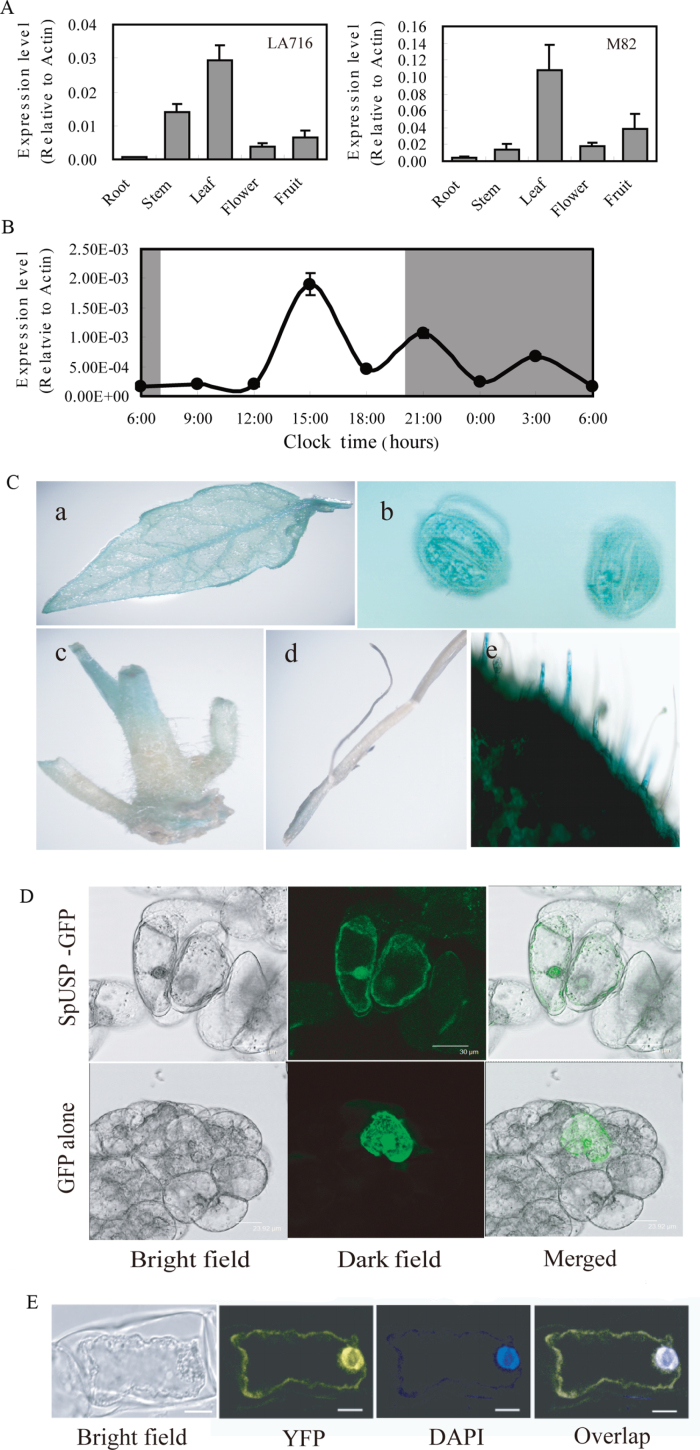
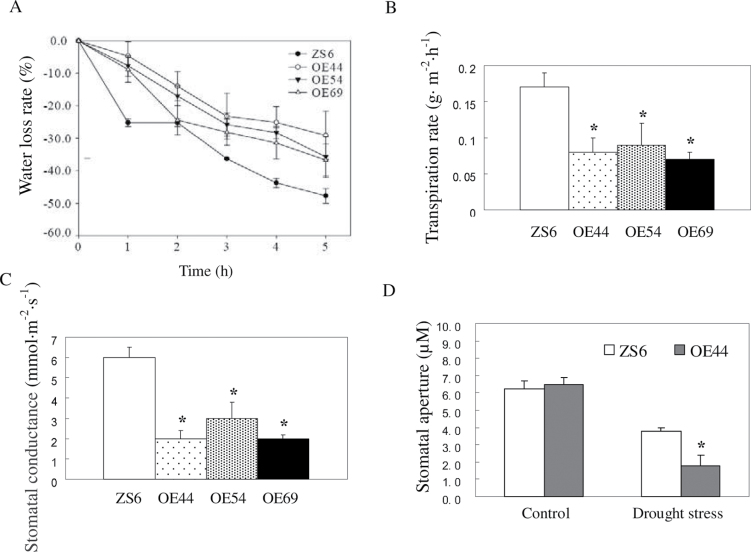
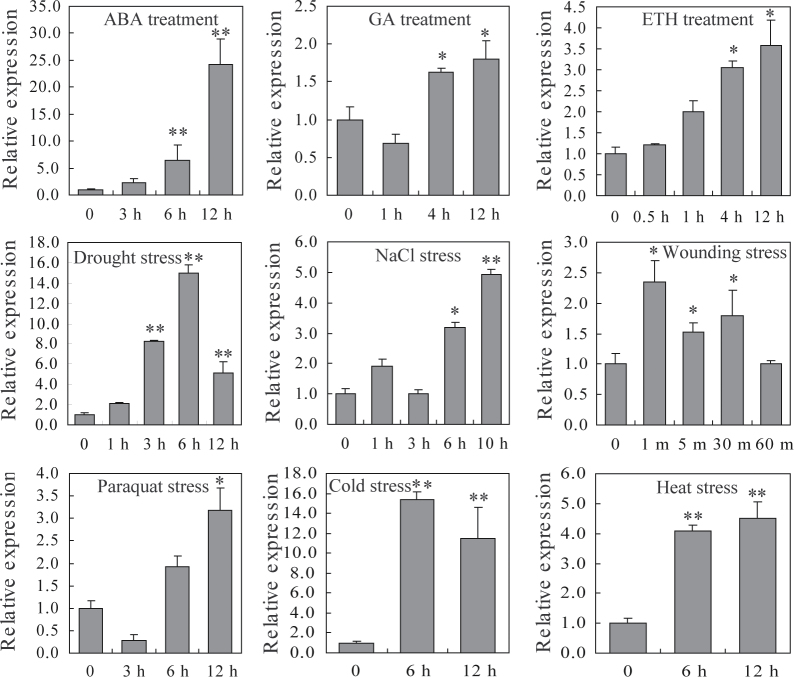
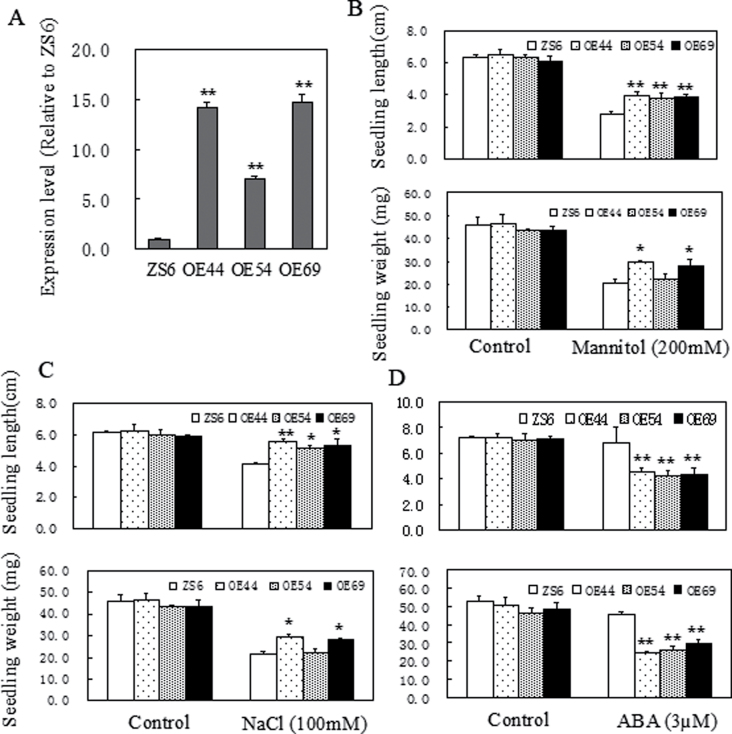
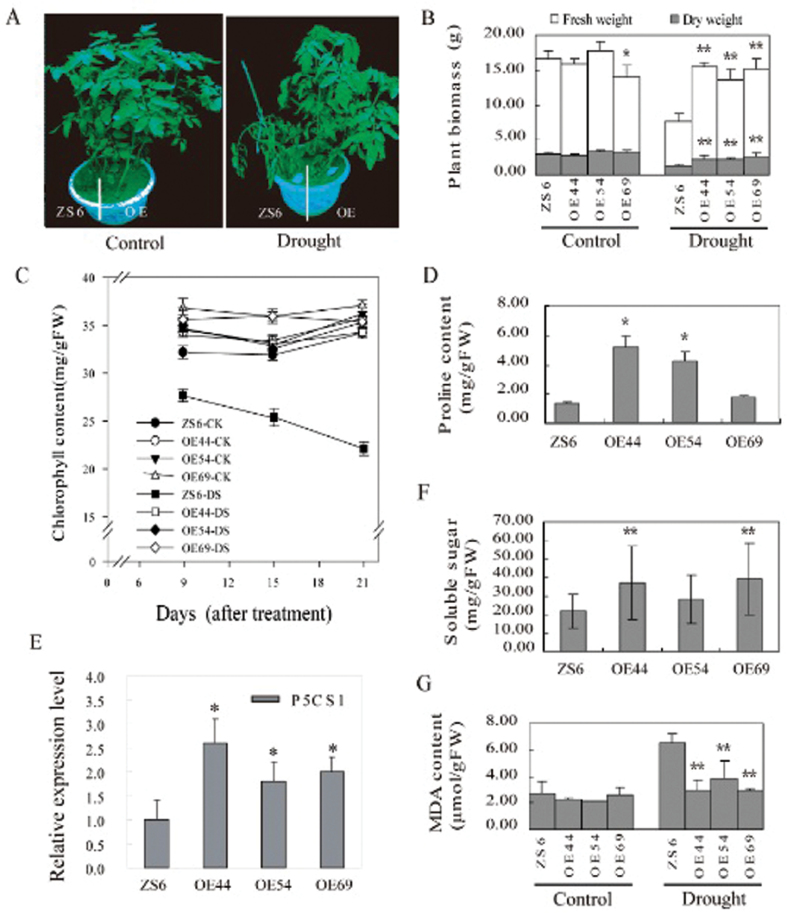
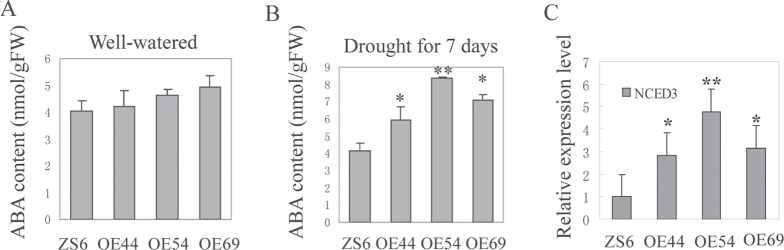
Universal stress protein (USP) appears to play an active role in the abiotic stress response, but their functions remain largely unknown in plants. A USP gene (SpUSP) was cloned from wild tomato (Solanum pennellii) and functionally characterized in cultivated tomato in the present study. The SpUSP transcript is abundantly accumulated in leaf stomata and its expression varied with the circadian rhythm. SpUSP was remarkably induced by dehydration, salt stress, oxidative stress, and the phytohormone abscisic acid (ABA) etc. This protein was predominantly localized in the nucleus and cell membrane. Overexpressing SpUSP increased drought tolerance of tomato in the seedling and adult stages. Under drought stress, the ABA content significantly increased in the SpUSP-overexpressing plants, which induced stomatal closure and reduced water loss, leading to the enhancement of drought tolerance. Based on the microarray data, a large number of chlorophyll a/b-binding proteins and photosystem-related genes were up-regulated in the SpUSP-overexpressing plants under drought conditions, which possibly enhanced the stomatal sensivitity to ABA and maintained the photosynthetic function. SpUSP overexpression also alleviated the oxidative damage accompanied by oxidative stress-responsive gene activation and osmolyte accumulation. Annexin (SGN-U314161) was found to interacte with SpUSP in the yeast two-hybrid method. This interaction was further confirmed by the bimolecular fluorescence complementation assay. The present study demonstrated that the annexin-interacting SpUSP plays important roles in the drought tolerance of tomato by influencing ABA-induced stomatal movement, increasing photosynthesis, and alleviating oxidative stress.
普遍应激蛋白(USP)似乎在非生物胁迫反应中发挥积极作用,但它们在植物中的功能仍知之甚少。本研究从野生番茄(Solanum pennellii)中克隆了一个 USP 基因(SpUSP),并在栽培番茄中对其功能进行了表征。SpUSP 转录本在叶片气孔中大量积累,其表达随昼夜节律而变化。SpUSP 显著受脱水、盐胁迫、氧化胁迫和植物激素脱落酸(ABA)等诱导。这种蛋白质主要定位于细胞核和细胞膜。过表达 SpUSP 增加了番茄幼苗和成株期的耐旱性。在干旱胁迫下,SpUSP 过表达植株中的 ABA 含量显著增加,诱导气孔关闭并减少水分流失,从而提高耐旱性。基于微阵列数据,在干旱条件下,SpUSP 过表达植株中大量叶绿素 a/b 结合蛋白和光系统相关基因上调,这可能增强了气孔对 ABA 的敏感性并维持了光合作用功能。SpUSP 过表达还通过激活氧化应激响应基因和积累渗透物来减轻氧化损伤。通过酵母双杂交法发现 annexin(SGN-U314161)与 SpUSP 相互作用。该相互作用通过双分子荧光互补测定进一步得到证实。本研究表明,与 annexin 相互作用的 SpUSP 通过影响 ABA 诱导的气孔运动、增加光合作用和减轻氧化应激来在番茄耐旱性中发挥重要作用。