Institute for Bioscience and Biotechnology Research, University of Maryland, College Park, MD, USA.
Int J Nanomedicine. 2012;7:4223-37. doi: 10.2147/IJN.S34105. Epub 2012 Aug 1.
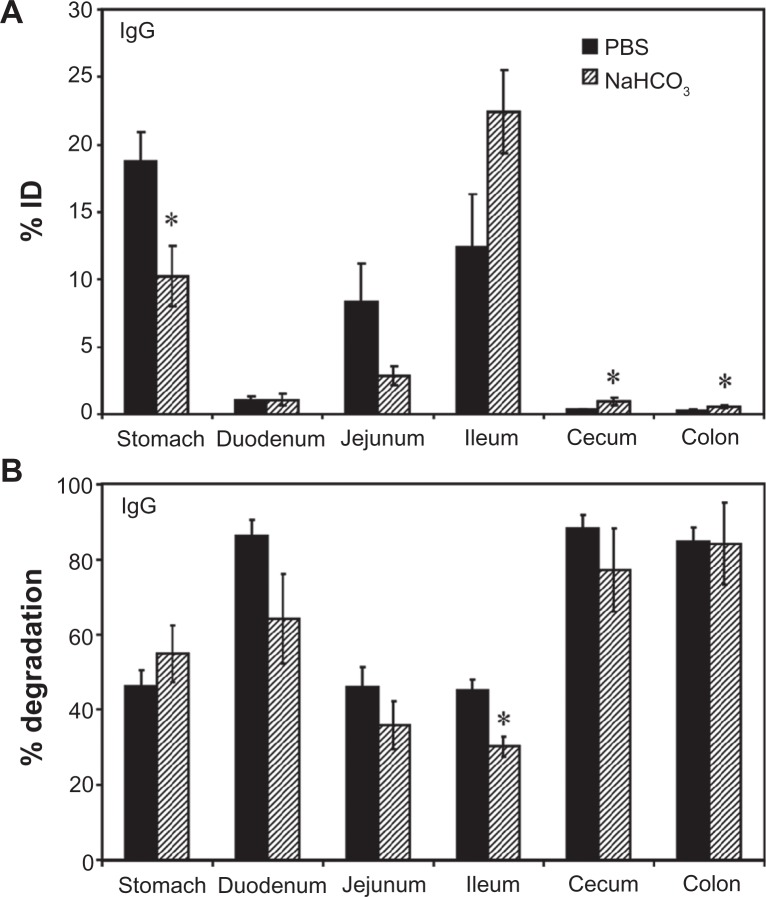
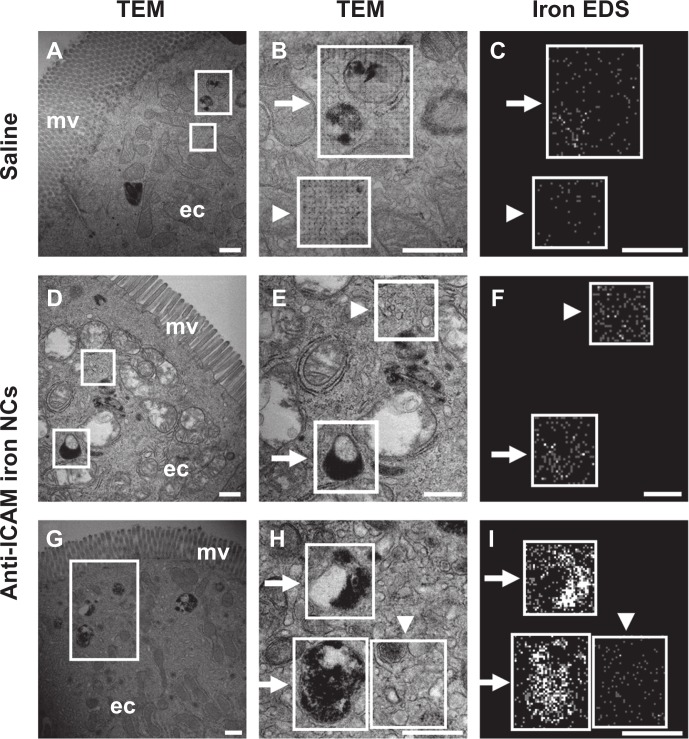
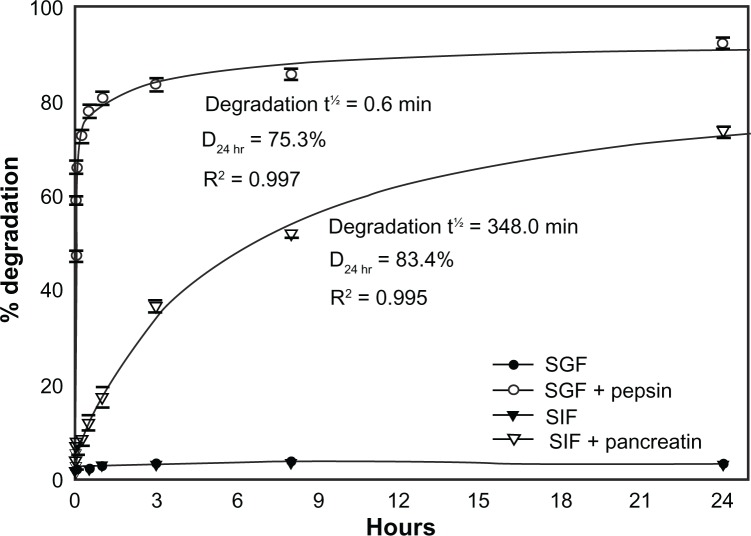
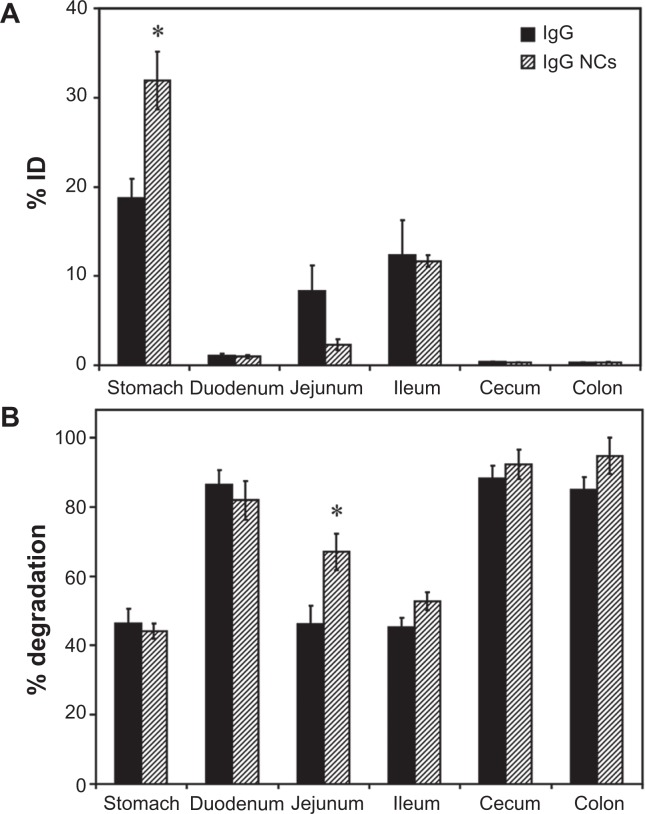
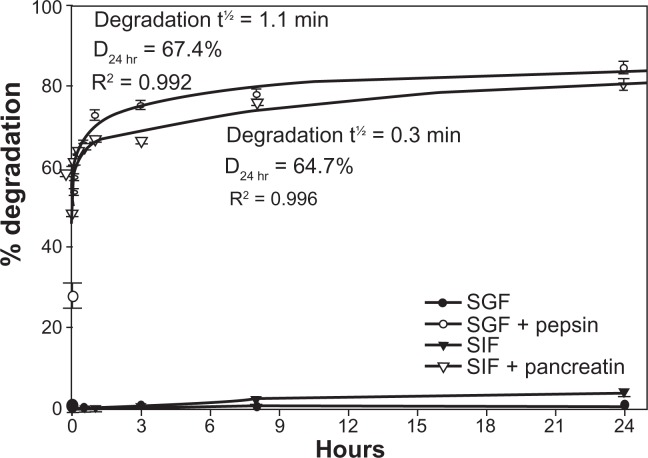
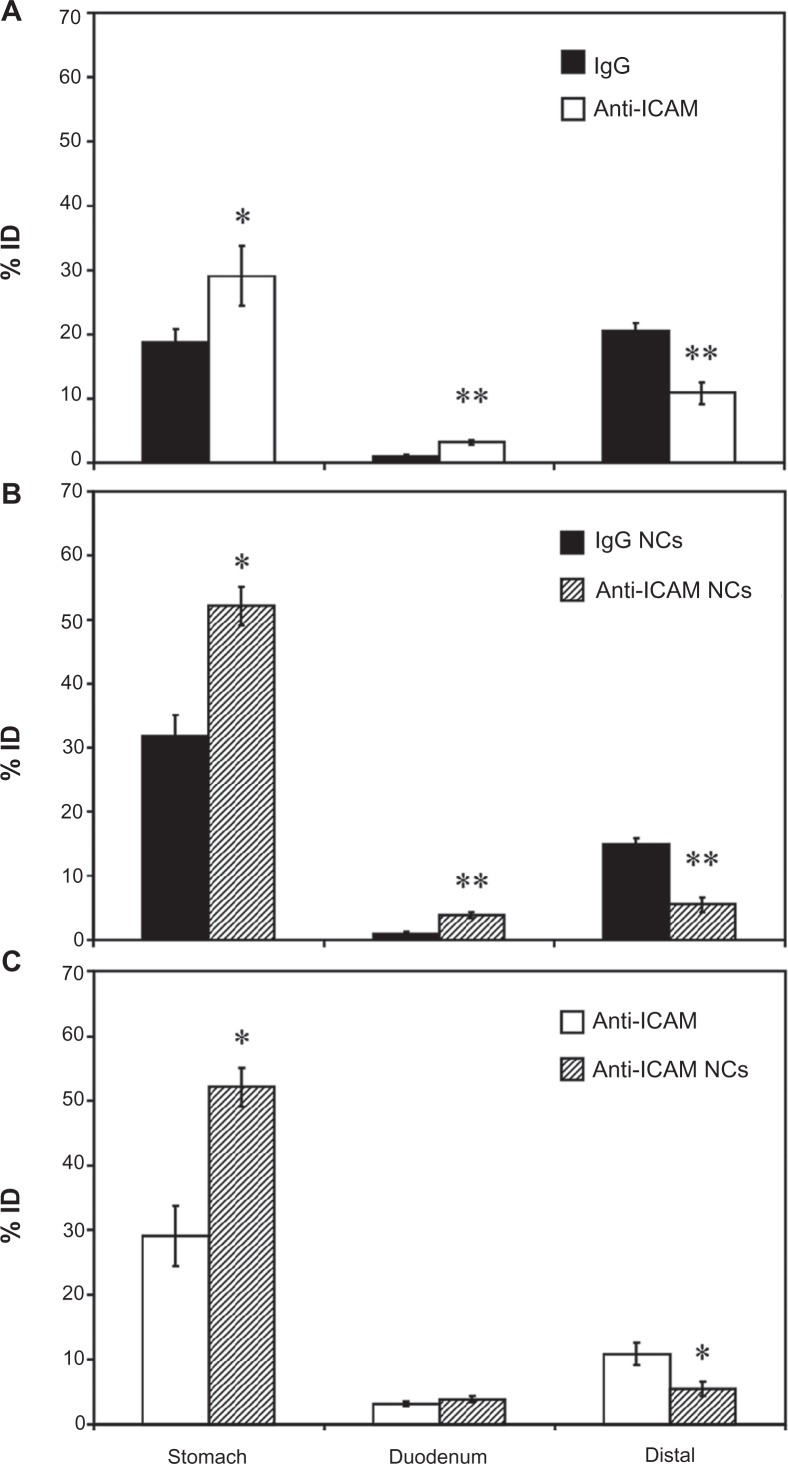
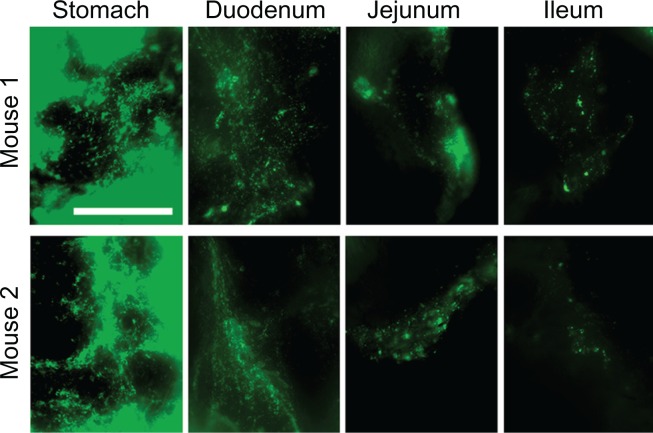
Drug delivery to the gastrointestinal (GI) tract is key for improving treatment of GI maladies, developing oral vaccines, and facilitating drug transport into circulation. However, delivery of formulations to the GI tract is hindered by pH changes, degradative enzymes, mucus, and peristalsis, leading to poor GI retention. Targeting may prolong residence of therapeutics in the GI tract and enhance their interaction with this tissue, improving such aspects. We evaluated nanocarrier (NC) and ligand-mediated targeting in the GI tract following gastric gavage in mice. We compared GI biodistribution, degradation, and endocytosis between control antibodies and antibodies targeting the cell surface determinant intercellular adhesion molecule 1 (ICAM-1), expressed on GI epithelium and other cell types. These antibodies were administered either as free entities or coated onto polymer NCs. Fluorescence and radioisotope tracing showed proximal accumulation, with preferential retention in the stomach, jejunum, and ileum; and minimal presence in the duodenum, cecum, and colon by 1 hour after administration. Upstream (gastric) retention was enhanced in NC formulations, with decreased downstream (jejunal) accumulation. Of the total dose delivered to the GI tract, ∼60% was susceptible to enzymatic (but not pH-mediated) degradation, verified both in vitro and in vivo. Attenuation of peristalsis by sedation increased upstream retention (stomach, duodenum, and jejunum). Conversely, alkaline NaHCO(3), which enhances GI transit by decreasing mucosal viscosity, favored downstream (ileal) passage. This suggests passive transit through the GI tract, governed by mucoadhesion and peristalsis. In contrast, both free anti-ICAM and anti-ICAM NCs demonstrated significantly enhanced upstream (stomach and duodenum) retention when compared to control IgG counterparts, suggesting GI targeting. This was validated by transmission electron microscopy and energy dispersive X-ray spectroscopy, which revealed anti-ICAM NCs in vesicular compartments within duodenal epithelial cells. These results will guide future work aimed at improving intraoral delivery of targeted therapeutics for the treatment of GI pathologies.
药物递送至胃肠道(GI)对于改善 GI 疾病的治疗、开发口服疫苗以及促进药物进入循环系统的运输至关重要。然而,由于 pH 值变化、降解酶、黏液和蠕动,制剂递送至胃肠道会受到阻碍,导致 GI 保留率差。靶向作用可以延长治疗剂在胃肠道中的停留时间,并增强其与该组织的相互作用,从而改善这些方面。我们在小鼠胃内灌胃后评估了纳米载体(NC)和配体介导的 GI 靶向作用。我们比较了靶向细胞表面标志物细胞间黏附分子 1(ICAM-1)的抗体与对照抗体在 GI 中的生物分布、降解和内吞作用,ICAM-1 表达于 GI 上皮细胞和其他细胞类型上。这些抗体以游离形式或涂覆在聚合物 NC 上给药。荧光和放射性同位素示踪显示,给药后 1 小时,NC 制剂在近端积聚,优先保留在胃、空肠和回肠中,而在十二指肠、盲肠和结肠中的存在较少;在上游(胃)保留增强,而下游(空肠)积累减少。在 GI 中递送至 GI 中的总剂量的约 60%易受酶(但不受 pH 介导)降解,这在体外和体内均得到验证。通过镇静来减弱蠕动可增强上游保留(胃、十二指肠和空肠)。相反,碱性 NaHCO(3) 通过降低黏膜粘度来增加 GI 转运,有利于下游(回肠)通过。这表明 GI 是被动通过的,由黏膜黏附和蠕动控制。相比之下,与对照 IgG 相比,游离抗 ICAM 或抗 ICAM NC 均显示出明显增强的上游(胃和十二指肠)保留,表明 GI 靶向作用。这通过透射电子显微镜和能量色散 X 射线光谱学得到了验证,该方法显示抗 ICAM NC 位于十二指肠上皮细胞的囊泡腔室中。这些结果将指导旨在改善针对 GI 病理的靶向治疗剂经口递送的未来工作。