Department of Vaccinology and Applied Microbiology, Helmholtz Center for Infection Research, Braunschweig, Germany.
PLoS Pathog. 2012;8(8):e1002849. doi: 10.1371/journal.ppat.1002849. Epub 2012 Aug 16.
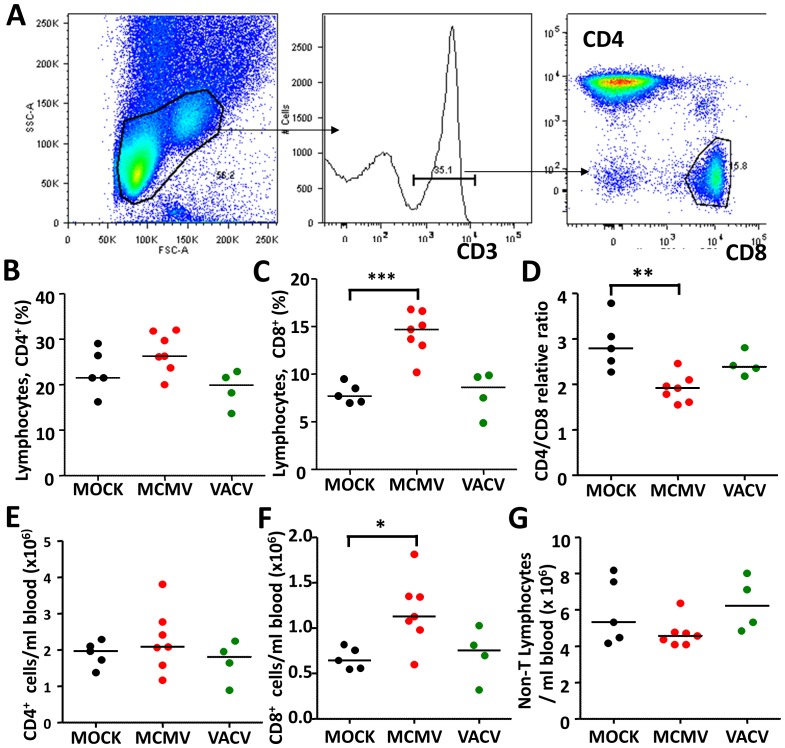
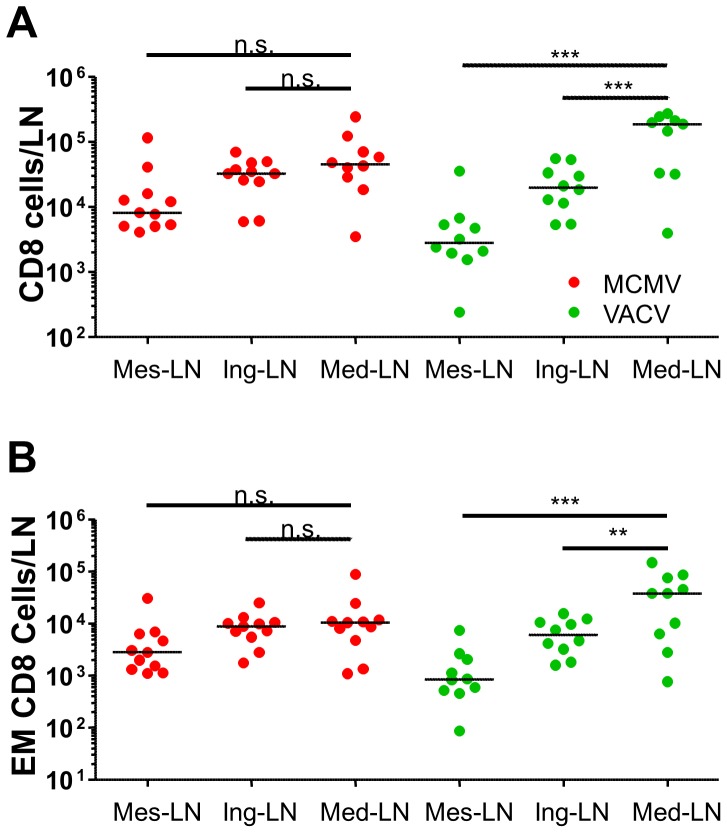
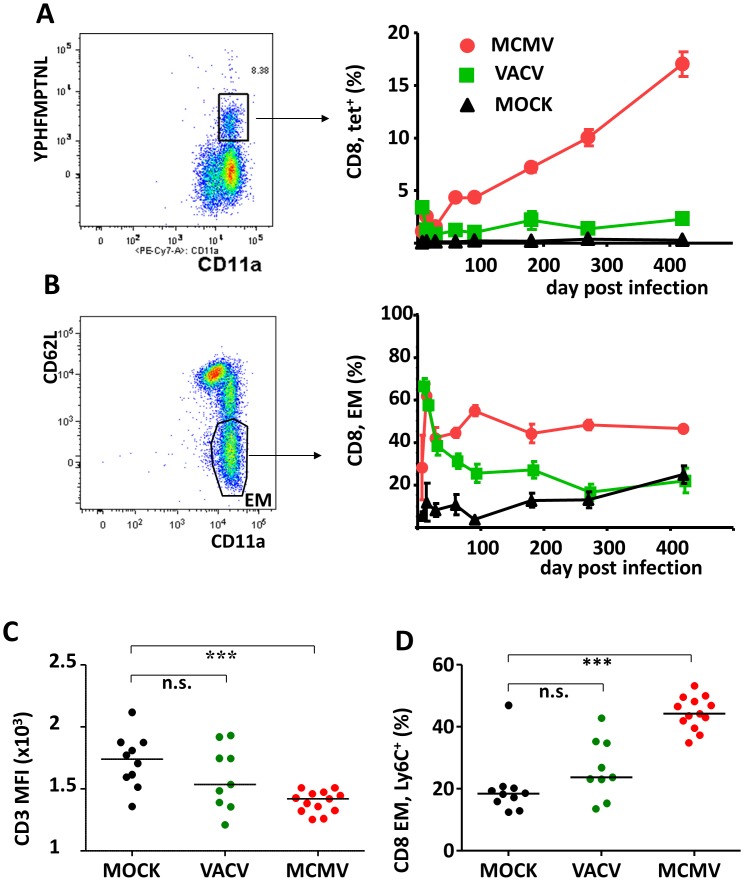
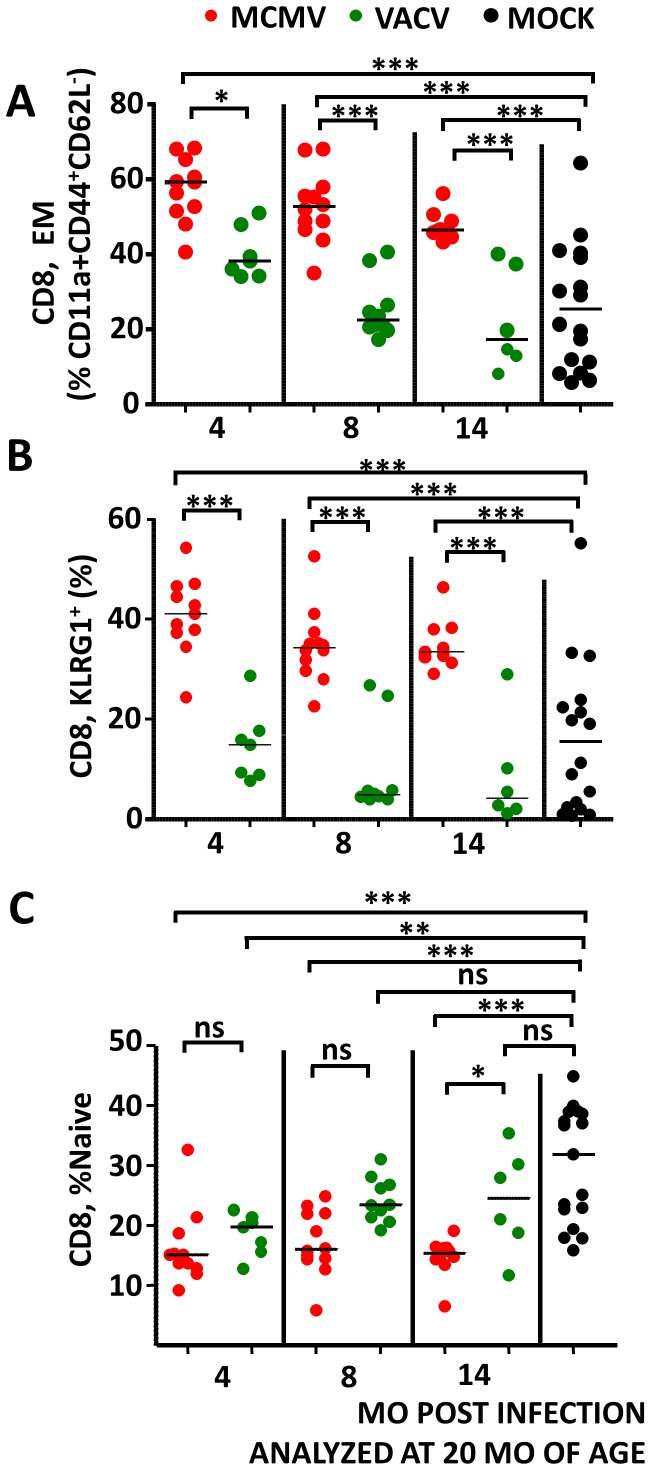
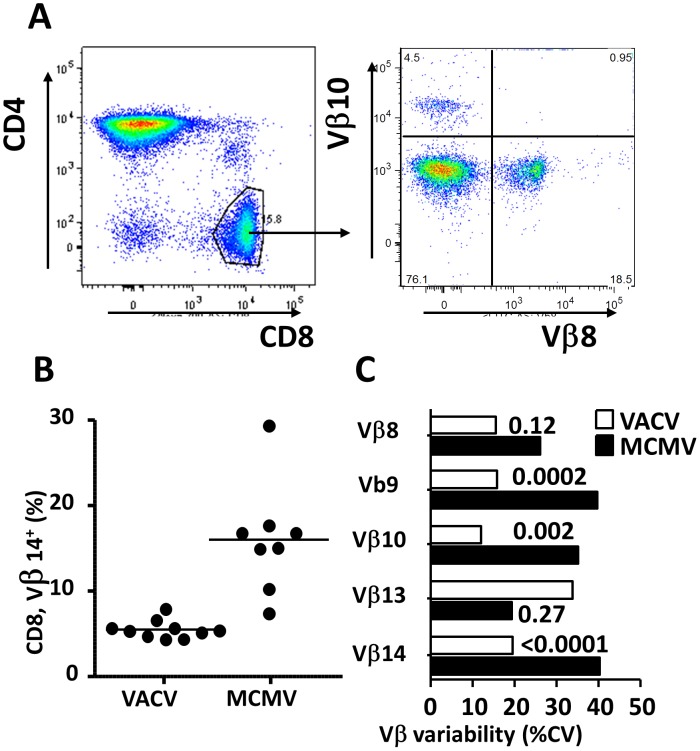
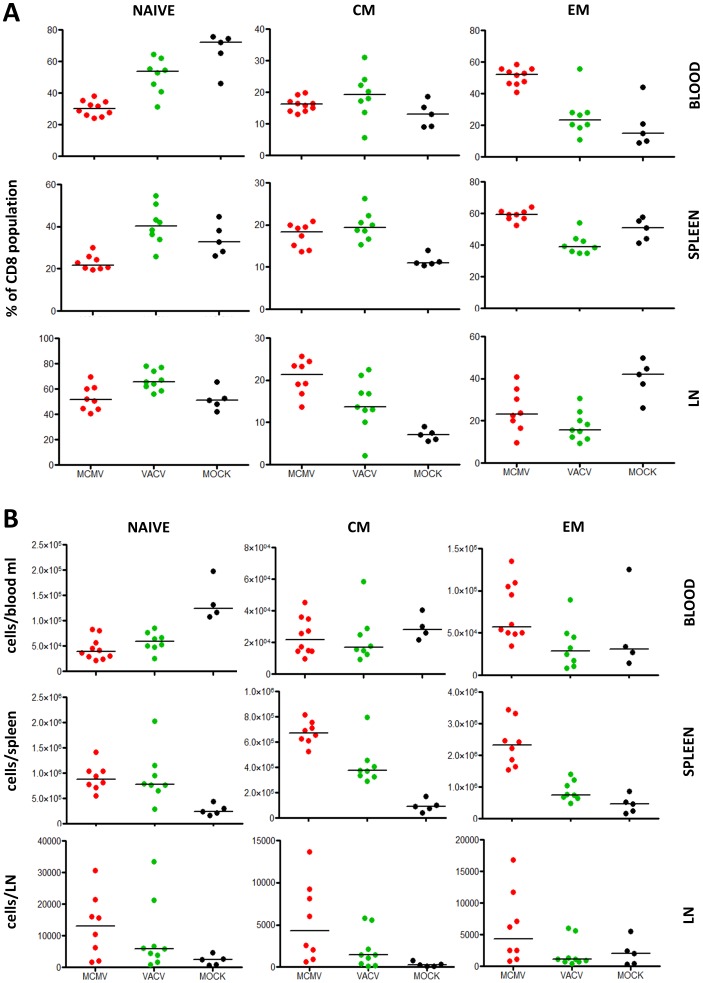
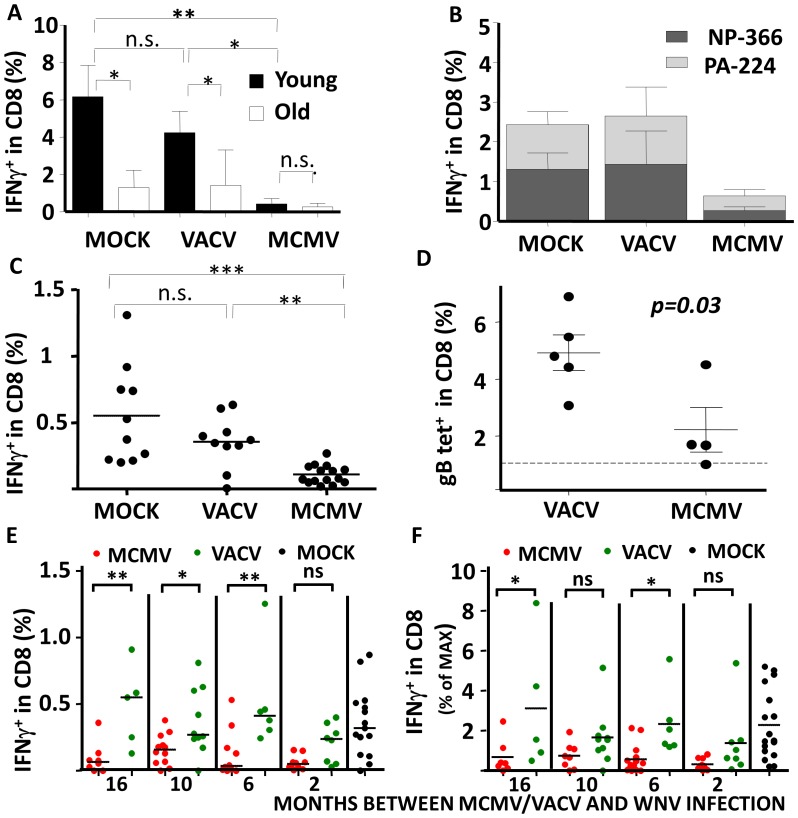
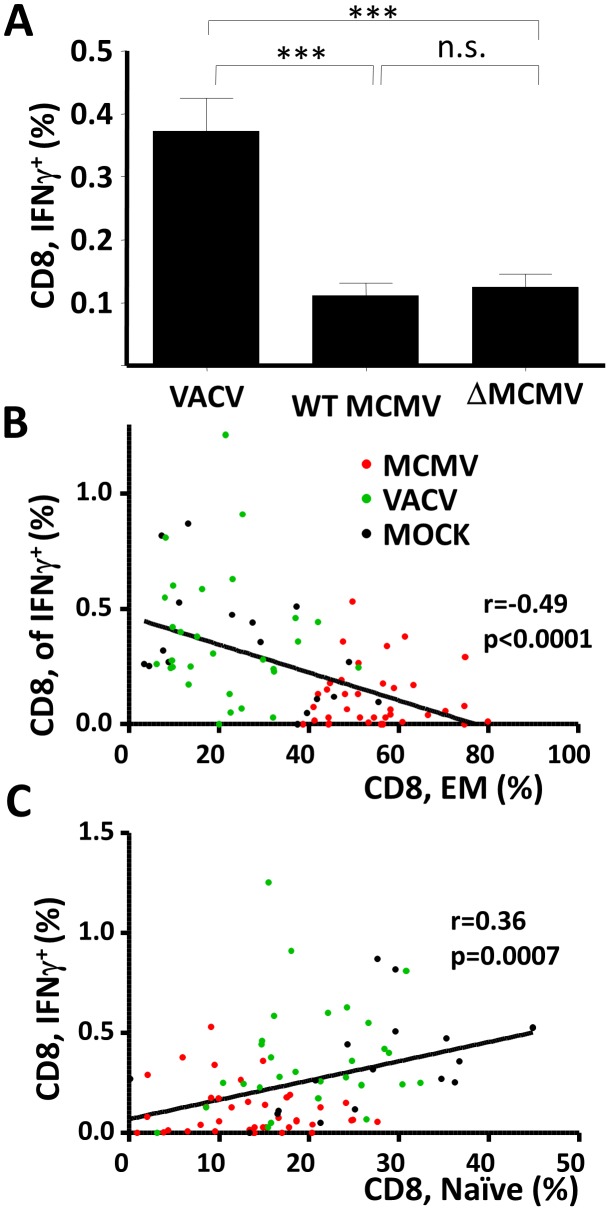
Prominent immune alterations associated with aging include the loss of naïve T-cell numbers, diversity and function. While genetic contributors and mechanistic details in the aging process have been addressed in multiple studies, the role of environmental agents in immune aging remains incompletely understood. From the standpoint of environmental infectious agents, latent cytomegalovirus (CMV) infection has been associated with an immune risk profile in the elderly humans, yet the cause-effect relationship of this association remains unclear. Here we present direct experimental evidence that mouse CMV (MCMV) infection results in select T-cell subset changes associated with immune aging, namely the increase of relative and absolute counts of CD8 T-cells in the blood, with a decreased representation of the naïve and the increased representation of the effector memory blood CD8 T-cells. Moreover, MCMV infection resulted in significantly weaker CD8 responses to superinfection with Influenza, Human Herpes Virus I or West-Nile-Virus, even 16 months following MCMV infection. These irreversible losses in T-cell function could not be observed in uninfected or in vaccinia virus-infected controls and were not due to the immune-evasive action of MCMV genes. Rather, the CD8 activation in draining lymph nodes upon viral challenge was decreased in MCMV infected mice and the immune response correlated directly to the frequency of the naïve and inversely to that of the effector cells in the blood CD8 pool. Therefore, latent MCMV infection resulted in pronounced changes of the T-cell compartment consistent with impaired naïve T-cell function.
与衰老相关的显著免疫改变包括幼稚 T 细胞数量、多样性和功能的丧失。虽然在多项研究中已经探讨了衰老过程中的遗传因素和机制细节,但环境因素在免疫衰老中的作用仍不完全清楚。从环境传染性病原体的角度来看,潜伏的巨细胞病毒 (CMV) 感染与老年人的免疫风险特征相关,但这种关联的因果关系尚不清楚。在这里,我们提出了直接的实验证据,证明小鼠 CMV (MCMV) 感染导致与免疫衰老相关的特定 T 细胞亚群变化,即血液中 CD8 T 细胞的相对和绝对计数增加,幼稚细胞的代表性降低,效应记忆血液 CD8 T 细胞的代表性增加。此外,即使在 MCMV 感染 16 个月后,MCMV 感染也会导致对流感、人类单纯疱疹病毒 I 或西尼罗河病毒的再次感染的 CD8 反应明显减弱。在未感染或接种牛痘病毒的对照小鼠中观察不到这种 T 细胞功能的不可逆丧失,并且这不是由于 MCMV 基因的免疫逃避作用。相反,在病毒攻击时引流淋巴结中的 CD8 激活在感染 MCMV 的小鼠中减少,免疫反应与血液 CD8 池中幼稚细胞的频率直接相关,与效应细胞的频率成反比。因此,潜伏的 MCMV 感染导致 T 细胞区室发生明显变化,与幼稚 T 细胞功能受损一致。