UOS Milan Unit, Istituto di Ricerca Genetica e Biomedica (IRGB), CNR, 20138 Milan, Italy.
IRCCS Humanitas Research Hospital, 20089 Milan, Italy.
Int J Mol Sci. 2022 Oct 6;23(19):11845. doi: 10.3390/ijms231911845.
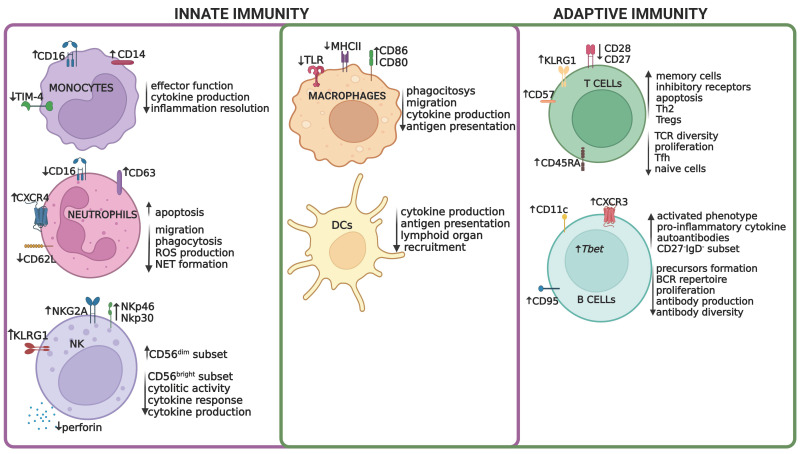
Cellular senescence is characterized by irreversible cell cycle arrest in response to different triggers and an inflammatory secretome. Although originally described in fibroblasts and cell types of solid organs, cellular senescence affects most tissues with advancing age, including the lymphoid tissue, causing chronic inflammation and dysregulation of both innate and adaptive immune functions. Besides its normal occurrence, persistent microbial challenge or pathogenic microorganisms might also accelerate the activation of cellular aging, inducing the premature senescence of immune cells. Therapeutic strategies counteracting the detrimental effects of cellular senescence are being developed. Their application to target immune cells might have the potential to improve immune dysfunctions during aging and reduce the age-dependent susceptibility to infections. In this review, we discuss how immune senescence influences the host's ability to resolve more common infections in the elderly and detail the different markers proposed to identify such senescent cells; the mechanisms by which infectious agents increase the extent of immune senescence are also reviewed. Finally, available senescence therapeutics are discussed in the context of their effects on immunity and against infections.
细胞衰老的特征是对不同的触发因素和炎症分泌组产生不可逆的细胞周期停滞。虽然最初在成纤维细胞和实体器官的细胞类型中描述,但细胞衰老会影响大多数随着年龄增长的组织,包括淋巴组织,导致慢性炎症和先天免疫和适应性免疫功能的失调。除了正常发生外,持续的微生物挑战或病原体也可能加速细胞衰老的激活,诱导免疫细胞过早衰老。正在开发对抗细胞衰老有害影响的治疗策略。将其应用于靶向免疫细胞可能具有改善衰老过程中免疫功能障碍和降低年龄相关感染易感性的潜力。在这篇综述中,我们讨论了免疫衰老如何影响宿主清除老年人常见感染的能力,并详细介绍了用于识别这些衰老细胞的不同标记物;还回顾了传染性病原体增加免疫衰老程度的机制。最后,根据它们对免疫和抗感染的影响讨论了现有的衰老治疗方法。