Biopharmacology, Eisai Limited, European Knowledge Centre, Mosquito Way, Hartfield, Hertfordshire, AL10 9SN, UK.
Alzheimers Res Ther. 2012 Aug 27;4(4):32. doi: 10.1186/alzrt135. eCollection 2012.
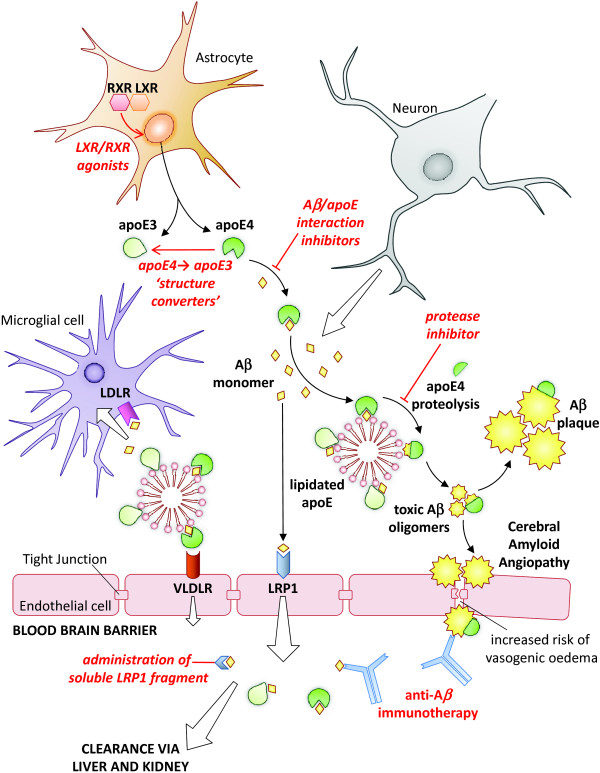
Alzheimer's disease (AD) is a progressive neurodegenerative disease characterised by extracellular amyloid-ß (Aß) and intraneuronal tau protein brain pathologies. The most significant risk factor for non-familial AD is the presence of the E4 isoform of the cholesterol transporter apolipoprotein E (apoE). Despite extensive basic research, the exact role of apoE in disease aetiology remains unclear. Correspondingly, therapeutic targeting of apoE in AD is at an early preclinical stage. In this review, I discuss the key interactions of apoE and Aß pathology, the current progress of preclinical animal models and the caveats of existing therapeutic approaches targeting apoE. Finally, novel Alzheimer's genetics and Aß-independent disease mechanisms are highlighted.
阿尔茨海默病(AD)是一种进行性神经退行性疾病,其特征是细胞外淀粉样蛋白-β(Aβ)和神经元内tau 蛋白的脑病理学改变。非家族性 AD 的最重要危险因素是胆固醇转运蛋白载脂蛋白 E(apoE)的 E4 同工型的存在。尽管进行了广泛的基础研究,但 apoE 在疾病发病机制中的确切作用仍不清楚。相应地,AD 中 apoE 的治疗靶向处于早期临床前阶段。在这篇综述中,我讨论了 apoE 与 Aβ病理学的关键相互作用、目前的临床前动物模型进展以及针对 apoE 的现有治疗方法的注意事项。最后,强调了新的阿尔茨海默病遗传学和 Aβ 独立的疾病机制。