Harvard School of Public Health, 677 Huntington Avenue, Boston, MA 02115, USA.
Malar J. 2012 Aug 28;11:299. doi: 10.1186/1475-2875-11-299.
The Affordable Medicines Facility for malaria (AMFm) is a pilot supra-national subsidy program that aims to increase access and affordability of artemisinin combination therapy (ACT) in public sector clinics and private retail shops. It is unclear to what extent the AMFm model will translate into wide scale availability and price reductions in ACT, particularly for rural, remote areas where disparities in access to medicines often exist. This study is the first to rigorously examine the availability and price of subsidized ACT during the first year of the AMFm, measured through retail audits in remote regions of Tanzania.
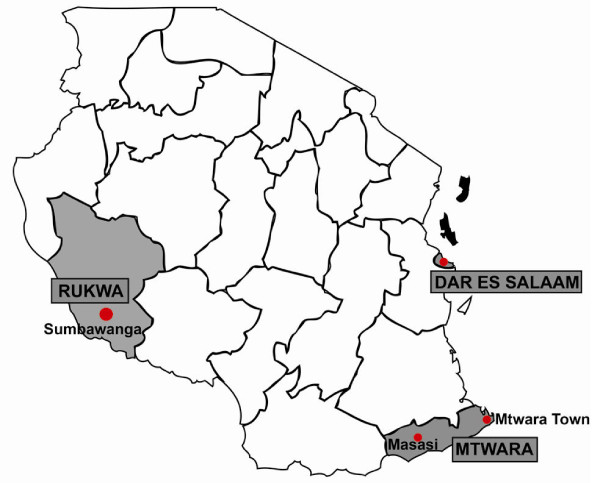
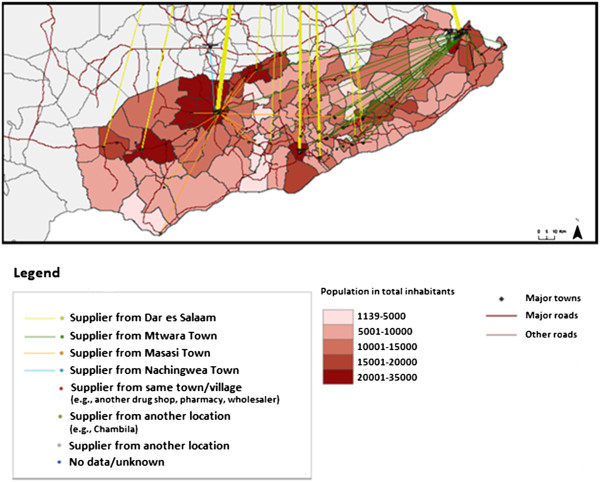
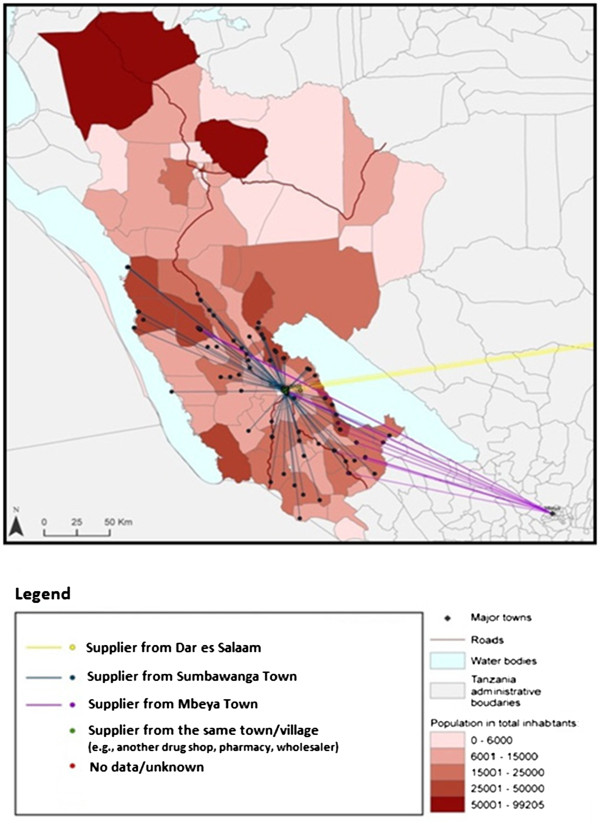
Periodic retail audits of Accredited Drug Dispensing Outlets (ADDOs) were conducted in two remote regions of Tanzania (Mtwara and Rukwa). Temporal and spatial variation in ACT availability and pricing were explored. A composite measure of ADDO remoteness, using variables, such as distance to suppliers and towns, altitude and population density, was used to explore whether ACT availability and price vary systematically with remoteness.
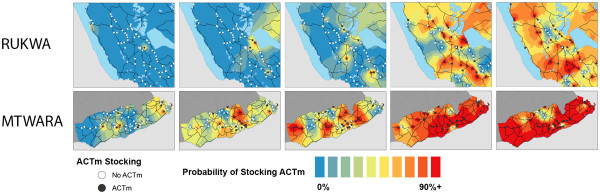
Between February 2011 and January 2012, the fraction of ADDOs stocking AMFm-ACT increased from 25% to 88% in Mtwara and from 3% to 62% in Rukwa. Availability was widespread, though diffusion throughout the region was achieved more quickly in Mtwara. No significant relationship was found between ACT availability and remoteness. Adult doses of AMFm-ACT were much more widely available than any other age/weight band. Average prices fell from 1529 TZS (1.03 USD) to 1272 TZS (0.81 USD) over the study period, with prices in Rukwa higher than Mtwara. The government recommended retail price for AMFm- ACT is 1,000 TZS ($0.64 USD). The median retail ACT price in the final round of data collection was 1,000 TZS.
The AMFm led to large increases in availability of low priced ACT in Tanzania, with no significant variation in availability based on remoteness. Availability did remain lower and prices remained higher in Rukwa, which is a more remote region overall. Low availability of child and adolescent ACT doses could be due in part to lower quantities of non-adult packs imported into Tanzania. Future research will explore whether increased availability and affordability persists and whether it translates into higher ACT use in Tanzania.
平价药品机制(AMFm)是一个超国家补贴项目,旨在增加公共部门诊所和私营零售药店青蒿素复方疗法(ACT)的可及性和可负担性。目前尚不清楚 AMFm 模式在多大程度上会导致 ACT 的广泛供应和价格降低,尤其是在农村和偏远地区,那里往往存在药品获取方面的差距。这项研究首次通过在坦桑尼亚偏远地区进行零售审计,严格检查 AMFm 实施第一年补贴后的 ACT 的供应和价格情况。
在坦桑尼亚的两个偏远地区(姆特瓦拉和鲁夸)进行定期的认可药品分销点(ADDO)零售审计。探讨了 ACT 供应和价格的时间和空间变化。使用距离供应商和城镇、海拔和人口密度等变量的综合措施来衡量 ADDO 的偏远程度,以探讨 ACT 的供应和价格是否与偏远程度有系统地变化。
2011 年 2 月至 2012 年 1 月期间,姆特瓦拉和鲁夸的 AMFm-ACT 库存 ADDO 的比例从 25%分别增加到 88%和从 3%增加到 62%。尽管在姆特瓦拉地区更快地普及到整个地区,但供应情况还是很广泛的。没有发现 ACT 的供应与偏远程度之间存在显著关系。成人剂量的 AMFm-ACT 比任何其他年龄/体重组别的供应都要广泛。在研究期间,价格从 1529 坦桑尼亚先令(1.03 美元)降至 1272 坦桑尼亚先令(0.81 美元),鲁夸的价格高于姆特瓦拉。AMFm-ACT 的政府建议零售价为 1000 坦桑尼亚先令(0.64 美元)。最后一轮数据收集时,零售 ACT 的中位数价格为 1000 坦桑尼亚先令。
AMFm 导致坦桑尼亚低价 ACT 的供应大幅增加,而偏远程度对供应的影响不大。总体来说,鲁夸的供应仍然较低,价格仍然较高。儿童和青少年剂量的 ACT 供应不足部分原因可能是进入坦桑尼亚的非成人剂量包数量较少。未来的研究将探讨供应和可负担性是否持续增加,以及这是否会导致坦桑尼亚 ACT 的使用量增加。