Hoffman-Sommer Marta, Supady Adriana, Klipp Edda
Theoretical Biophysics, Institute of Biology, Humboldt-Universität zu Berlin Berlin, Germany.
Front Physiol. 2012 Jul 25;3:287. doi: 10.3389/fphys.2012.00287. eCollection 2012.
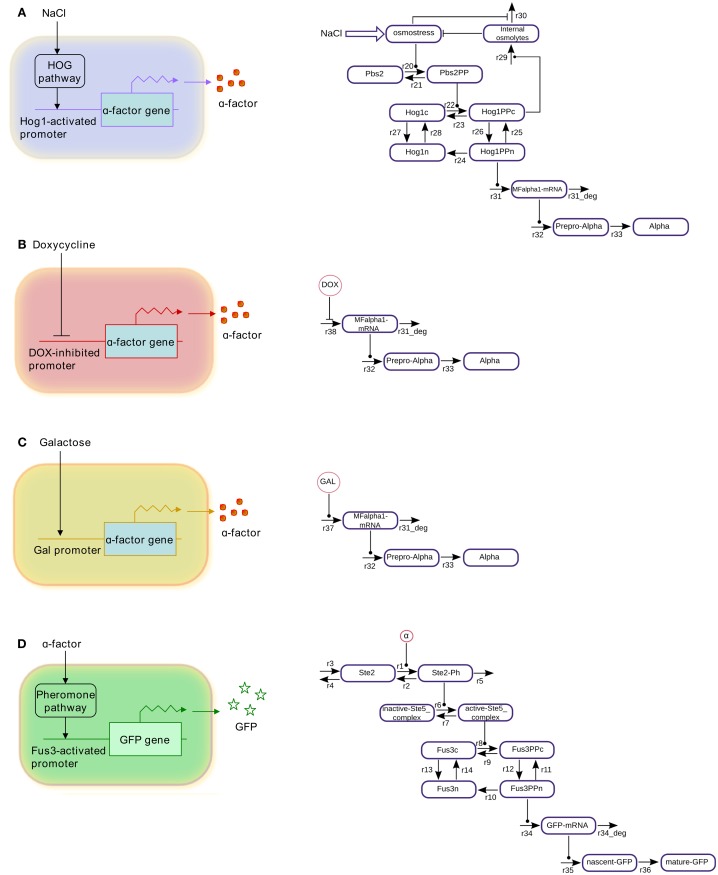
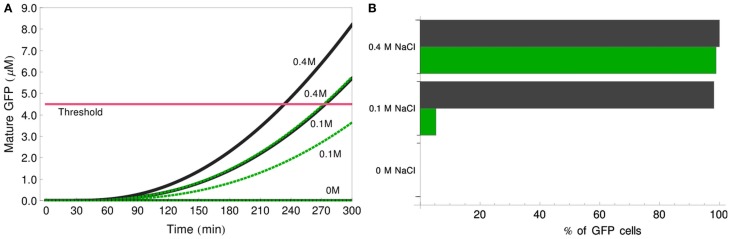
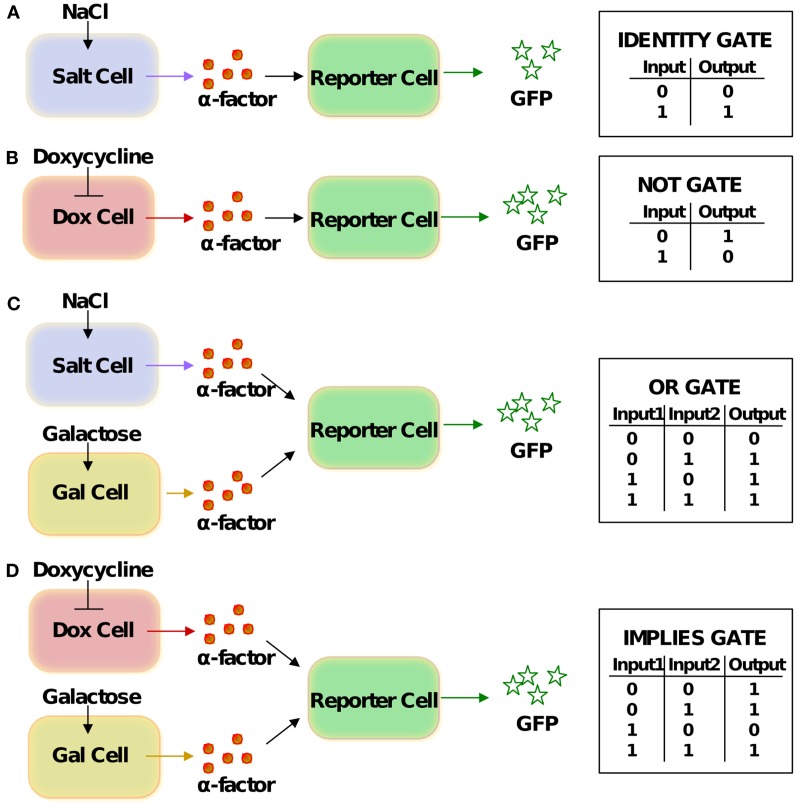
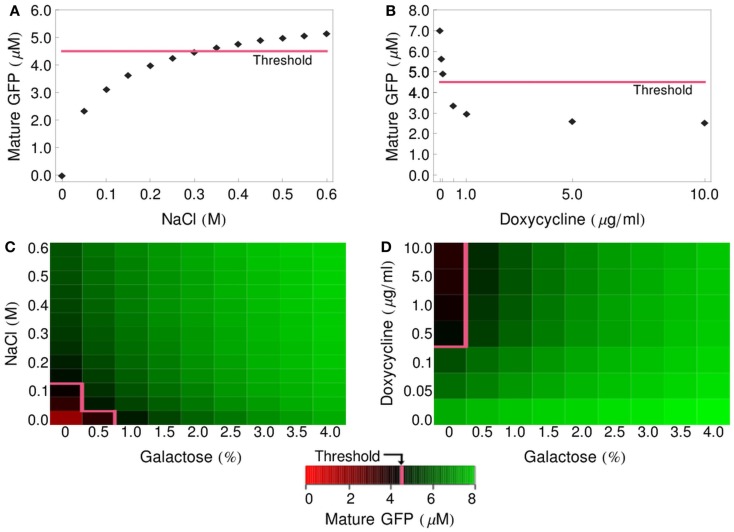
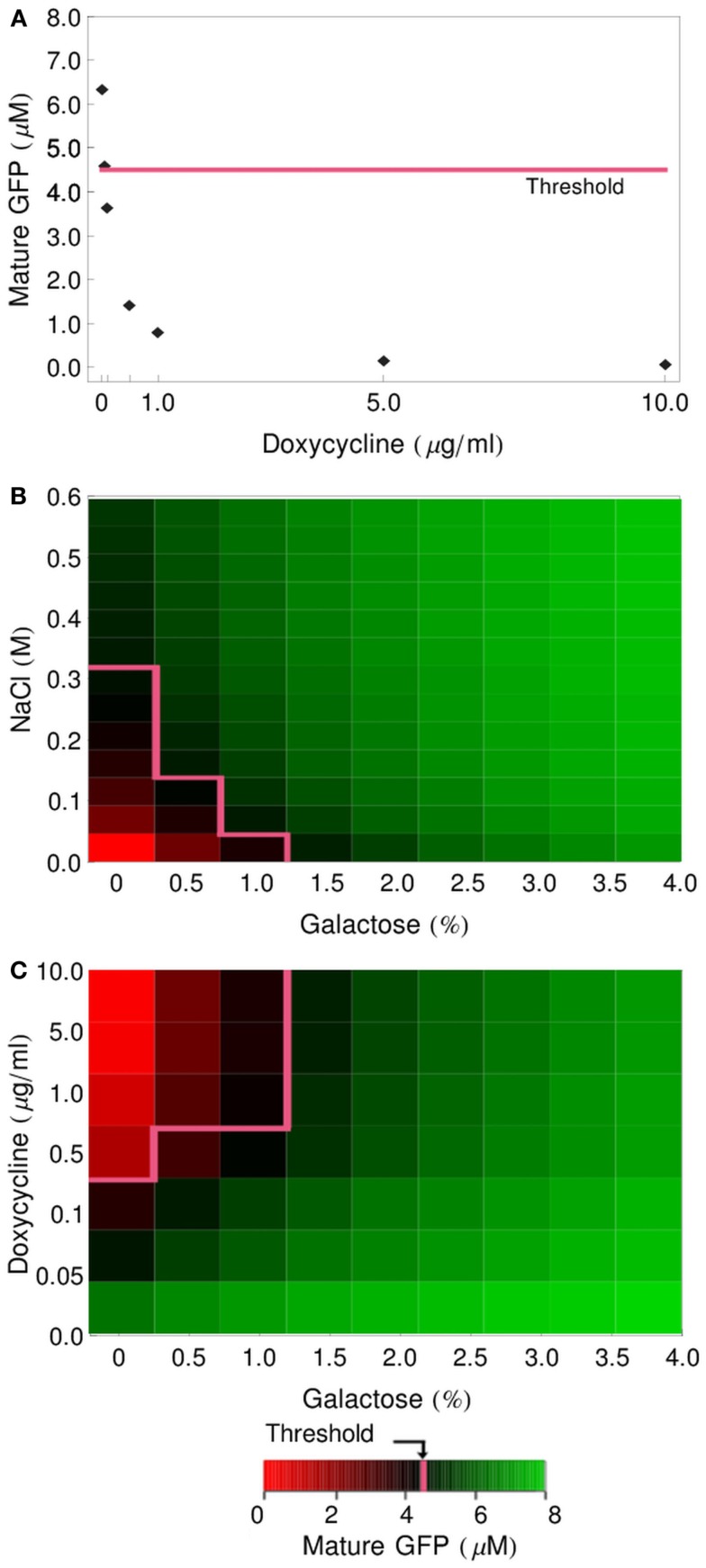
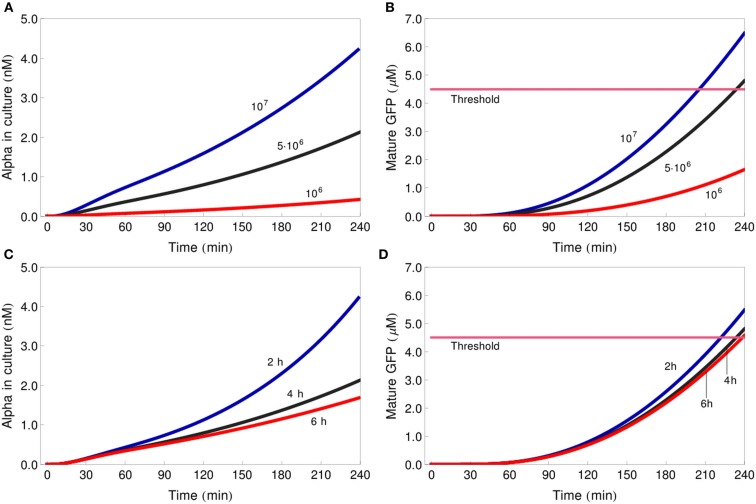
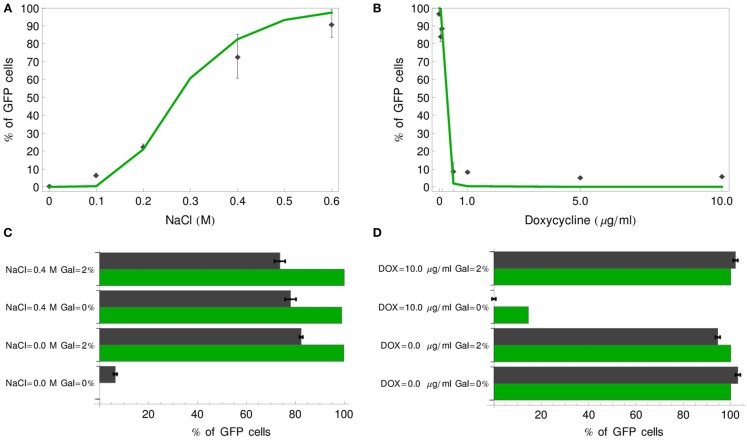
One of the goals in the field of synthetic biology is the construction of cellular computation devices that could function in a manner similar to electronic circuits. To this end, attempts are made to create biological systems that function as logic gates. In this work we present a theoretical quantitative analysis of a synthetic cellular logic-gates system, which has been implemented in cells of the yeast Saccharomyces cerevisiae (Regot et al., 2011). It exploits endogenous MAP kinase signaling pathways. The novelty of the system lies in the compartmentalization of the circuit where all basic logic gates are implemented in independent single cells that can then be cultured together to perform complex logic functions. We have constructed kinetic models of the multicellular IDENTITY, NOT, OR, and IMPLIES logic gates, using both deterministic and stochastic frameworks. All necessary model parameters are taken from literature or estimated based on published kinetic data, in such a way that the resulting models correctly capture important dynamic features of the included mitogen-activated protein kinase pathways. We analyze the models in terms of parameter sensitivity and we discuss possible ways of optimizing the system, e.g., by tuning the culture density. We apply a stochastic modeling approach, which simulates the behavior of whole populations of cells and allows us to investigate the noise generated in the system; we find that the gene expression units are the major sources of noise. Finally, the model is used for the design of system modifications: we show how the current system could be transformed to operate on three discrete values.
合成生物学领域的目标之一是构建能够以类似于电子电路的方式运行的细胞计算设备。为此,人们尝试创建作为逻辑门运行的生物系统。在这项工作中,我们对一个合成细胞逻辑门系统进行了理论定量分析,该系统已在酿酒酵母细胞中实现(Regot等人,2011年)。它利用内源性丝裂原活化蛋白激酶信号通路。该系统的新颖之处在于电路的区室化,其中所有基本逻辑门都在独立的单细胞中实现,然后可以将这些细胞一起培养以执行复杂的逻辑功能。我们使用确定性和随机框架构建了多细胞身份、非、或和蕴含逻辑门的动力学模型。所有必要的模型参数均取自文献或根据已发表的动力学数据进行估计,以使所得模型正确捕捉所包含的丝裂原活化蛋白激酶途径的重要动态特征。我们从参数敏感性方面分析模型,并讨论优化系统的可能方法,例如通过调整培养密度。我们应用一种随机建模方法,该方法模拟整个细胞群体的行为,并使我们能够研究系统中产生的噪声;我们发现基因表达单元是主要的噪声来源。最后,该模型用于系统修改的设计:我们展示了当前系统如何能够转换为在三个离散值上运行。