Sovari Ali A, Dudley Samuel C
Section of Cardiology, Center for Cardiovascular Research, University of Illinois at Chicago Chicago, IL, USA.
Front Physiol. 2012 Aug 6;3:311. doi: 10.3389/fphys.2012.00311. eCollection 2012.
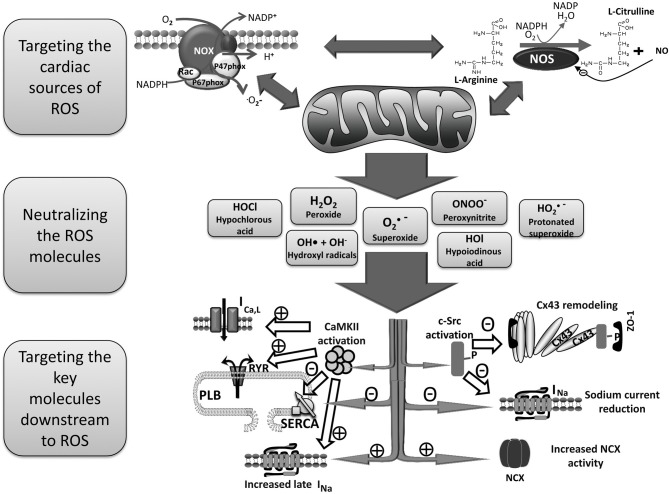
Atrial fibrillation (AF) is the most common arrhythmia that requires medical attention, and its incidence is increasing. Current ion channel blockade therapies and catheter ablation have significant limitations in treatment of AF, mainly because they do not address the underlying pathophysiology of the disease. Oxidative stress has been implicated as a major underlying pathology that promotes AF; however, conventional antioxidants have not shown impressive therapeutic effects. A more careful design of antioxidant therapies and better selection of patients likely are required to treat effectively AF with antioxidant agents. Current evidence suggest inhibition of prominent cardiac sources of reactive oxygen species (ROS) such as nicotinamide adenine dinucleotide phosphate (NADPH) oxidase and targeting subcellular compartments with the highest levels of ROS may prove to be effective therapies for AF. Increased serum markers of oxidative stress may be an important guide in selecting the AF patients who will most likely respond to antioxidant therapy.
心房颤动(AF)是最常见的需要医疗关注的心律失常,且其发病率正在上升。目前的离子通道阻滞疗法和导管消融在房颤治疗中存在显著局限性,主要是因为它们未解决该疾病的潜在病理生理学问题。氧化应激被认为是促进房颤的主要潜在病理机制;然而,传统抗氧化剂尚未显示出令人印象深刻的治疗效果。可能需要更精心设计抗氧化疗法并更好地选择患者,以便用抗氧化剂有效治疗房颤。目前的证据表明,抑制活性氧(ROS)的主要心脏来源,如烟酰胺腺嘌呤二核苷酸磷酸(NADPH)氧化酶,并靶向ROS水平最高的亚细胞区室,可能是治疗房颤的有效疗法。氧化应激血清标志物升高可能是选择最有可能对抗氧化疗法产生反应的房颤患者的重要指导。