Wellcome Trust Centre for Neuroimaging, UCL Institute of Neurology, University College London, London, UK.
Magn Reson Med. 2013 Aug;70(2):358-69. doi: 10.1002/mrm.24467. Epub 2012 Aug 30.
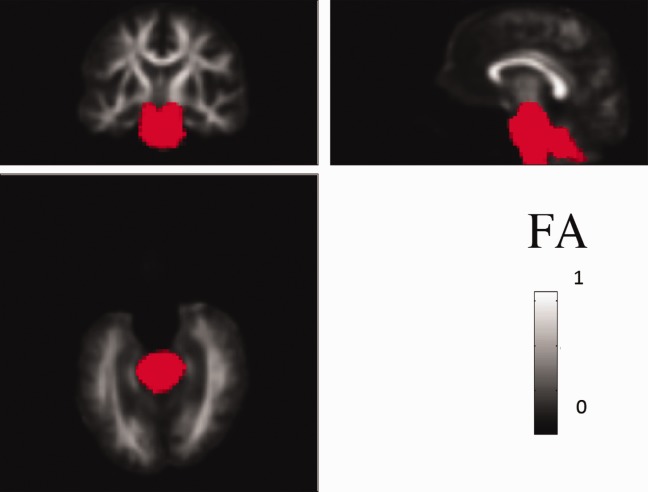
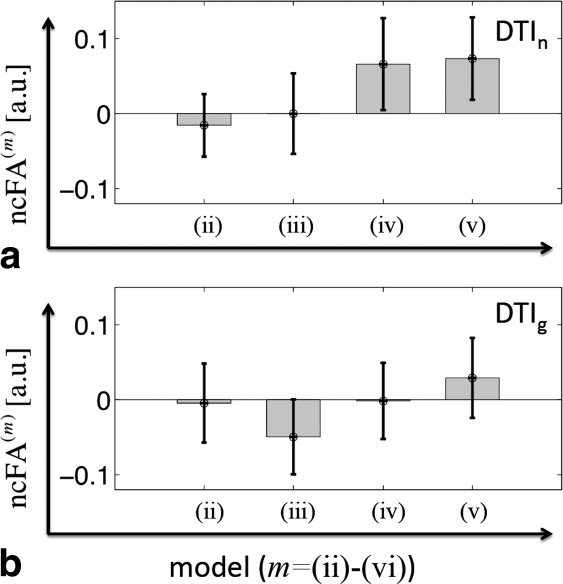
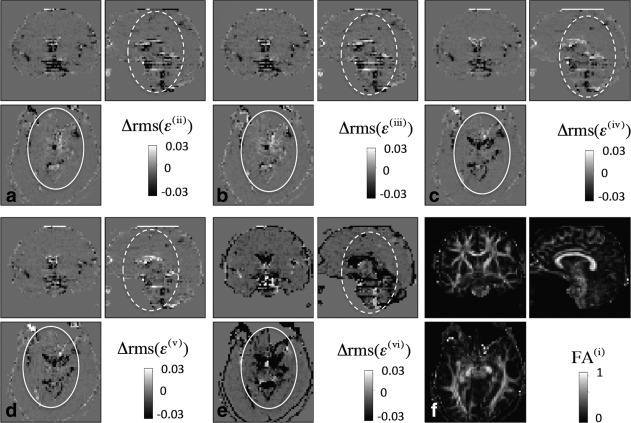
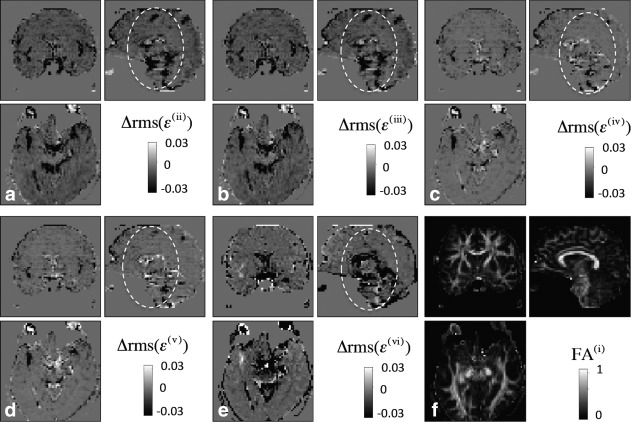
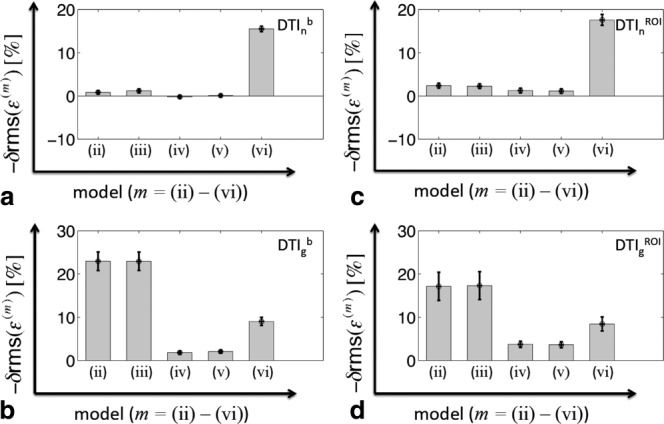
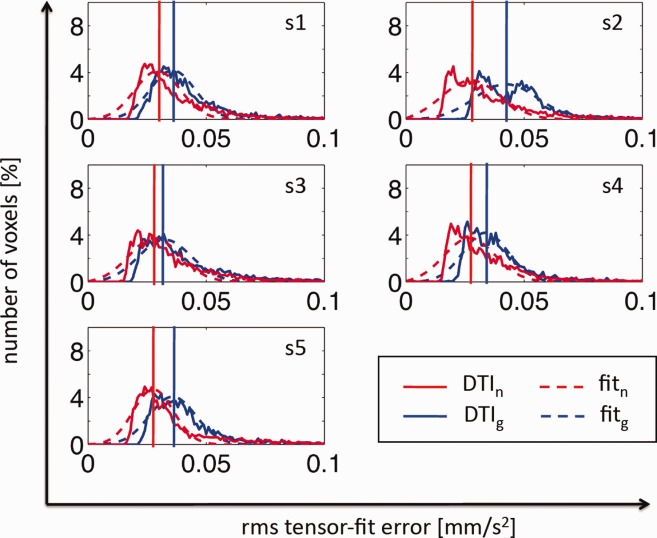
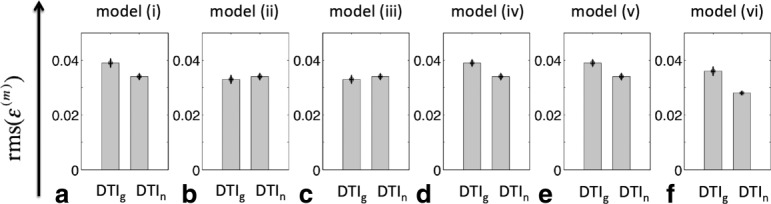
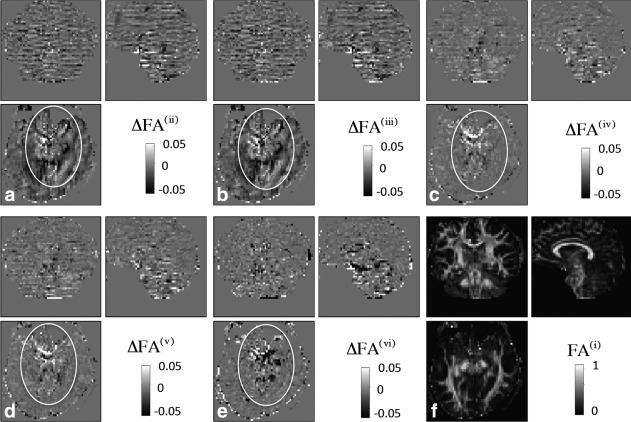
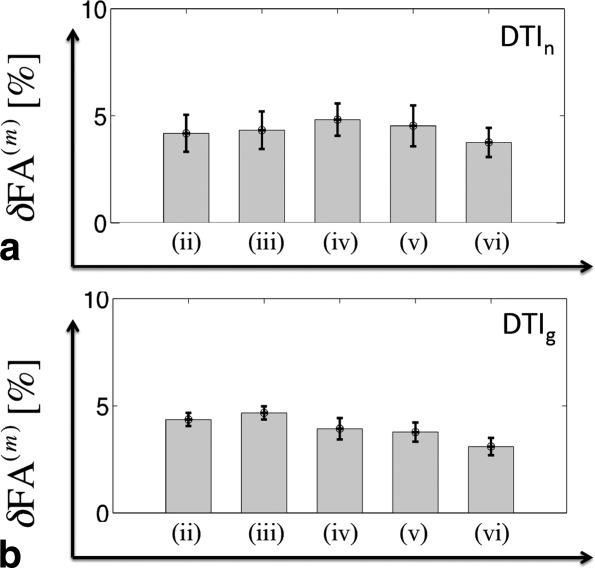
Diffusion tensor imaging is widely used in research and clinical applications, but this modality is highly sensitive to artefacts. We developed an easy-to-implement extension of the original diffusion tensor model to account for physiological noise in diffusion tensor imaging using measures of peripheral physiology (pulse and respiration), the so-called extended tensor model. Within the framework of the extended tensor model two types of regressors, which respectively modeled small (linear) and strong (nonlinear) variations in the diffusion signal, were derived from peripheral measures. We tested the performance of four extended tensor models with different physiological noise regressors on nongated and gated diffusion tensor imaging data, and compared it to an established data-driven robust fitting method. In the brainstem and cerebellum the extended tensor models reduced the noise in the tensor-fit by up to 23% in accordance with previous studies on physiological noise. The extended tensor model addresses both large-amplitude outliers and small-amplitude signal-changes. The framework of the extended tensor model also facilitates further investigation into physiological noise in diffusion tensor imaging. The proposed extended tensor model can be readily combined with other artefact correction methods such as robust fitting and eddy current correction.
弥散张量成像广泛应用于研究和临床应用,但该模式对伪影非常敏感。我们开发了一种易于实现的原始弥散张量模型的扩展,以使用外周生理学(脉搏和呼吸)的测量值来解释弥散张量成像中的生理噪声,即所谓的扩展张量模型。在扩展张量模型的框架内,从外周测量值中推导出了两种回归器,它们分别模拟了扩散信号中的小(线性)和大(非线性)变化。我们在非门控和门控弥散张量成像数据上测试了具有不同生理噪声回归器的四个扩展张量模型的性能,并将其与一种已建立的数据驱动稳健拟合方法进行了比较。在脑干和小脑,扩展张量模型根据先前关于生理噪声的研究,将张量拟合的噪声降低了高达 23%。扩展张量模型既解决了大振幅异常值,也解决了小振幅信号变化的问题。扩展张量模型的框架还便于进一步研究弥散张量成像中的生理噪声。所提出的扩展张量模型可以很容易地与其他伪影校正方法(如稳健拟合和涡流校正)相结合。