Department of Life Science, National Taiwan Normal University, Taipei, Taiwan.
PLoS One. 2012;7(8):e43680. doi: 10.1371/journal.pone.0043680. Epub 2012 Aug 24.
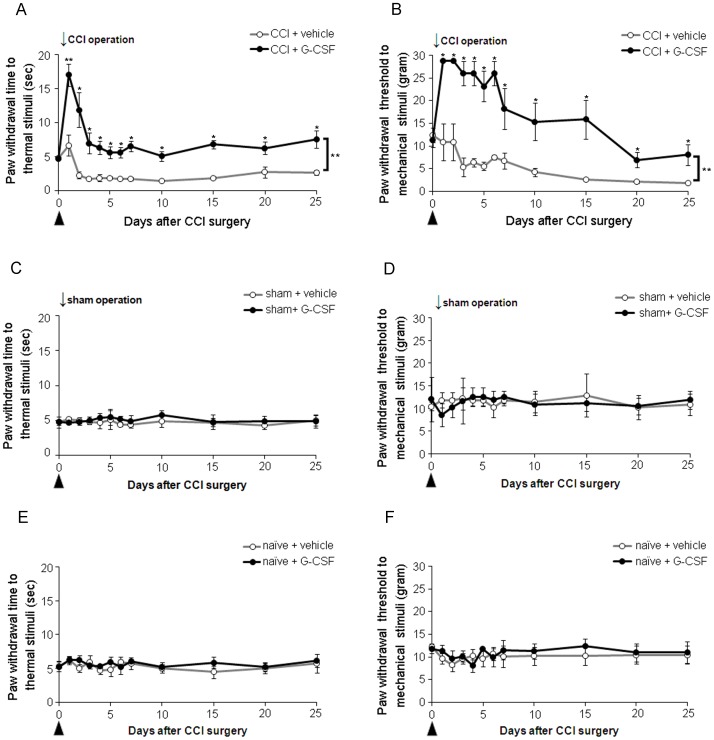
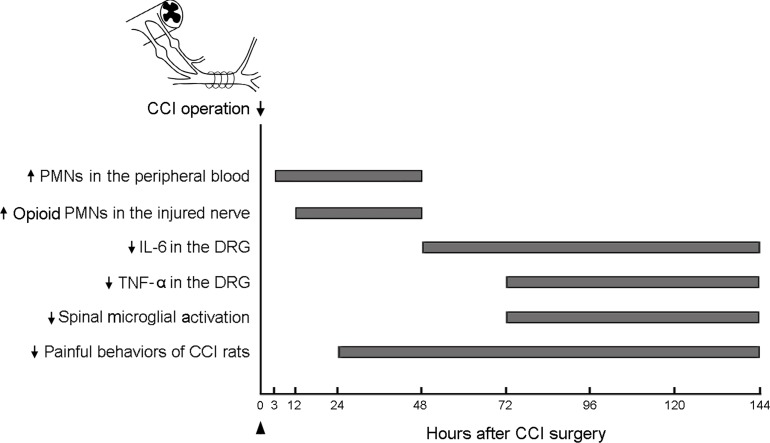
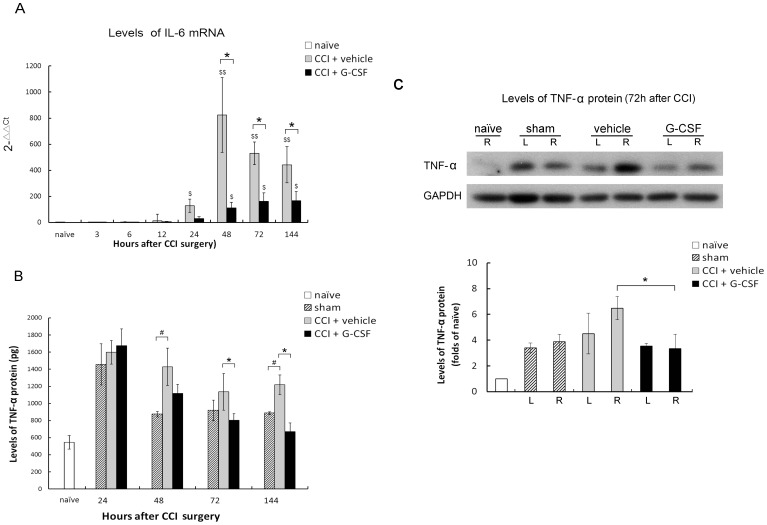
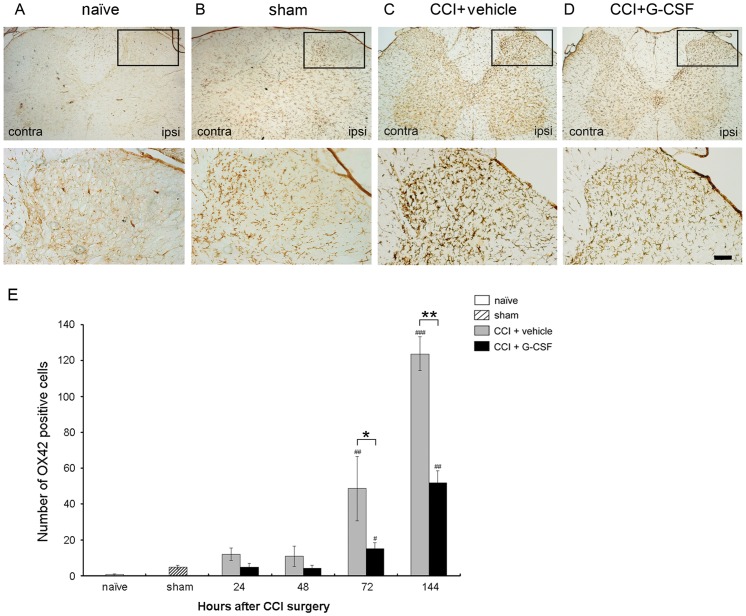
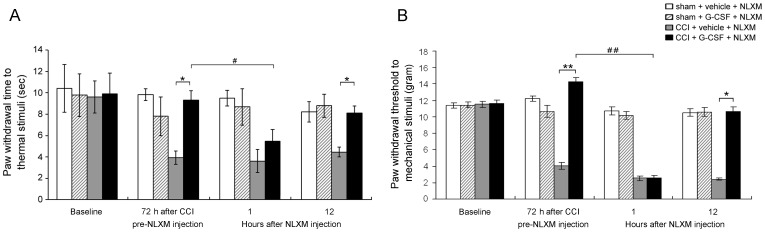
Recent studies have shown that opioid treatment can reduce pro-inflammatory cytokine production and counteract various neuropathic pain syndromes. Granulocyte colony-stimulating factor (G-CSF) can promote immune cell differentiation by increasing leukocytes (mainly opioid-containing polymorphonuclear (PMN) cells), suggesting a potential beneficial role in treating chronic pain. This study shows the effectiveness of exogenous G-CSF treatment (200 µg/kg) for alleviating thermal hyperalgesia and mechanical allodynia in rats with chronic constriction injury (CCI), during post-operative days 1-25, compared to that of vehicle treatment. G-CSF also increases the recruitment of opioid-containing PMN cells into the injured nerve. After CCI, single administration of G-CSF on days 0, 1, and 2, but not on day 3, relieved thermal hyperalgesia, which indicated that its effect on neuropathic pain had a therapeutic window of 0-48 h after nerve injury. CCI led to an increase in the levels of interleukin-6 (IL-6) mRNA and tumor necrosis factor-α (TNF-α) protein in the dorsal root ganglia (DRG). These high levels of IL-6 mRNA and TNF-α were suppressed by a single administration of G-CSF 48-144 h and 72-144 h after CCI, respectively. Furthermore, G-CSF administered 72-144 h after CCI suppressed the CCI-induced upregulation of microglial activation in the ipsilateral spinal dorsal horn, which is essential for sensing neuropathic pain. Moreover, the opioid receptor antagonist naloxone methiodide (NLXM) reversed G-CSF-induced antinociception 3 days after CCI, suggesting that G-CSF alleviates hyperalgesia via opioid/opioid receptor interactions. These results suggest that an early single systemic injection of G-CSF alleviates neuropathic pain via activation of PMN cell-derived endogenous opioid secretion to activate opioid receptors in the injured nerve, downregulate IL-6 and TNF-α inflammatory cytokines, and attenuate microglial activation in the spinal dorsal horn. This indicates that G-CSF treatment can suppress early inflammation and prevent the subsequent development of neuropathic pain.
最近的研究表明,阿片类药物治疗可以减少促炎细胞因子的产生,并对抗各种神经病理性疼痛综合征。粒细胞集落刺激因子 (G-CSF) 通过增加白细胞(主要是含有阿片类物质的多形核 (PMN) 细胞)来促进免疫细胞分化,这表明其在治疗慢性疼痛方面具有潜在的有益作用。本研究显示,与载体治疗相比,外源性 G-CSF 治疗(200µg/kg)在术后第 1-25 天可缓解慢性缩窄性损伤(CCI)大鼠的热痛觉过敏和机械性痛觉过敏。G-CSF 还增加了含有阿片类物质的PMN 细胞向受损神经的募集。CCI 后,在第 0、1 和 2 天给予 G-CSF 单次给药,而在第 3 天不给药,可缓解热痛觉过敏,这表明其对神经病理性疼痛的作用具有神经损伤后 0-48 小时的治疗窗口。CCI 导致背根神经节 (DRG) 中白细胞介素 6 (IL-6) mRNA 和肿瘤坏死因子-α (TNF-α) 蛋白水平升高。CCI 后 48-144 小时和 72-144 小时给予 G-CSF 单次给药可分别抑制这些高水平的 IL-6 mRNA 和 TNF-α。此外,CCI 后 72-144 小时给予 G-CSF 可抑制同侧脊髓背角中小胶质细胞激活的 CCI 诱导上调,这对于感知神经病理性疼痛至关重要。此外,阿片受体拮抗剂纳洛酮甲碘化物 (NLXM) 在 CCI 后 3 天逆转了 G-CSF 诱导的镇痛作用,表明 G-CSF 通过阿片类物质/阿片受体相互作用缓解痛觉过敏。这些结果表明,早期单次全身注射 G-CSF 通过激活PMN 细胞衍生的内源性阿片类物质分泌来激活损伤神经中的阿片受体,下调 IL-6 和 TNF-α 炎症细胞因子,减轻脊髓背角中的小胶质细胞激活,从而缓解神经病理性疼痛。这表明 G-CSF 治疗可以抑制早期炎症并防止随后发生的神经病理性疼痛。