Zhang Yu-Qiu, Guo Ning, Peng Guangdun, Wang Xidao, Han Mei, Raincrow Jeremy, Chiu Chi-hua, Coolen Lique M, Wenthold Robert J, Zhao Zhi-Qi, Jing Naihe, Yu Lei
Department of Cell Biology, Neurobiology and Anatomy, University of Cincinnati College of Medicine, Cincinnati, OH, USA.
Pain. 2009 Nov;146(1-2):130-40. doi: 10.1016/j.pain.2009.07.011. Epub 2009 Sep 12.
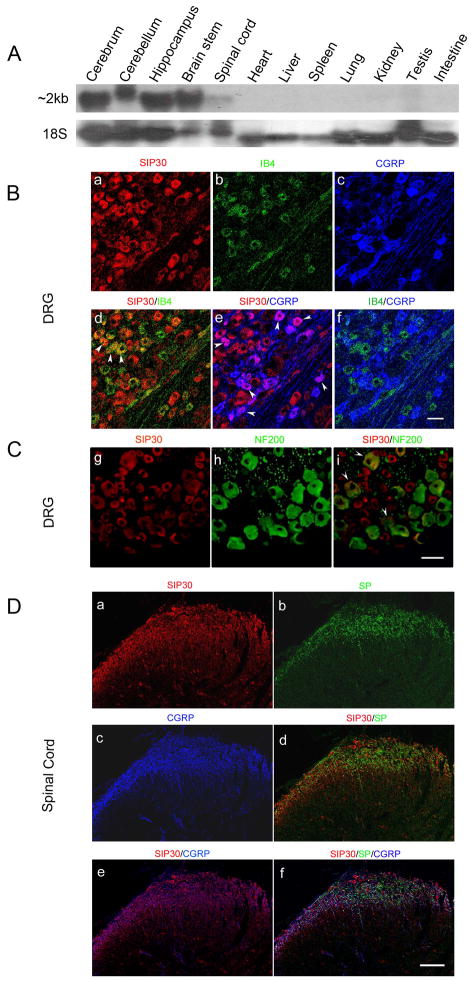
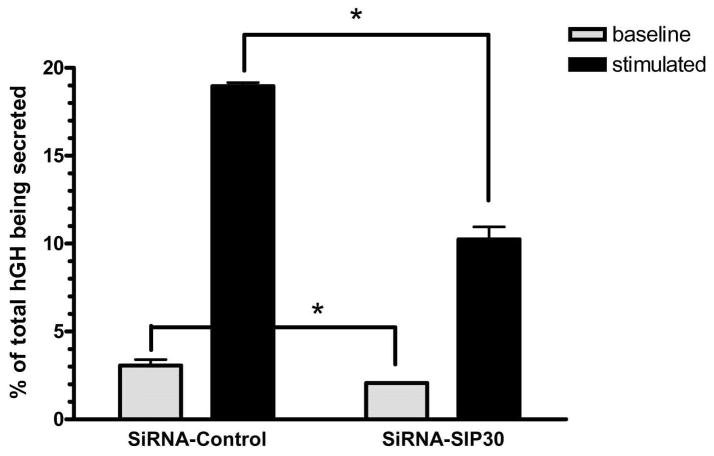
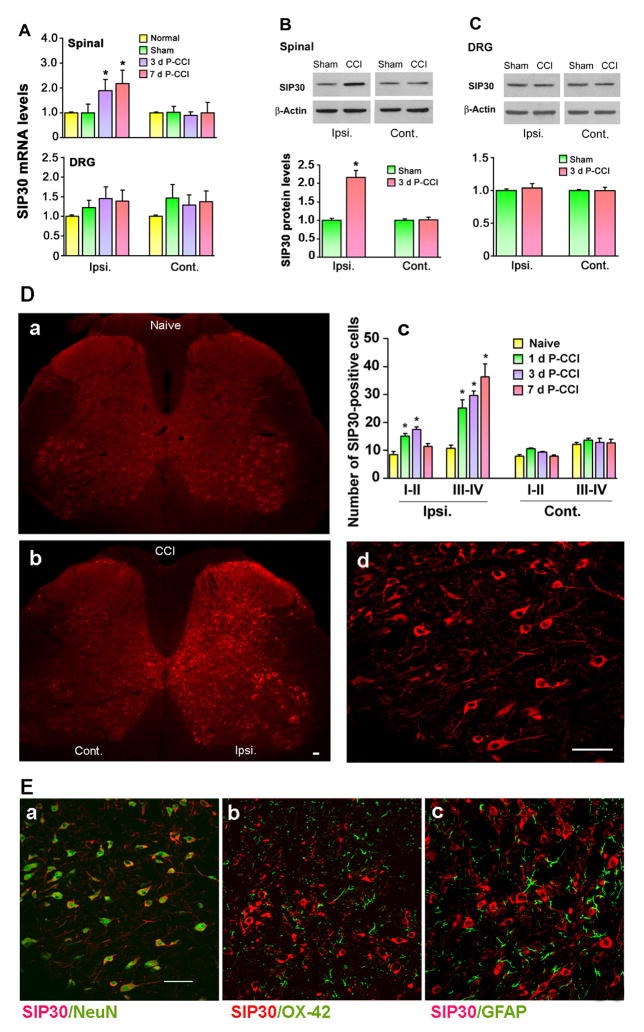
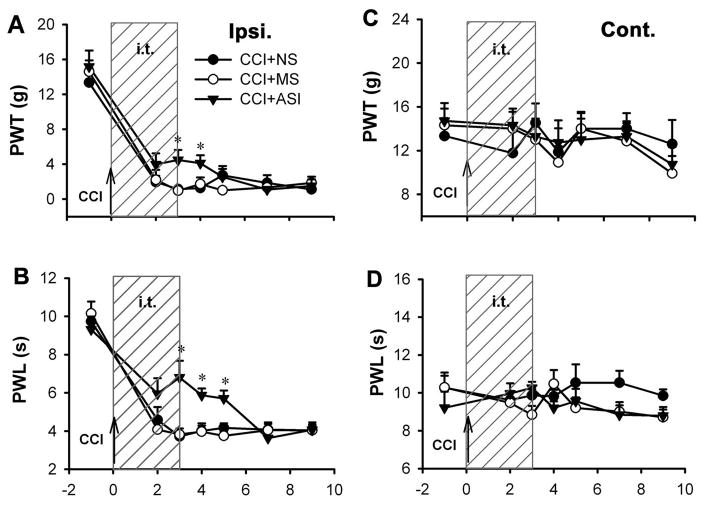
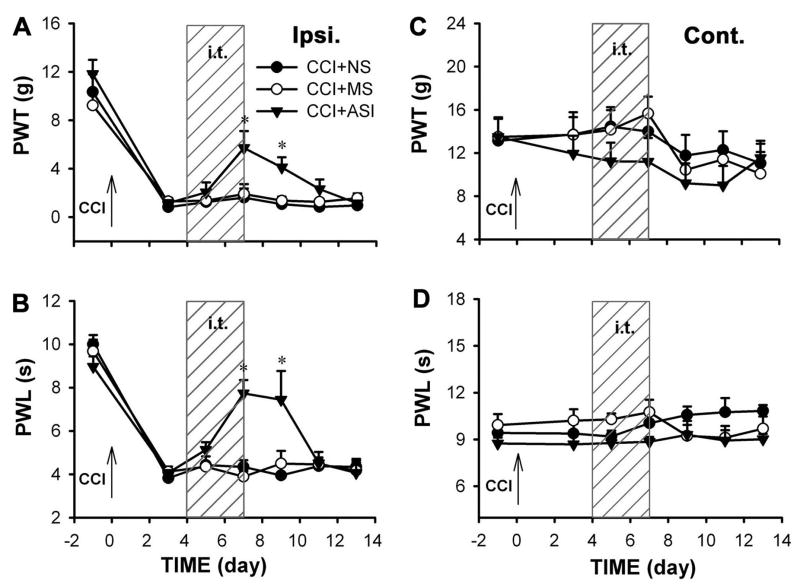
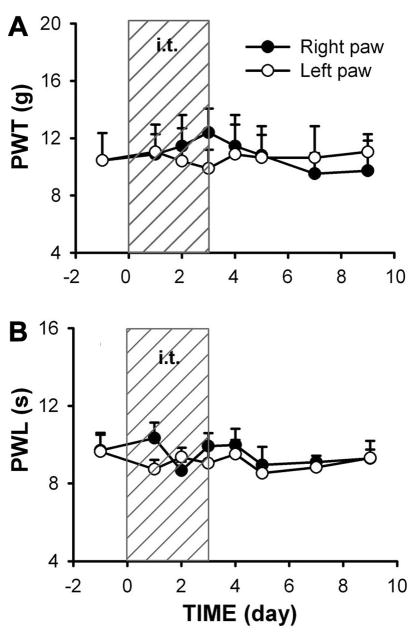
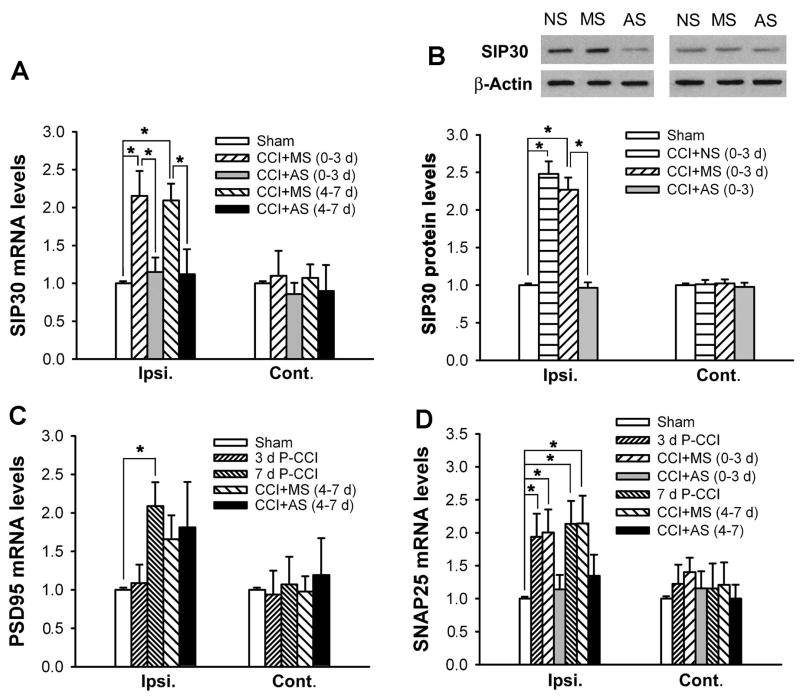
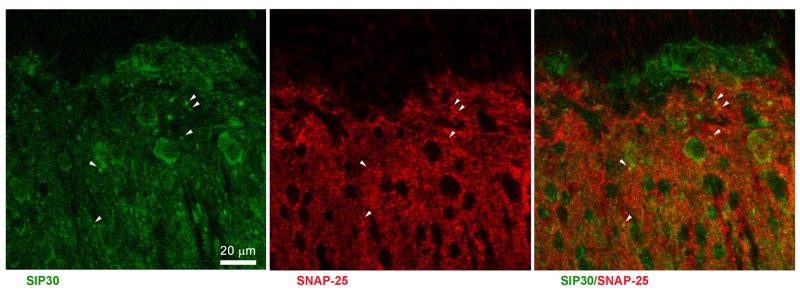
Using the chronic constriction injury (CCI) model of neuropathic pain, we profiled gene expression in the rat spinal cord, and identified SIP30 as a gene whose expression was elevated after CCI. SIP30 was previously shown to interact with SNAP25, but whose function was otherwise unknown. We now show that in the spinal cord, SIP30 was present in the dorsal horn laminae where the peripheral nociceptive inputs first synapse, co-localizing with nociception-related neuropeptides CGRP and substance P. With the onset of neuropathic pain after CCI surgery, SIP30 mRNA and protein levels increased in the ipsilateral side of the spinal cord, suggesting a potential association between SIP30 and neuropathic pain. When CCI-upregulated SIP30 was inhibited by intrathecal antisense oligonucleotide administration, neuropathic pain was attenuated. This neuropathic pain-reducing effect was observed both during neuropathic pain onset following CCI, and after neuropathic pain was fully established, implicating SIP30 involvement in the development and maintenance phases of neuropathic pain. Using a secretion assay in PC12 cells, anti-SIP30 siRNA decreased the total pool of synaptic vesicles available for exocytosis, pointing to a potential function for SIP30. These results suggest a role of SIP30 in the development and maintenance of peripheral nerve injury-induced neuropathic pain.
利用神经性疼痛的慢性压迫损伤(CCI)模型,我们分析了大鼠脊髓中的基因表达,并确定SIP30是一种在CCI后表达上调的基因。先前已表明SIP30与SNAP25相互作用,但其功能未知。我们现在发现,在脊髓中,SIP30存在于外周伤害性输入首先发生突触的背角板层,与伤害感受相关神经肽降钙素基因相关肽(CGRP)和P物质共定位。随着CCI手术后神经性疼痛的出现,脊髓同侧的SIP30 mRNA和蛋白质水平升高,表明SIP30与神经性疼痛之间可能存在关联。当通过鞘内注射反义寡核苷酸抑制CCI上调的SIP30时,神经性疼痛减轻。在CCI后神经性疼痛发作期间以及神经性疼痛完全形成后均观察到这种减轻神经性疼痛的效果,这表明SIP30参与了神经性疼痛的发生和维持阶段。在PC12细胞中进行分泌测定时,抗SIP30 siRNA减少了可用于胞吐作用的突触小泡的总量,这表明SIP30具有潜在功能。这些结果表明SIP30在周围神经损伤诱导的神经性疼痛的发生和维持中起作用。