Tumor Immunology and Gene Therapy Center, Eastern Hepatobiliary Surgery Hospital, Second Military Medical University, Shanghai, PR China.
BMC Med. 2012 Aug 31;10:98. doi: 10.1186/1741-7015-10-98.
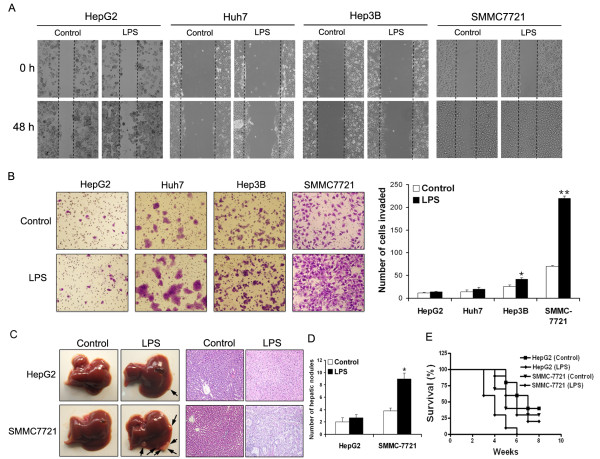
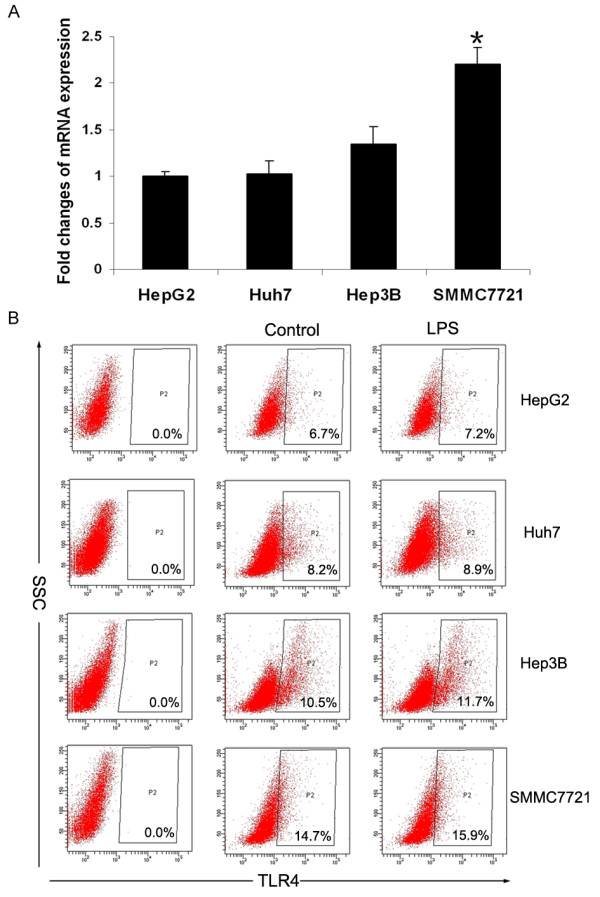
The endotoxin level in the portal and peripheral veins of hepatocellular carcinoma (HCC) patients is higher and lipopolysaccharide (LPS), a cell wall constituent of gram-negative bacteria, has been reported to inhibit tumor growth. However, in this study, we found that LPS-induced toll-like receptor 4 (TLR4) signaling was involved in tumor invasion and survival, and the molecular mechanism was investigated,
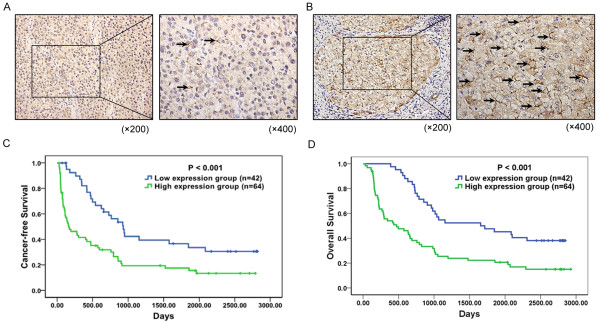
Four HCC cell lines and a splenic vein metastasis of the nude mouse model were used to study the invasion ability of LPS-induced HCC cells and the epithelia-mesenchymal transition (EMT) in vitro and in vivo. A total of 106 clinical samples from HCC patients were used to evaluate TLR4 expression and analyze its association with clinicopathological characteristics
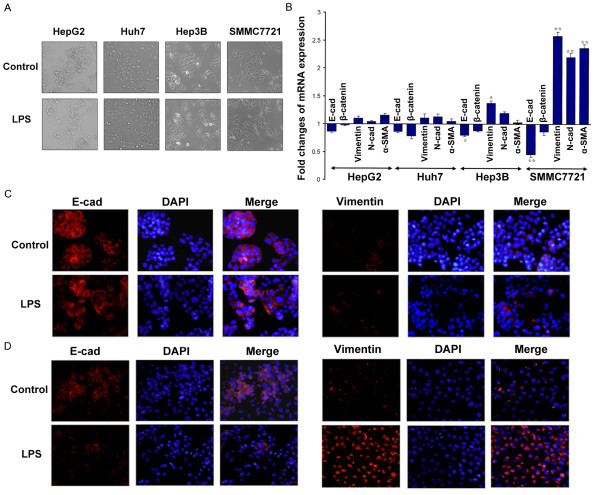
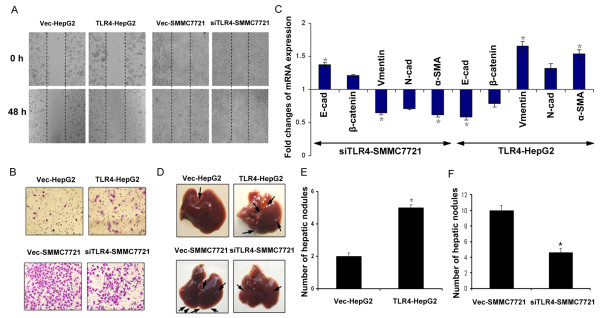
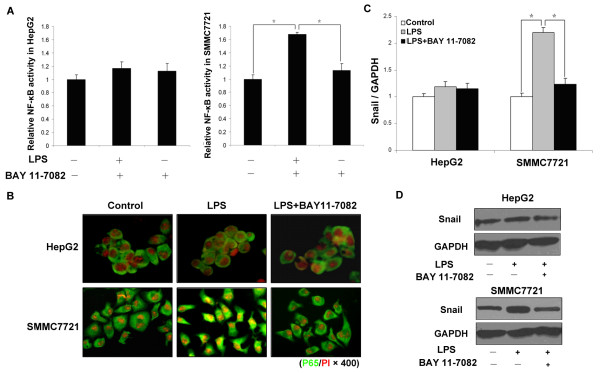
The in vitro and in vivo experiments demonstrated that LPS could significantly enhance the invasive potential and induce EMT in HCC cells with TLR4 dependent. Further studies showed that LPS could directly activate nuclear factor kappa B (NF-κB) signaling through TLR4 in HCC cells. Interestingly, blocking NF-κB signaling significantly inhibited transcription factor Snail expression and thereby inhibited EMT occurrence. High expression of TLR4 in HCC tissues was strongly associated with both poor cancer-free survival and overall survival in patients.
Our results indicate that TLR4 signaling is required for LPS-induced EMT, tumor cell invasion and metastasis, which provide molecular insights for LPS-related pathogenesis and a basis for developing new strategies against metastasis in HCC.
肝癌(HCC)患者门静脉和外周静脉内毒素水平较高,革兰氏阴性菌细胞壁成分脂多糖(LPS)已被报道能抑制肿瘤生长。然而,在这项研究中,我们发现 LPS 诱导的 toll 样受体 4(TLR4)信号参与肿瘤侵袭和存活,并且研究了其分子机制。
使用四种 HCC 细胞系和裸鼠脾脏静脉转移模型研究 LPS 诱导的 HCC 细胞侵袭能力以及体外和体内的上皮-间充质转化(EMT)。共使用来自 106 例 HCC 患者的临床样本评估 TLR4 表达,并分析其与临床病理特征的相关性。
体外和体内实验表明,LPS 可通过 TLR4 依赖性显著增强 HCC 细胞的侵袭潜能并诱导 EMT。进一步的研究表明,LPS 可通过 TLR4 在 HCC 细胞中直接激活核因子 kappa B(NF-κB)信号。有趣的是,阻断 NF-κB 信号可显著抑制转录因子 Snail 的表达,从而抑制 EMT 的发生。HCC 组织中 TLR4 的高表达与患者无癌症生存和总体生存均较差密切相关。
我们的研究结果表明,TLR4 信号是 LPS 诱导的 EMT、肿瘤细胞侵袭和转移所必需的,为 LPS 相关发病机制提供了分子见解,并为开发针对 HCC 转移的新策略提供了依据。