Institute of Biomedical Engineering, Department of Engineering Science, University of Oxford, UK.
Med Image Anal. 2012 Dec;16(8):1550-64. doi: 10.1016/j.media.2012.07.004. Epub 2012 Aug 9.
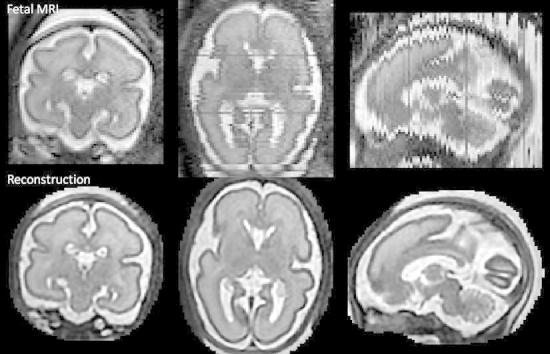
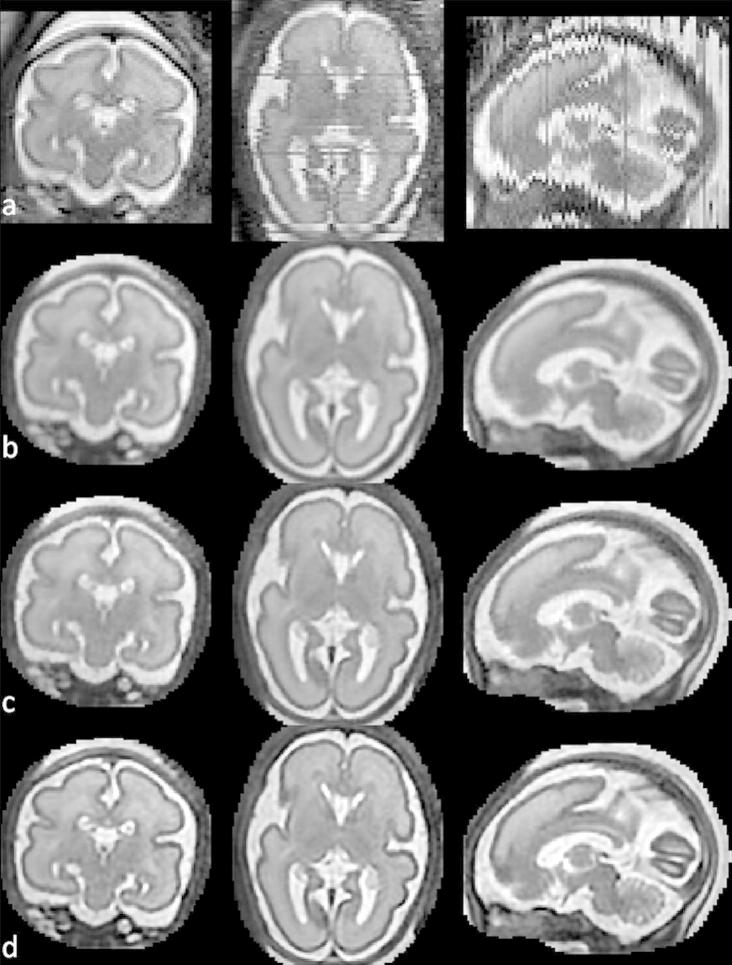
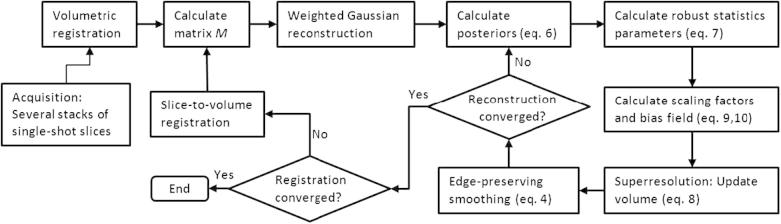
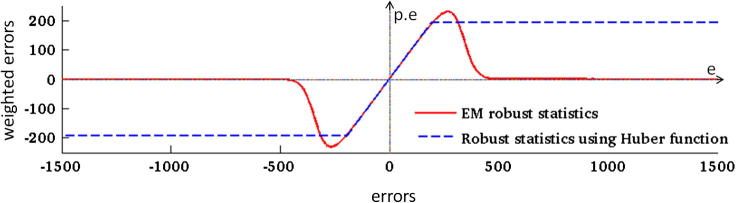
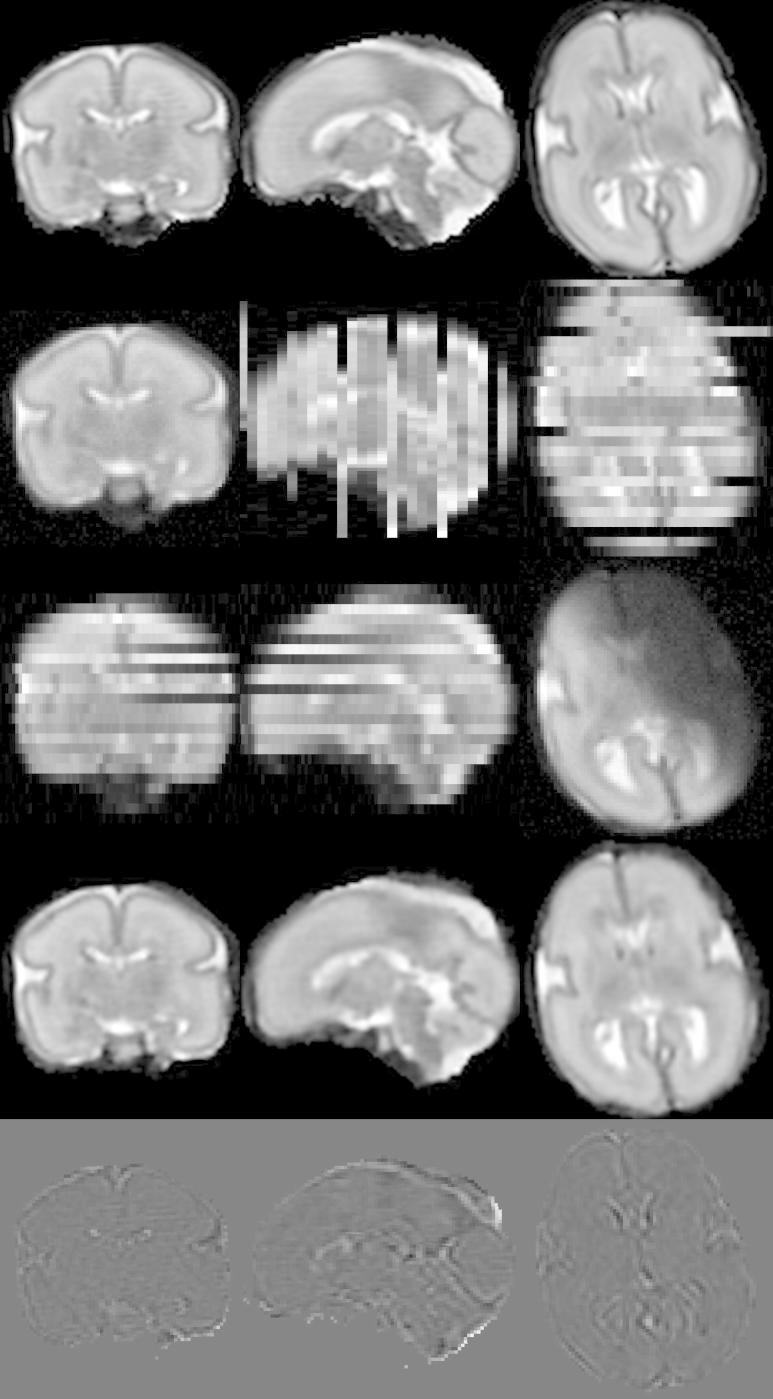
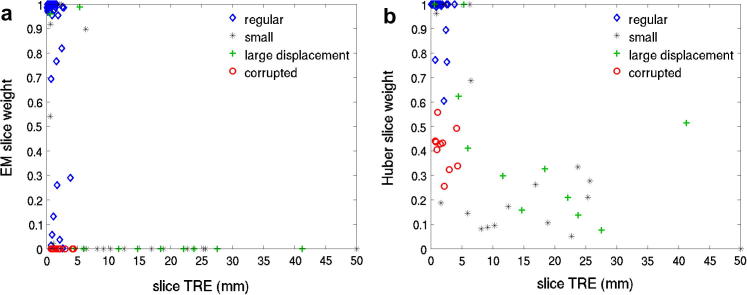
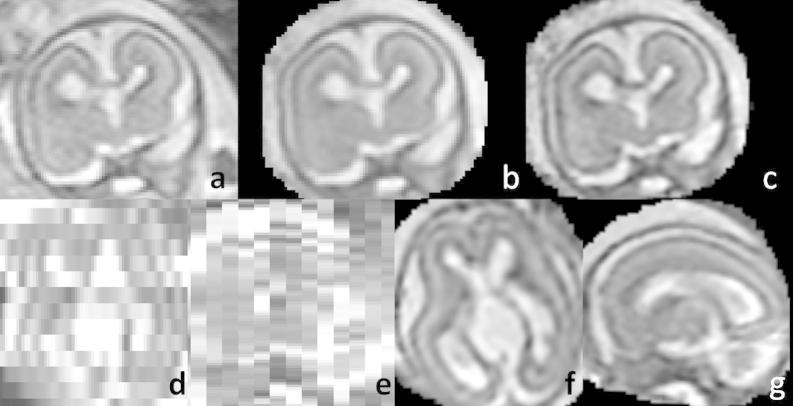
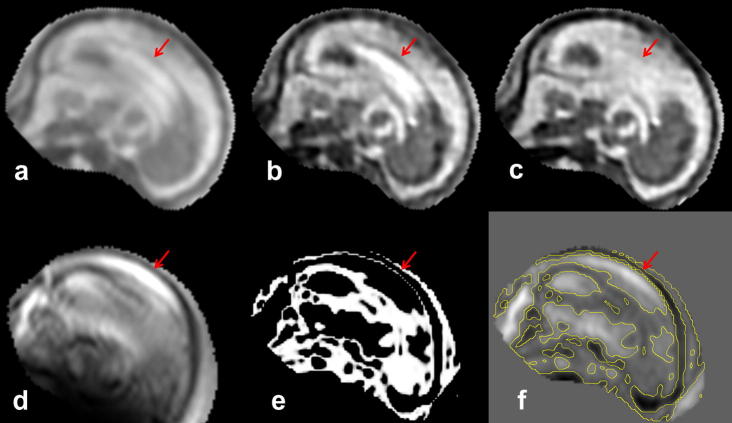
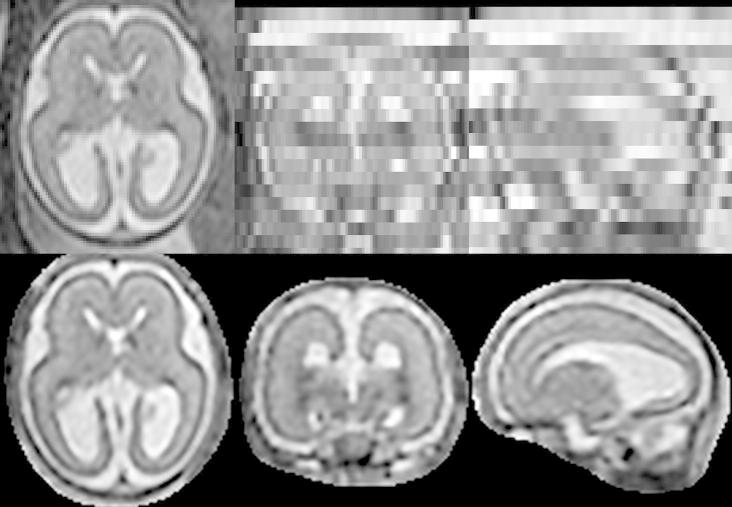
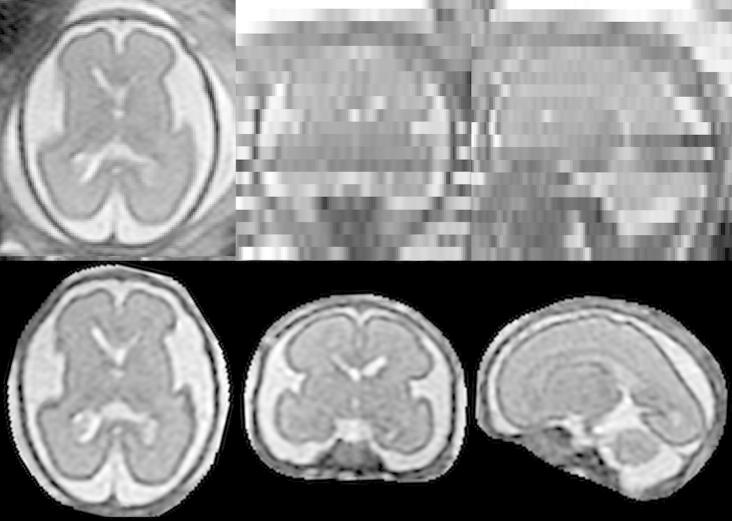
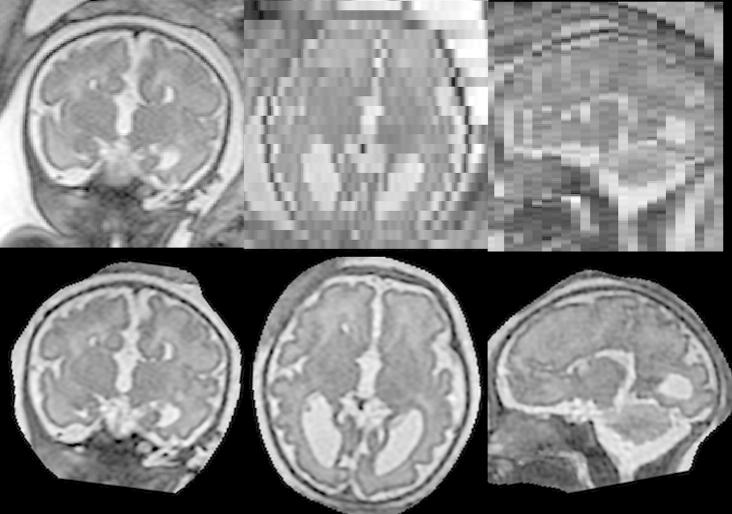
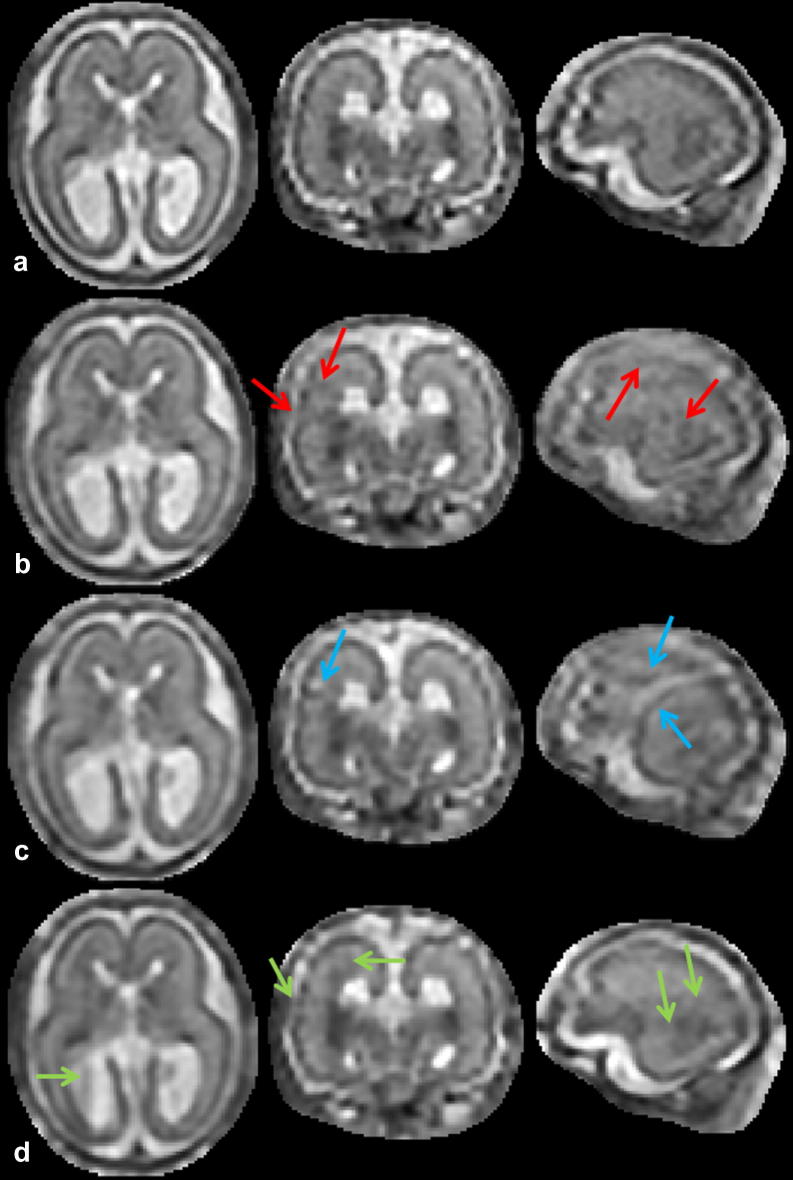
We propose a method for the reconstruction of volumetric fetal MRI from 2D slices, comprising super-resolution reconstruction of the volume interleaved with slice-to-volume registration to correct for the motion. The method incorporates novel intensity matching of acquired 2D slices and robust statistics which completely excludes identified misregistered or corrupted voxels and slices. The reconstruction method is applied to motion-corrupted data simulated from MRI of a preterm neonate, as well as 10 clinically acquired thick-slice fetal MRI scans and three scan-sequence optimized thin-slice fetal datasets. The proposed method produced high quality reconstruction results from all the datasets to which it was applied. Quantitative analysis performed on simulated and clinical data shows that both intensity matching and robust statistics result in statistically significant improvement of super-resolution reconstruction. The proposed novel EM-based robust statistics also improves the reconstruction when compared to previously proposed Huber robust statistics. The best results are obtained when thin-slice data and the correct approximation of the point spread function is used. This paper addresses the need for a comprehensive reconstruction algorithm of 3D fetal MRI, so far lacking in the scientific literature.
我们提出了一种从 2D 切片重建胎儿 MRI 体数据集的方法,该方法包括体积超分辨率重建和用于纠正运动的层间体积到层间的配准。该方法采用新颖的采集二维切片的强度匹配和稳健统计学方法,完全排除了已识别的配准错误或损坏的体素和切片。该重建方法应用于从早产儿 MRI 模拟的运动伪影数据,以及 10 个临床采集的厚层胎儿 MRI 扫描和三个扫描序列优化的薄层胎儿数据集。所提出的方法对所有应用数据集都产生了高质量的重建结果。对模拟和临床数据的定量分析表明,强度匹配和稳健统计学都导致超分辨率重建的显著改善。与以前提出的 Huber 稳健统计学相比,所提出的基于 EM 的稳健统计学也提高了重建效果。当使用薄层数据和正确的点扩散函数近似值时,可获得最佳结果。本文针对目前科学文献中缺乏全面的 3D 胎儿 MRI 重建算法的问题,提出了一种新的解决方案。