Makerere University, College of Agricultural and Environmental Sciences (MUCAES), P.O. Box 7062, Kampala, Uganda.
J Ethnobiol Ethnomed. 2012 Sep 3;8:35. doi: 10.1186/1746-4269-8-35.
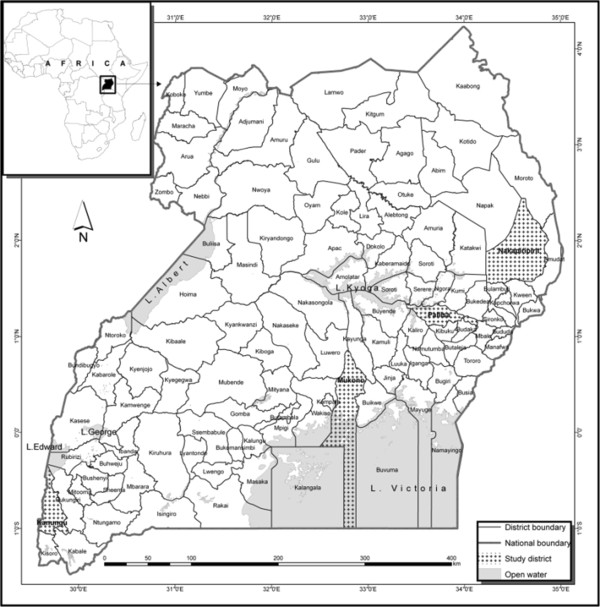
Traditional medicine (TM) occupies a special place in the management of diseases in Uganda. Not with standing the many people relying on TM, indigenous knowledge (IK) related to TM is getting steadily eroded. To slow down this loss it is necessary to document and conserve as much of the knowledge as possible. This study was conducted to document the IK relevant to traditional medicine in the districts of Mukono, Nakapiripirit, Kanungu and Pallisa, in Uganda.
An ethnobotanical survey was conducted between October 2008 and February 2009 using techniques of key informant interviews and household interviews.
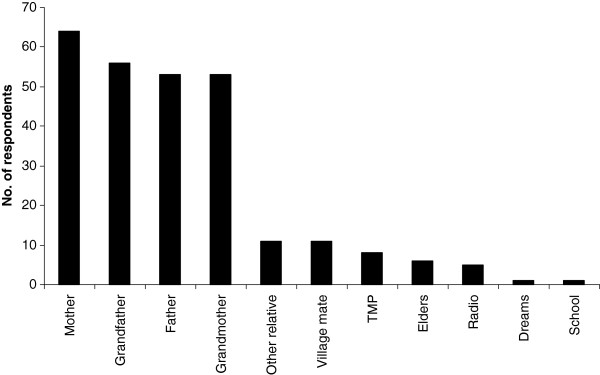
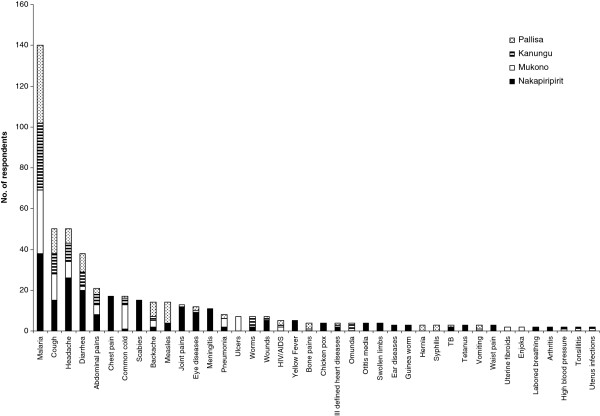
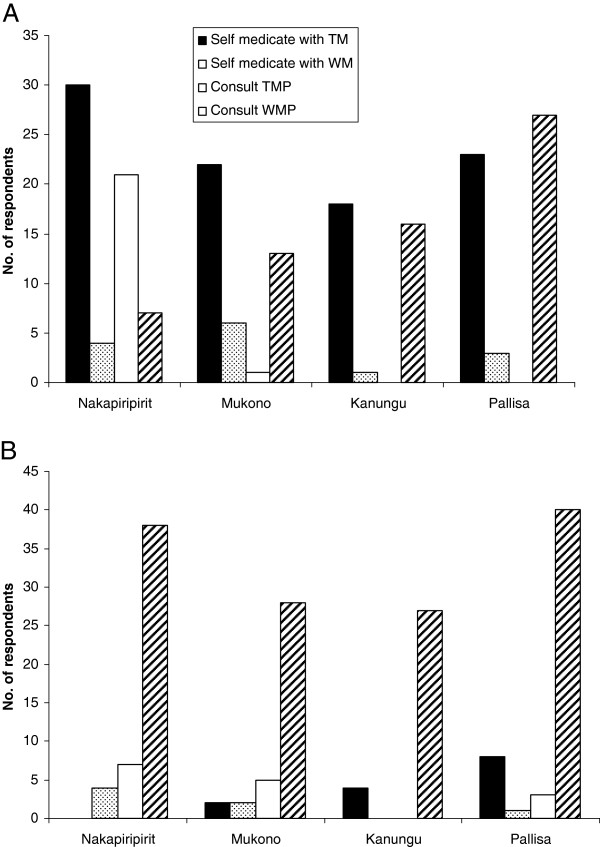
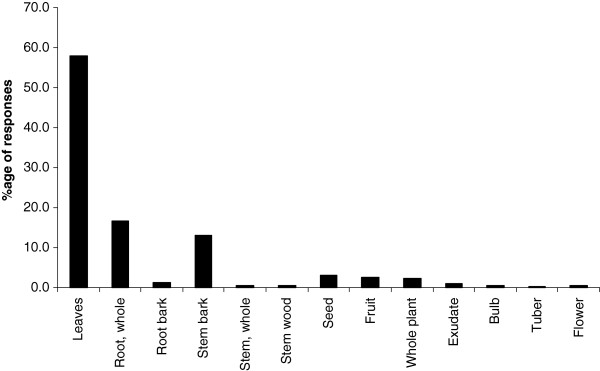
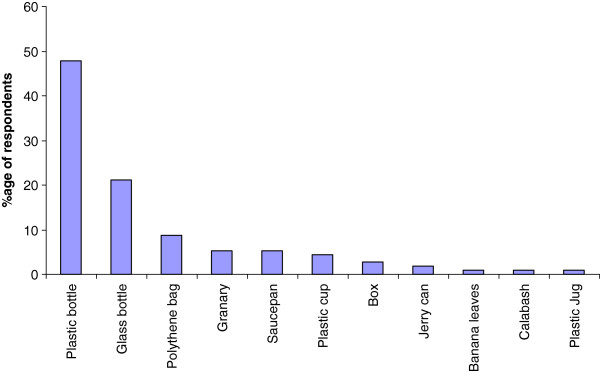
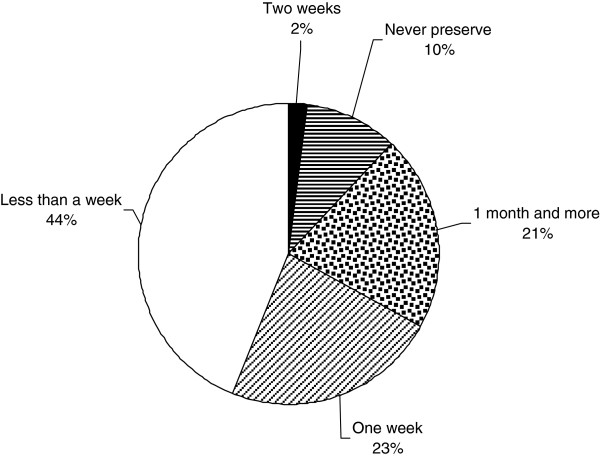
The common diseases and conditions in the four districts include malaria, cough, headache, diarrhea, abdominal pain, flu, backache and eye diseases. Respondents stated that when they fall sick they self medicate using plant medicines or consult western-trained medicine practitioners. Self medication using herbal medicines was reported mostly by respondents of Nakapiripirit and Mukono. Respondents have knowledge to treat 78 ailments using herbal medicines. 44 species, mentioned by three or more respondents have been prioritized. The most frequently used part in herbal medicines is the leaf, followed by the stem and root. People sometime use animal parts, soil, salt and water from a grass roof, in traditional medicines. Herbal medicines are stored for short periods of time in bottles. The knowledge to treat ailments is acquired from parents and grandparents. Respondents' age and tribe appears to have a significant influence on knowledge of herbal medicine, while gender does not.
This survey has indicated that IK associated with TM stills exists and that TM is still important in Uganda because many people use it as a first line of health care when they fall sick. Age and tribe influence the level of IK associated with herbal medicine, but gender does not.
传统医学(TM)在乌干达的疾病管理中占据特殊地位。尽管有许多人依赖 TM,但与 TM 相关的本土知识(IK)正逐渐受到侵蚀。为了减缓这种损失,有必要尽可能多地记录和保护这些知识。本研究旨在记录乌干达 Mukono、Nakapiripirit、Kanungu 和 Pallisa 四个地区与传统医学相关的 IK。
2008 年 10 月至 2009 年 2 月期间,采用关键知情人访谈和家庭访谈技术进行了一项民族植物学调查。
四个地区的常见疾病和病症包括疟疾、咳嗽、头痛、腹泻、腹痛、流感、背痛和眼部疾病。受访者表示,生病时会使用植物药进行自我治疗,或咨询受过西方训练的医学从业者。使用草药进行自我治疗主要由 Nakapiripirit 和 Mukono 的受访者报告。受访者用草药治疗 78 种疾病。有 44 种物种被 3 名或更多受访者提及,已被列为优先事项。草药中最常用的部分是叶子,其次是茎和根。人们有时会使用动物部分、土壤、盐和草屋顶上的水来制作传统药物。草药在短时间内储存在瓶子中。治疗疾病的知识是从父母和祖父母那里获得的。受访者的年龄和部落似乎对草药知识有重大影响,而性别则没有。
本调查表明,与 TM 相关的 IK 仍然存在,并且 TM 在乌干达仍然很重要,因为许多人在生病时将其作为首选的医疗保健方式。年龄和部落影响与草药相关的 IK 水平,但性别则没有。