Department of Ophthalmology, University of Calabar Teaching Hospital, Calabar, Cross River State, Nigeria.
Indian J Ophthalmol. 2012 Sep-Oct;60(5):411-5. doi: 10.4103/0301-4738.100538.
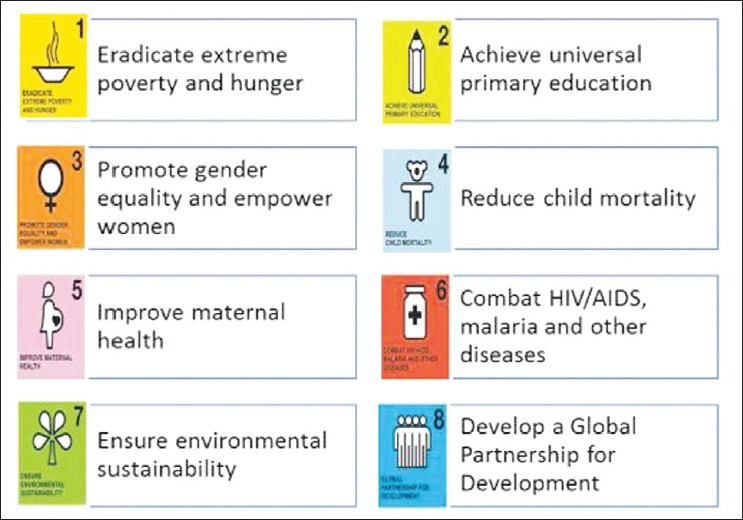
In September 2000, world leaders made a commitment to build a more equitable, prosperous and safer world by 2015 and launched the Millennium Development Goals (MDGs). In the previous year, the World Health Organization and the International Agency for the Prevention of Blindness in partnership launched the global initiative to eliminate avoidable blindness by the year 2020-VISION 2020 the Right to Sight. It has focused on the prevention of a disability-blindness and recognized a health issue-sight as a human right. Both global initiatives have made considerable progress with synergy especially on MDG 1-the reduction of poverty and the reduction in numbers of the blind. A review of the MDGs has identified the need to address disparities within and between countries, quality, and disability. Noncommunicable diseases are emerging as a challenge to the MDGs and Vision 2020:0 the Right to Sight. For the future, up to and beyond 2015, there will be need for both initiatives to continue to work in synergy to address present and emerging challenges.
2000 年 9 月,世界各国领导人承诺到 2015 年建立一个更加公平、繁荣和安全的世界,并发起了千年发展目标(MDGs)。在这之前的一年,世界卫生组织和国际防盲协会合作发起了一项全球倡议,旨在到 2020 年消除可避免的失明——视觉 2020:享有看见的权利。该倡议专注于预防残疾性失明,并认识到视力是一项人权,这是一个健康问题。这两项全球倡议都取得了相当大的进展,具有协同作用,特别是在千年发展目标 1(减少贫困和减少盲人数量)方面。对千年发展目标的审查确定了需要解决各国国内和国家之间的差异、质量和残疾问题。非传染性疾病的出现对千年发展目标和视觉 2020:享有看见的权利构成了挑战。未来,直到 2015 年及以后,这两项倡议都需要继续协同工作,以应对当前和新出现的挑战。