Warwick Medical School, University of Warwick, Coventry, UK.
J Cell Mol Med. 2012 Dec;16(12):2990-3000. doi: 10.1111/j.1582-4934.2012.01626.x.
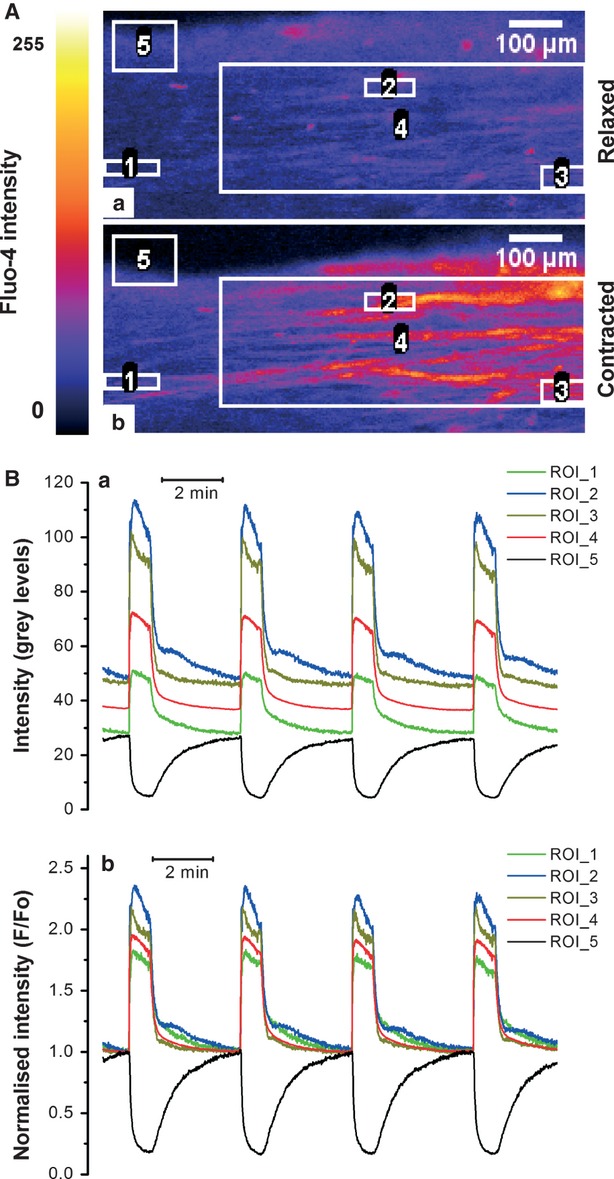
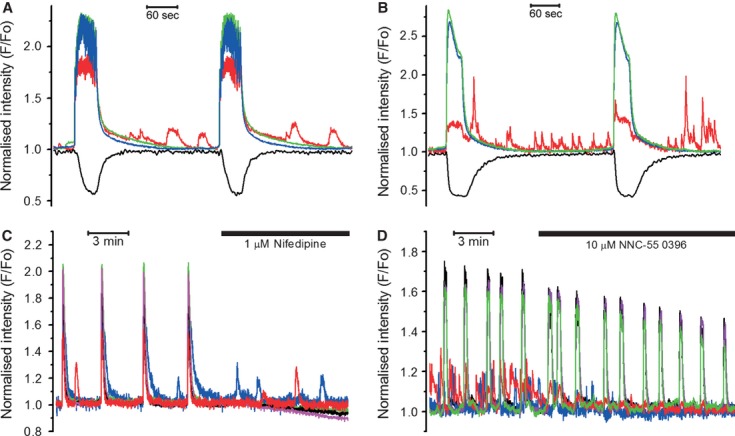
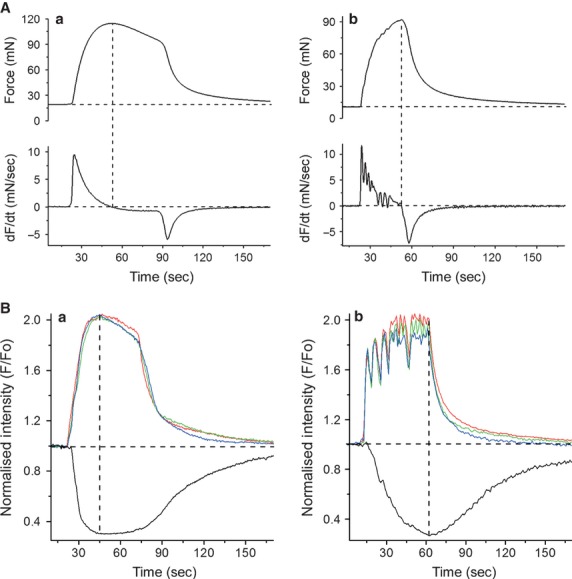
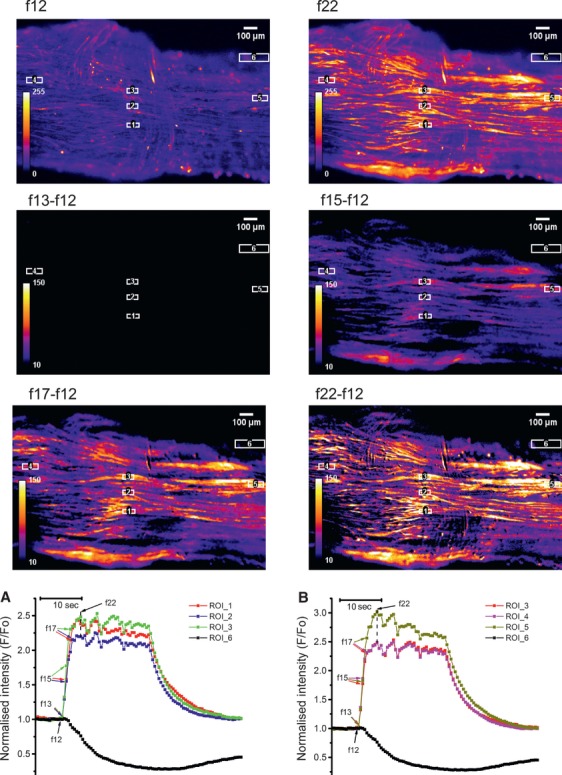
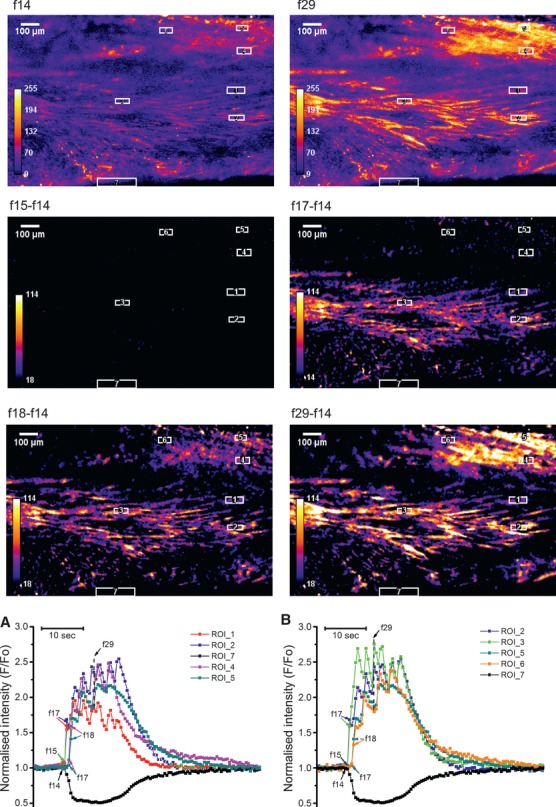
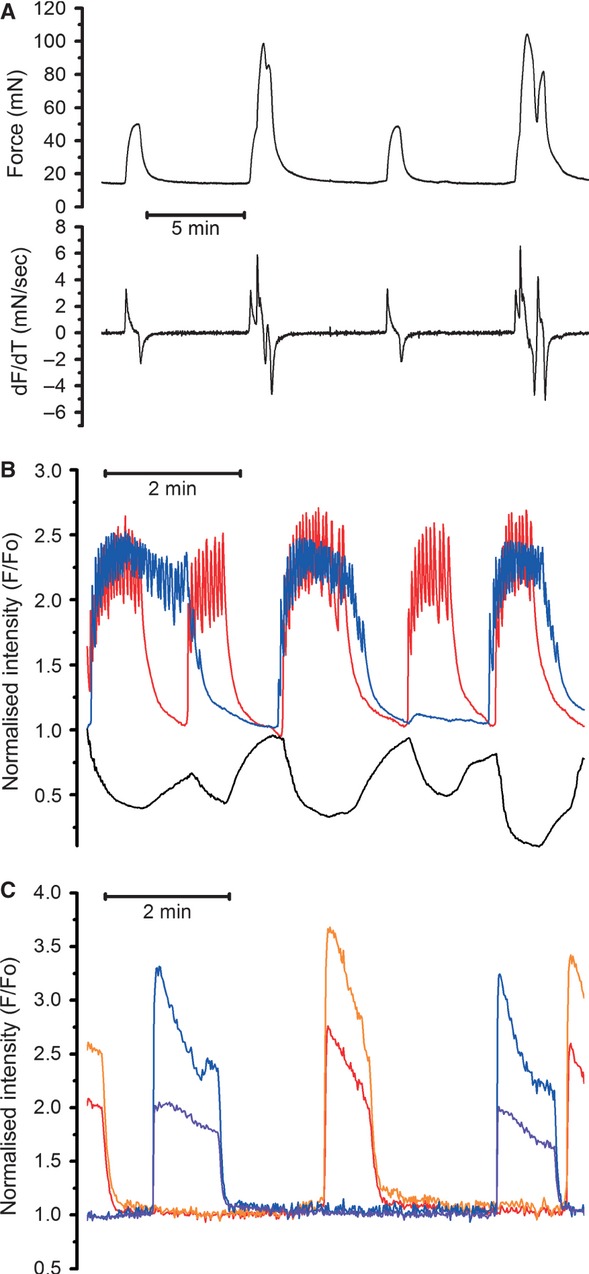
In the labouring uterus, millions of myocytes forming the complex geometrical structure of myometrium contract in synchrony to increase intrauterine pressure, dilate the cervix and eventually expel the foetus through the birth canal. The mechanisms underlying the precise coordination of contractions in human myometrium are not completely understood. In the present study, we have characterized the spatio-temporal properties of tissue-level Ca(2+) transients in thin slices of intact human myometrium. We found that the waveform of Ca(2+) transients and isotonic contractions recorded from thin slices was similar to the waveform of isometric contractions recorded from the larger strips in traditional organ bath experiments, suggesting that the spatio-temporal information obtained from thin slices is representative of the whole tissue. By comparing the time course of Ca(2+) transients in individual cells to that recorded from the bundles of myocytes we found that the majority of myocytes produce rapidly propagating long-lasting Ca(2+) transients accompanied by contractions. We also found a small number of cells showing desynchronized Ca(2+) oscillations that did not trigger contractions. The Ca(2+) oscillations in these cells were insensitive to nifedipine, but readily inhibited by the T-type Ca(2+) channel inhibitor NNC55-0396. In conclusion, our data suggest that the spread of Ca(2+) signals in human myometrium is achieved via propagation of long-lasting action potentials. The propagation was fast when action potentials propagated along bundles of myocytes and slower when propagating between the bundles of uterine myocytes.
在劳动的子宫中,数以百万计的肌细胞形成复杂的子宫肌几何结构,同步收缩以增加子宫内压,扩张宫颈,最终通过产道排出胎儿。人类子宫肌收缩的精确协调机制尚未完全理解。在本研究中,我们对完整的人子宫肌薄片中的组织水平 Ca(2+) 瞬变的时空特性进行了表征。我们发现,从薄片中记录的 Ca(2+) 瞬变和等张收缩的波形与传统器官浴实验中从较大条带记录的等长收缩的波形相似,这表明从薄片中获得的时空信息是整个组织的代表性。通过比较单个细胞中 Ca(2+) 瞬变的时间过程与从肌细胞束中记录的时间过程,我们发现大多数肌细胞产生快速传播的长时程 Ca(2+) 瞬变并伴有收缩。我们还发现一小部分细胞显示出不同步的 Ca(2+) 振荡,这些振荡不会引发收缩。这些细胞中的 Ca(2+) 振荡对硝苯地平不敏感,但易被 T 型钙通道抑制剂 NNC55-0396 抑制。总之,我们的数据表明,人子宫肌中 Ca(2+) 信号的传播是通过长时程动作电位的传播来实现的。当动作电位沿着肌细胞束传播时,传播速度很快,而当在子宫肌束之间传播时,传播速度较慢。