Coe Jeffrey D, Kitchel Scott H, Meisel Hans Jörg, Wingo Charles H, Lee Soo Eon, Jahng Tae-Ahn
Silicon Valley Spine Institute, Campbell, CA, USA.
J Korean Neurosurg Soc. 2012 Jun;51(6):343-9. doi: 10.3340/jkns.2012.51.6.343. Epub 2012 Jun 30.
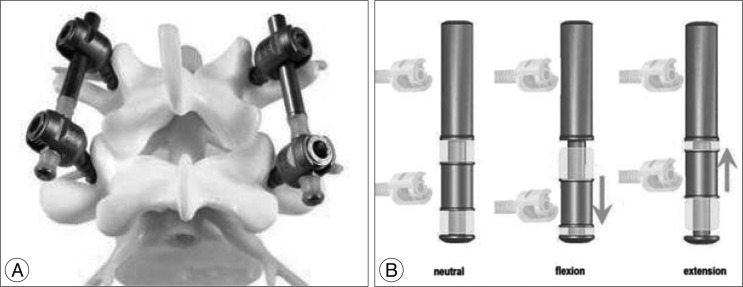
Pedicle-based dynamic stabilization systems, in which semi-rigid rods or cords are used to restrict or control spinal segmental motion, aim to reduce or eliminate the drawbacks associated with rigid fusion. In this study, we analyzed the two-year clinical outcomes of patients treated with the NFlex (Synthes Spine, Inc.), a pedicle-based dynamic stabilization system.
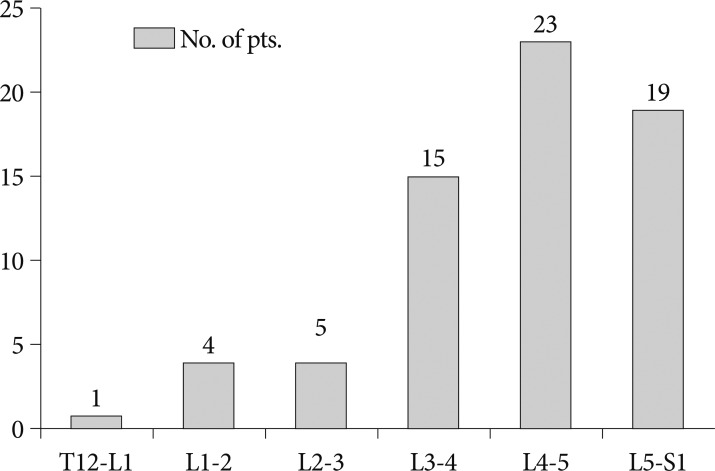
Five sites participated in a retrospective study of 72 consecutive patients who underwent NFlex stabilization. Of these 72 patients, 65 were available for 2-year follow-up. Patients were included based on the presence of degenerative disc disease (29 patients), degenerative spondylolisthesis (16 patients), lumbar stenosis (9 patients), adjacent segment degeneration (6 patients), and degenerative lumbar scoliosis (5 patients). The clinical outcome measures at each assessment were Visual Analogue Scale (VAS) to measure back pain, and Oswestry Disability Index (ODI) to measure functional status. Radiographic assessments included evidence of instrumentation failure or screw loosening.
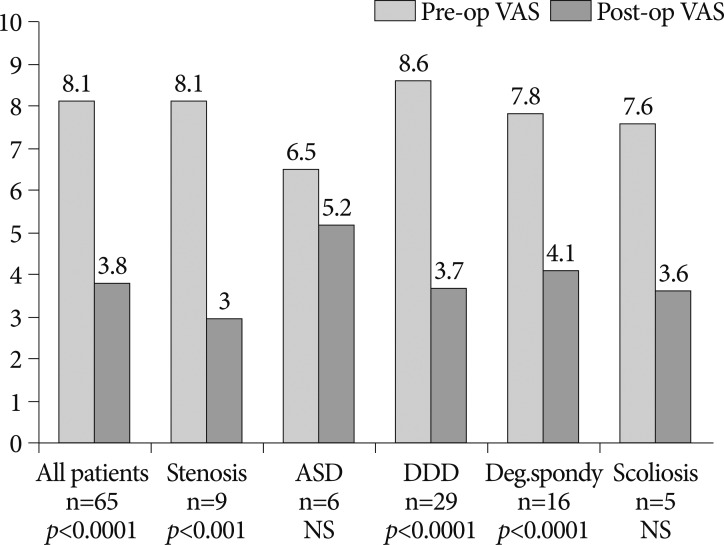
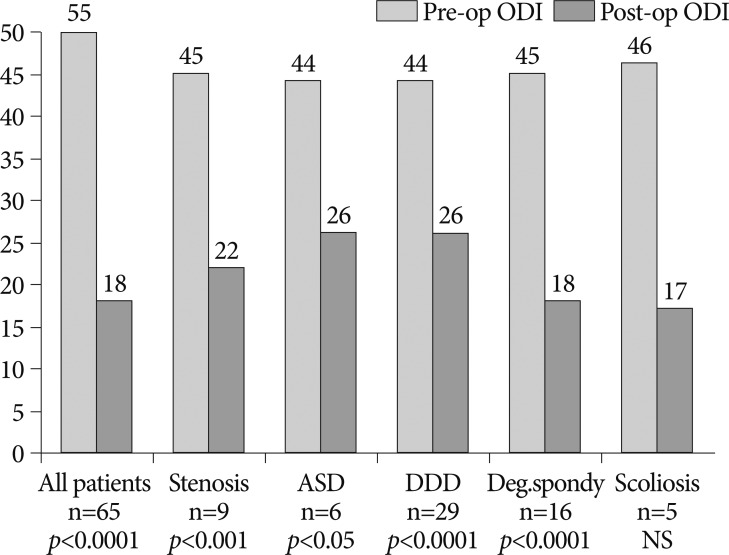
Sixty-five patients (26 men and 39 women) with a mean age of 54.5 years were included. Mean follow-up was 25.6 months. The mean VAS score improved from 8.1 preoperatively to 3.8 postoperatively, representing a 53% improvement, and the ODI score from 44.5 to 21.8, representing a 51% improvement. Improvements in pain and disability scores were statistically significant. Three implant-related complications were observed.
Posterior pedicle-based dynamic stabilization using the NFlex system seems effective in improving pain and functional scores, with sustained clinical improvement after two years. With appropriate patient selection, it may be considered an effective alternative to rigid fusion.
基于椎弓根的动态稳定系统采用半刚性杆或绳索来限制或控制脊柱节段运动,旨在减少或消除与刚性融合相关的缺点。在本研究中,我们分析了采用基于椎弓根的动态稳定系统NFlex(辛迪斯脊柱公司)治疗的患者的两年临床结果。
五个研究点参与了一项对72例连续接受NFlex稳定术患者的回顾性研究。在这72例患者中,65例可供进行两年随访。纳入患者的疾病包括椎间盘退变(29例)、退变性椎体滑脱(16例)、腰椎管狭窄(9例)、相邻节段退变(6例)和退变性腰椎侧弯(5例)。每次评估的临床结果指标为采用视觉模拟量表(VAS)测量背痛,采用Oswestry功能障碍指数(ODI)测量功能状态。影像学评估包括内固定失败或螺钉松动的证据。
纳入65例患者(26例男性和39例女性),平均年龄54.5岁。平均随访时间为25.6个月。VAS评分均值从术前的8.1改善至术后的3.8,改善了53%;ODI评分从44.5改善至21.8,改善了51%。疼痛和功能障碍评分的改善具有统计学意义。观察到3例与植入物相关的并发症。
使用NFlex系统进行后路椎弓根动态稳定术似乎能有效改善疼痛和功能评分,且两年后临床持续改善。经过适当的患者选择,它可被视为刚性融合的一种有效替代方法。