Department of Cellular Microbiology, Max-Planck-Institute for Infection Biology, Charitéplatz 1, D-10117 Berlin, Germany.
Cell Death Dis. 2012 Sep 6;3(9):e384. doi: 10.1038/cddis.2012.124.
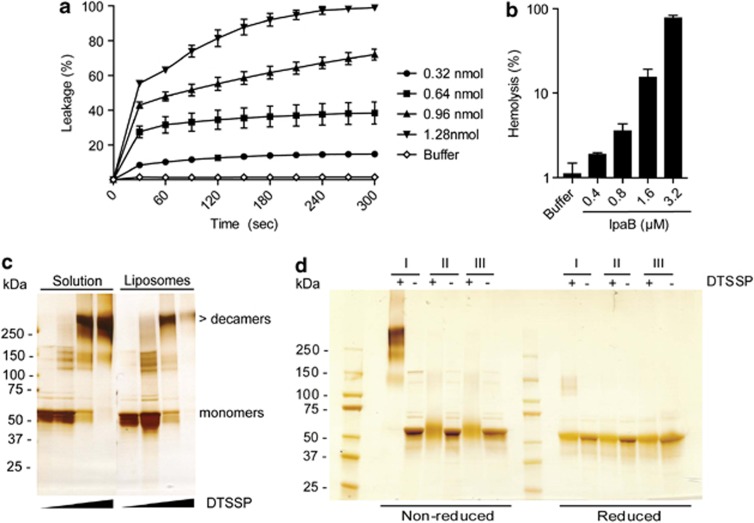
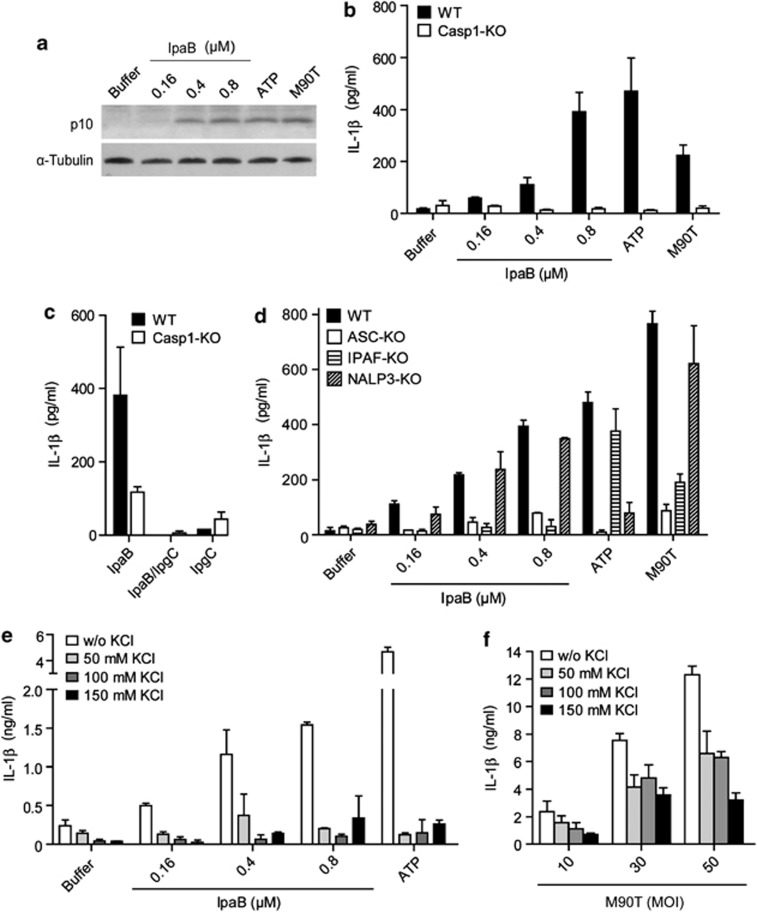
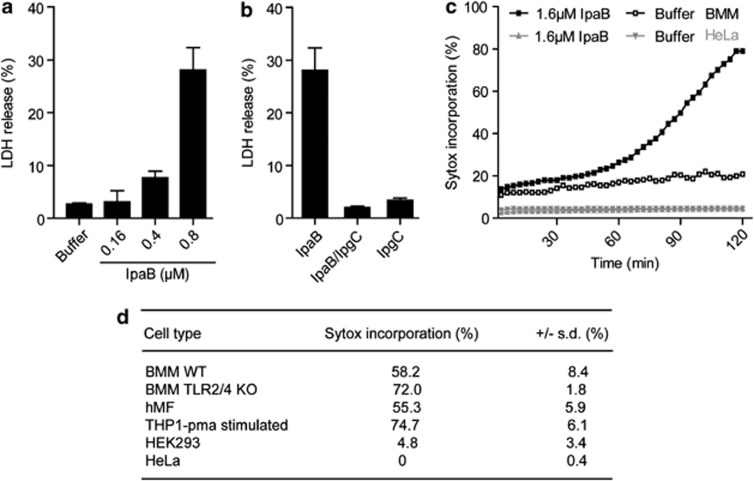
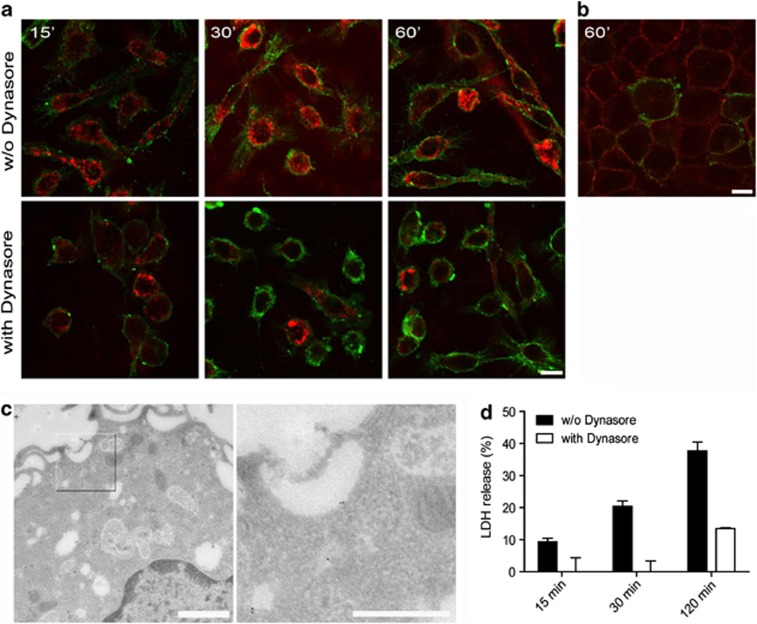
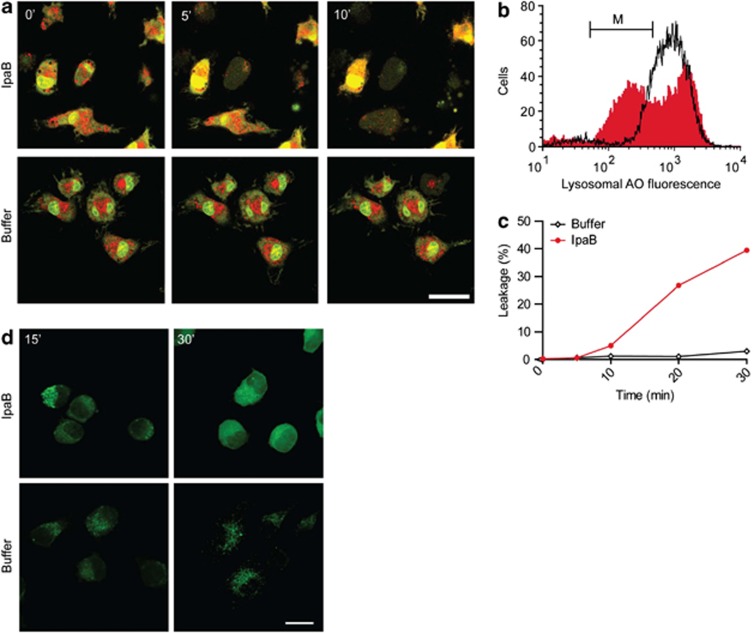
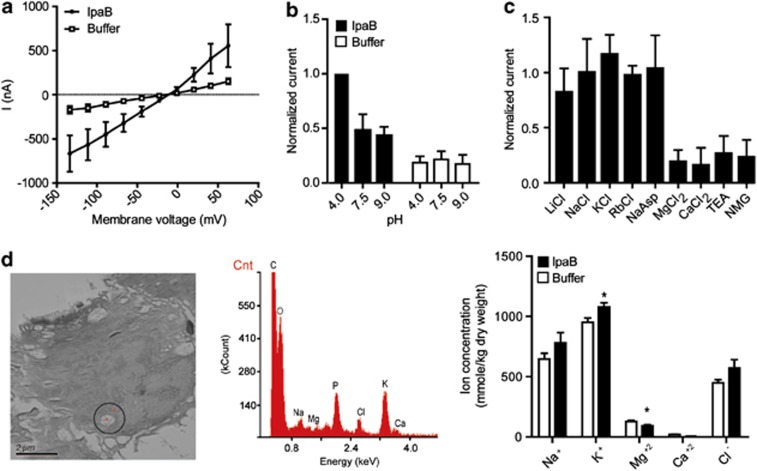
The Gram-negative bacterium Shigella flexneri invades the colonic epithelium and causes bacillary dysentery. S. flexneri requires the virulence factor invasion plasmid antigen B (IpaB) to invade host cells, escape from the phagosome and induce macrophage cell death. The mechanism by which IpaB functions remains unclear. Here, we show that purified IpaB spontaneously oligomerizes and inserts into the plasma membrane of target cells forming cation selective ion channels. After internalization, IpaB channels permit potassium influx within endolysosomal compartments inducing vacuolar destabilization. Endolysosomal leakage is followed by an ICE protease-activating factor-dependent activation of Caspase-1 in macrophages and cell death. Our results provide a mechanism for how the effector protein IpaB with its ion channel activity causes phagosomal destabilization and induces macrophage death. These data may explain how S. flexneri uses secreted IpaB to escape phagosome and kill the host cells during infection and, may be extended to homologs from other medically important enteropathogenic bacteria.
革兰氏阴性菌福氏志贺菌侵袭结肠上皮细胞并引起细菌性痢疾。福氏志贺菌需要毒力因子侵袭质粒抗原 B(IpaB)来侵袭宿主细胞,从吞噬体逃逸并诱导巨噬细胞死亡。IpaB 发挥作用的机制尚不清楚。在这里,我们表明纯化的 IpaB 自发寡聚化并插入靶细胞的质膜形成阳离子选择性离子通道。内化后,IpaB 通道允许钾离子在内吞体隔室内流入,诱导液泡不稳定。内吞体泄漏后,ICE 蛋白酶激活因子依赖性 Caspase-1 在巨噬细胞中的激活和细胞死亡。我们的结果提供了一种机制,说明效应蛋白 IpaB 如何通过其离子通道活性导致吞噬体不稳定并诱导巨噬细胞死亡。这些数据可能解释了福氏志贺菌如何利用分泌的 IpaB 在感染期间逃避吞噬体并杀死宿主细胞,并且可以扩展到来自其他医学上重要的肠致病性细菌的同源物。