Ferrari Mariana L, Charova Spyridoula N, Sansonetti Philippe J, Mylonas Efstratios, Gazi Anastasia D
Unité de Pathogénie Microbienne Moléculaire, Institut Pasteur, Paris, France.
INSERM U1202, Paris, France.
Front Cell Infect Microbiol. 2021 Apr 29;11:673122. doi: 10.3389/fcimb.2021.673122. eCollection 2021.
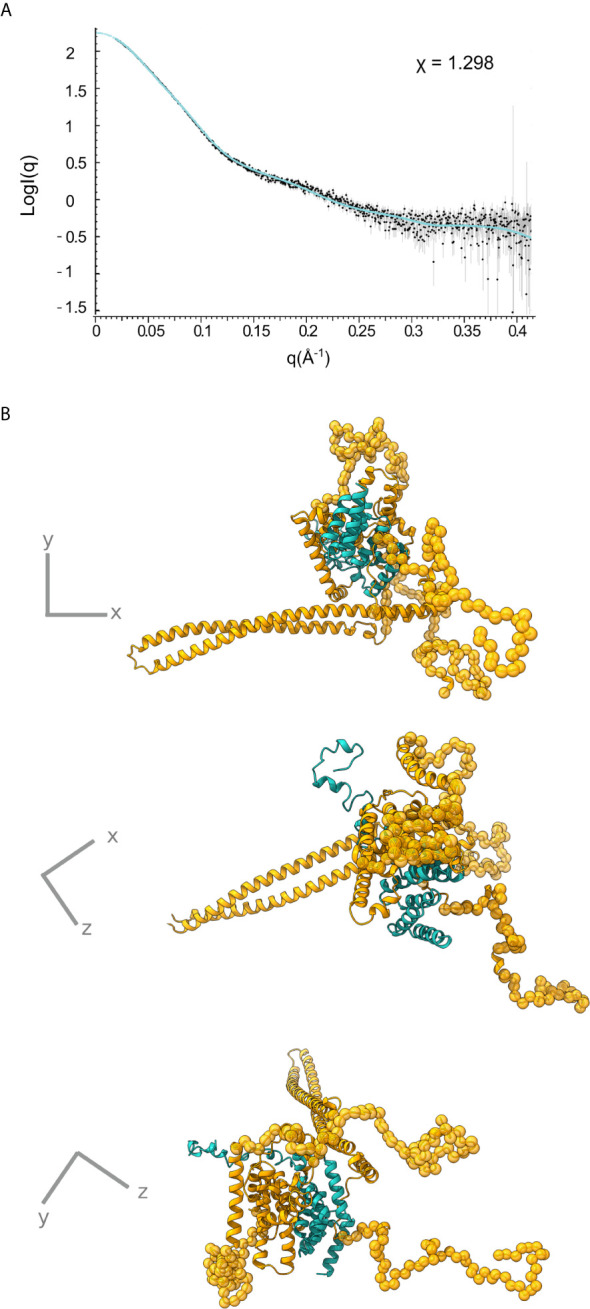
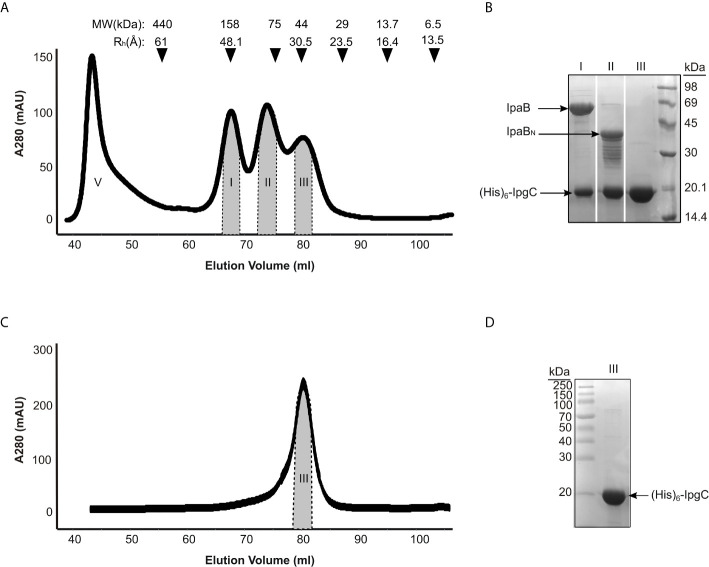
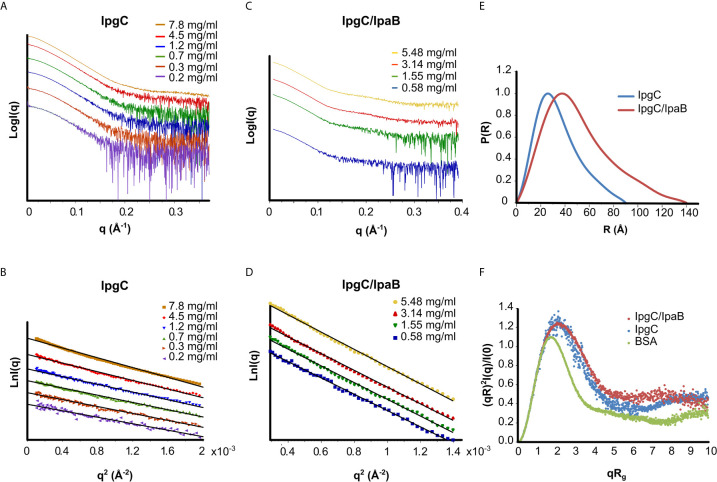
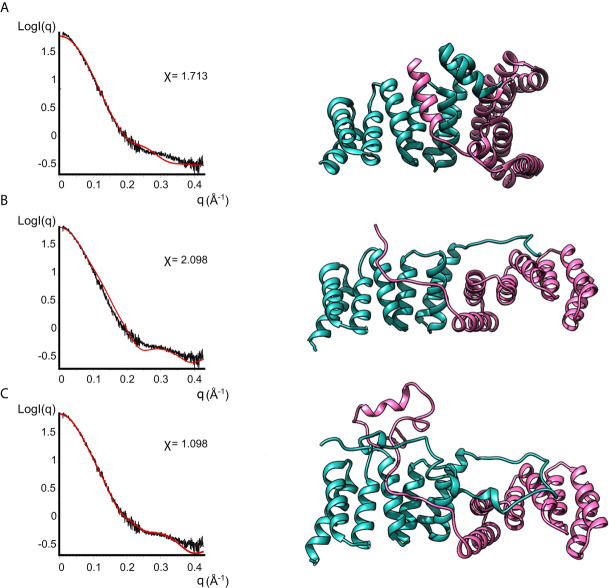
Bacterial Type III Secretion Systems (T3SSs) are specialized multicomponent nanomachines that mediate the transport of proteins either to extracellular locations or deliver Type III Secretion effectors directly into eukaryotic host cell cytoplasm. , the causing agent of bacillary dysentery or shigellosis, bears a set of T3SS proteins termed translocators that form a pore in the host cell membrane. IpaB, the major translocator of the system, is a key factor in promoting pathogenicity. Prior to secretion, IpaB is maintained inside the bacterial cytoplasm in a secretion competent folding state thanks to its cognate chaperone IpgC. IpgC couples T3SS activation to transcription of effector genes through its binding to MxiE, probably after the delivery of IpaB to the secretion export gate. Small Angle X-ray Scattering experiments and modeling reveal that IpgC is found in different oligomeric states in solution, as it forms a stable heterodimer with full-length IpaB in contrast to an aggregation-prone homodimer in the absence of the translocator. These results support a stoichiometry of interaction 1:1 in the IpgC/IpaB complex and the multi-functional nature of IpgC under different T3SS states.
细菌III型分泌系统(T3SSs)是专门的多组分纳米机器,可介导蛋白质运输到细胞外位置,或将III型分泌效应蛋白直接递送到真核宿主细胞胞质中。痢疾杆菌或志贺氏菌病的病原体带有一组称为转运蛋白的T3SS蛋白,这些蛋白在宿主细胞膜上形成一个孔。该系统的主要转运蛋白IpaB是促进致病性的关键因素。在分泌之前,由于其同源伴侣IpgC,IpaB以分泌能力的折叠状态维持在细菌细胞质内。IpgC可能在将IpaB递送到分泌出口门之后,通过其与MxiE的结合将T3SS激活与效应基因的转录偶联起来。小角X射线散射实验和建模表明,IpgC在溶液中以不同的寡聚状态存在,因为它与全长IpaB形成稳定的异二聚体,而在没有转运蛋白的情况下则形成易于聚集的同二聚体。这些结果支持IpgC/IpaB复合物中1:1的相互作用化学计量以及IpgC在不同T3SS状态下的多功能性质。