Department of Psychiatry, Behavioural and Clinical Neuroscience Institute, University of Cambridge, Cambridge, UK.
Am J Psychiatry. 2012 Sep;169(9):926-36. doi: 10.1176/appi.ajp.2012.11091421.
Not everyone who takes drugs becomes addicted, but the likelihood of developing drug addiction is greater in people with a family history of drug or alcohol dependence. Relatively little is known about how genetic risk mediates the development of drug dependence. By comparing the phenotypic profile of individuals with and without a family history of addiction, the authors sought to clarify the extent to which cognitive dysfunction and personality traits are shared by family members--and therefore likely to have predated drug dependence--and which aspects are specific to drug-dependent individuals.
The authors assessed cognitive function and personality traits associated with drug dependence in stimulant-dependent individuals (N=50), their biological siblings without a history of drug dependence (N=50), and unrelated healthy volunteers (N=50).
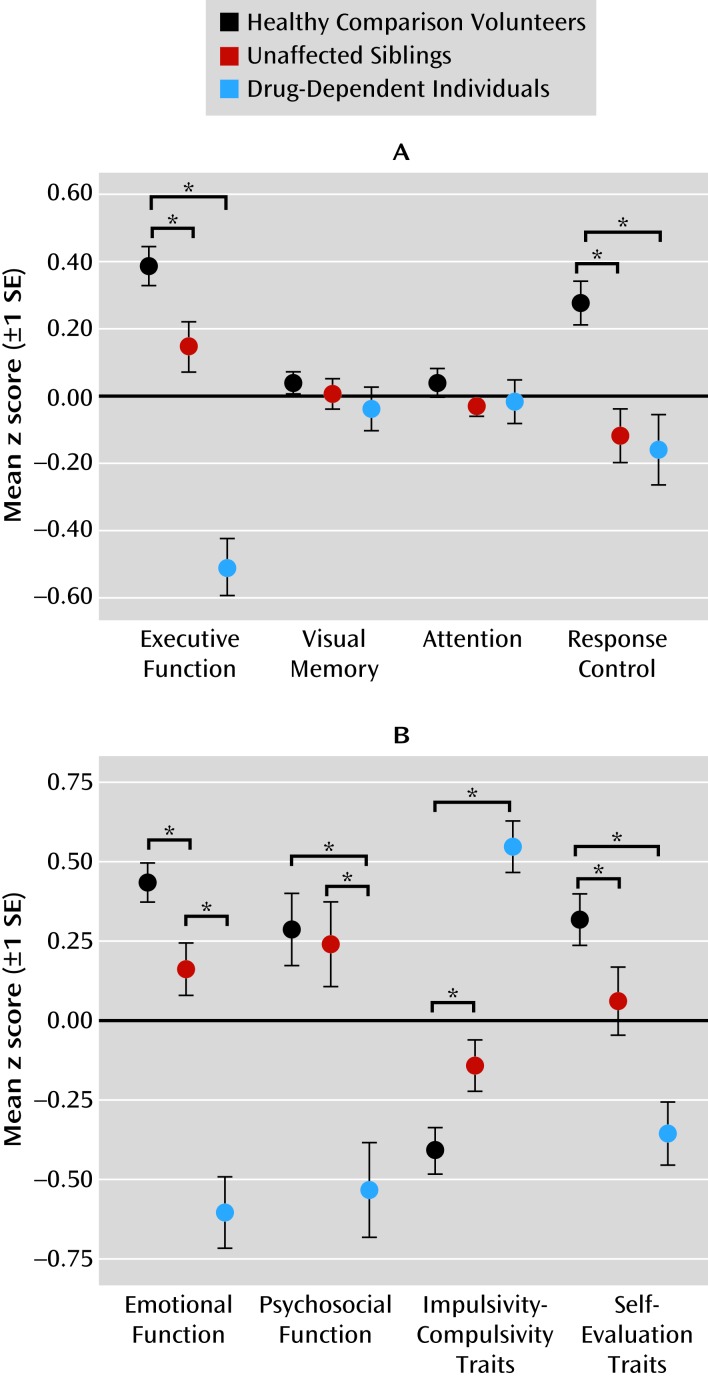
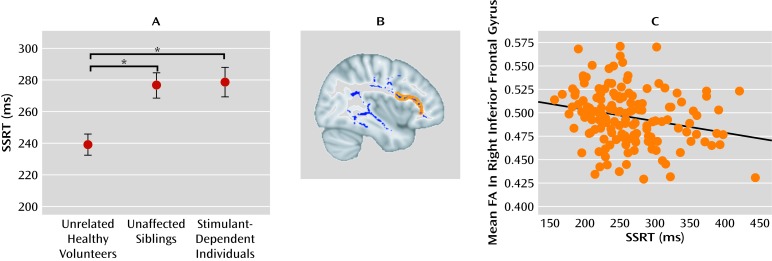
Cognitive function was significantly impaired in the stimulant-dependent individuals across a range of domains. Deficits in executive function and response control were identified in both the stimulant-dependent individuals and in their non-drug-dependent siblings. Drug-dependent individuals and their siblings also exhibited elevated anxious-impulsive personality traits relative to healthy comparison volunteers.
Deficits in executive function and response regulation as well as anxious-impulsive personality traits may represent endophenotypes associated with the risk of developing cocaine or amphetamine dependence. The identification of addiction endophenotypes may be useful in facilitating the rational development of therapeutic and preventive strategies.
并非每个吸毒的人都会上瘾,但有药物或酒精依赖家族史的人更有可能患上药物成瘾。关于遗传风险如何介导药物依赖的发展,人们知之甚少。通过比较有和没有药物滥用家族史的个体的表型特征,作者试图阐明认知功能障碍和人格特征在多大程度上为家庭成员所共有——因此可能先于药物依赖——以及哪些方面是药物依赖个体特有的。
作者评估了 50 名依赖兴奋剂的个体、50 名无药物依赖家族史的生物学兄弟姐妹和 50 名无关的健康志愿者的与药物依赖相关的认知功能和人格特征。
在一系列领域,兴奋剂依赖个体的认知功能明显受损。在兴奋剂依赖个体及其非药物依赖的兄弟姐妹中,都发现了执行功能和反应控制的缺陷。与健康对照组志愿者相比,药物依赖个体及其兄弟姐妹也表现出更高的焦虑冲动人格特质。
执行功能和反应调节缺陷以及焦虑冲动人格特质可能代表与可卡因或安非他命依赖风险相关的内表型。确定成瘾内表型可能有助于合理制定治疗和预防策略。