Department of Oncological Sciences, Huntsman Cancer Institute, University of Utah, Salt Lake City, Utah, United States of America.
PLoS Genet. 2012;8(8):e1002922. doi: 10.1371/journal.pgen.1002922. Epub 2012 Aug 30.
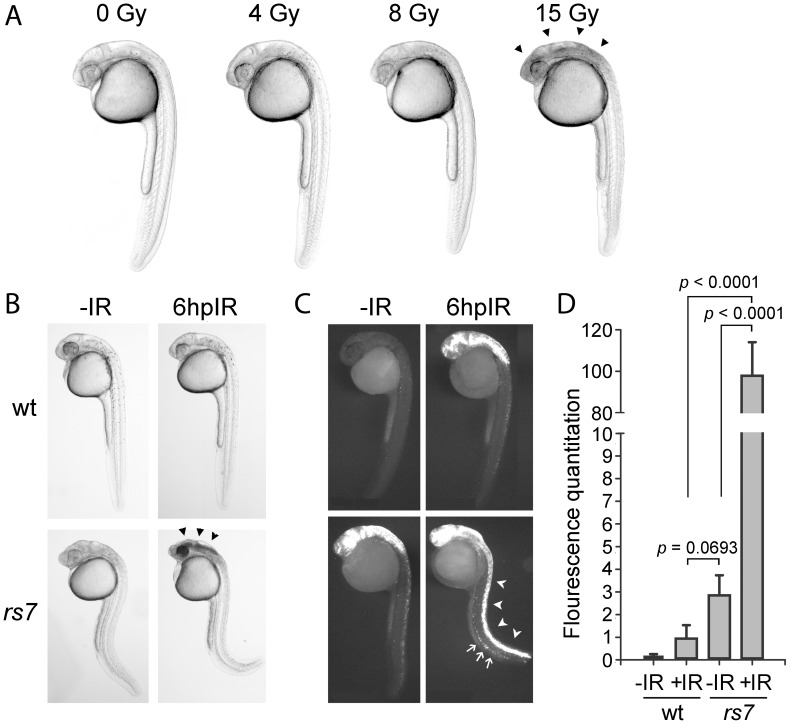
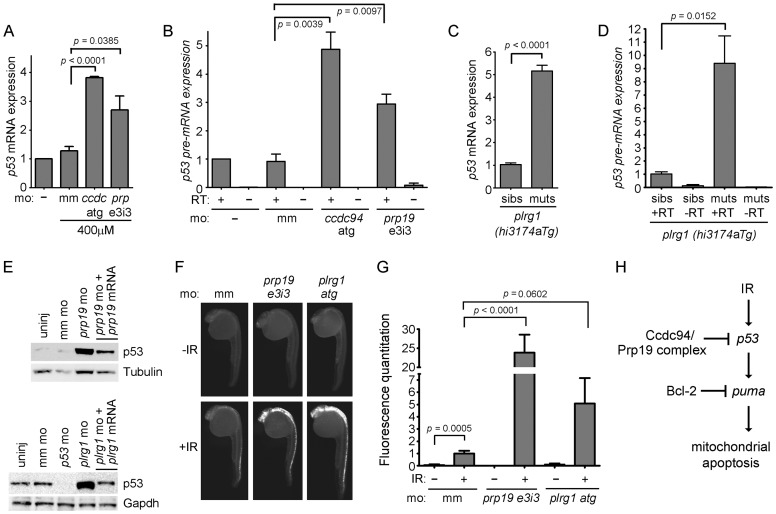
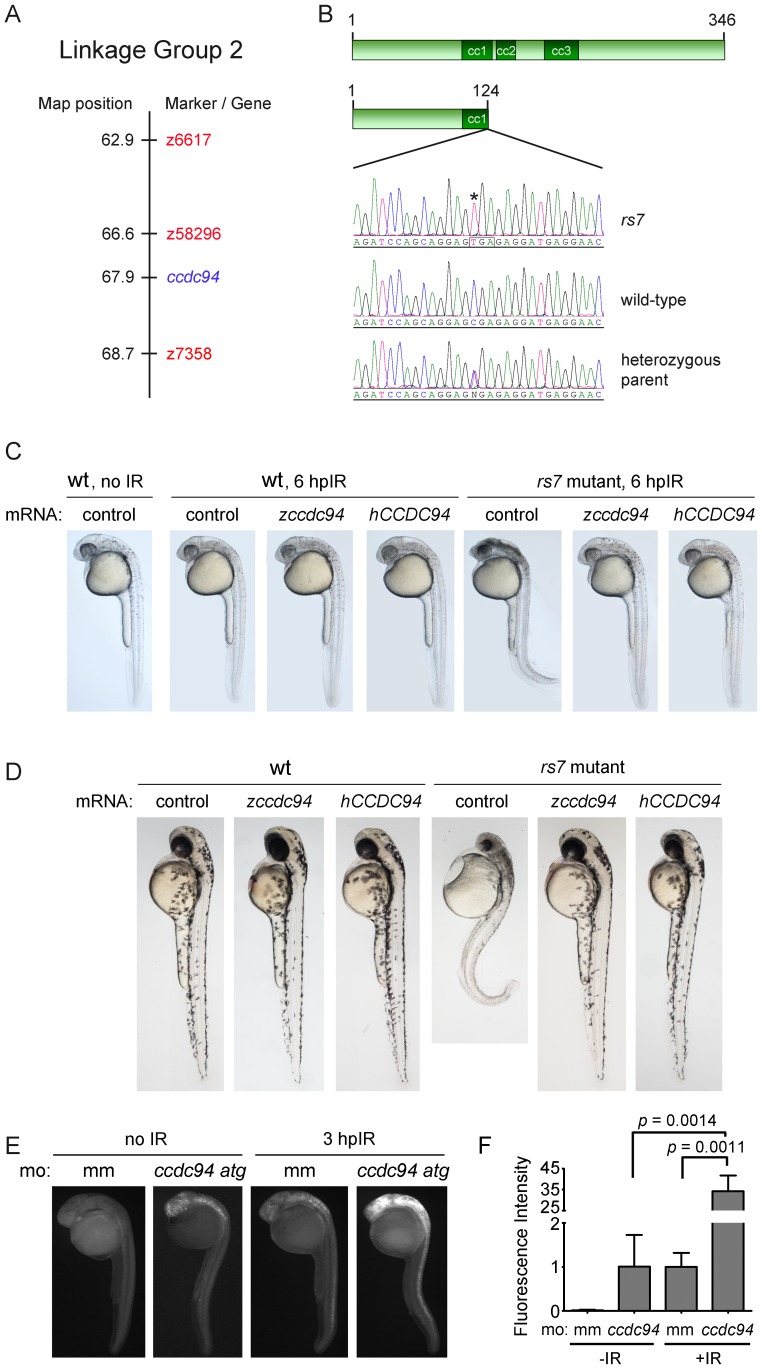
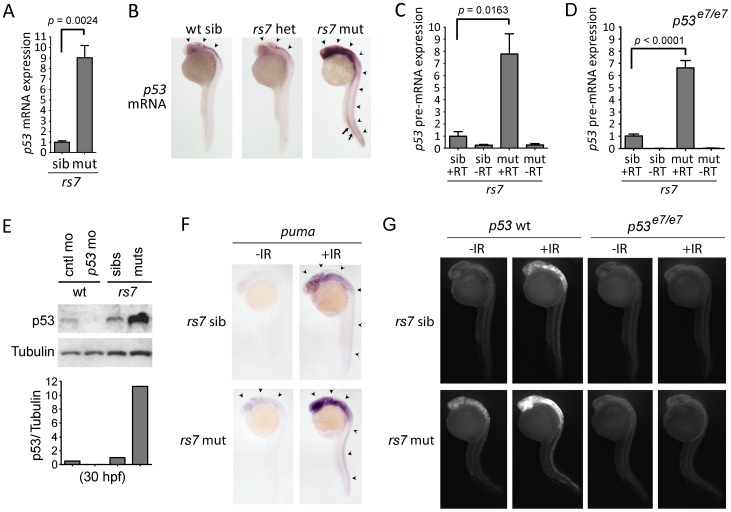
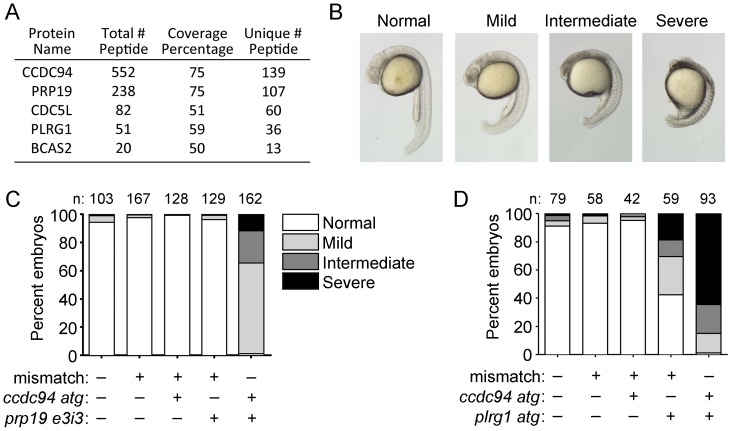
DNA double-strand breaks (DSBs) represent one of the most deleterious forms of DNA damage to a cell. In cancer therapy, induction of cell death by DNA DSBs by ionizing radiation (IR) and certain chemotherapies is thought to mediate the successful elimination of cancer cells. However, cancer cells often evolve to evade the cytotoxicity induced by DNA DSBs, thereby forming the basis for treatment resistance. As such, a better understanding of the DSB DNA damage response (DSB-DDR) pathway will facilitate the design of more effective strategies to overcome chemo- and radioresistance. To identify novel mechanisms that protect cells from the cytotoxic effects of DNA DSBs, we performed a forward genetic screen in zebrafish for recessive mutations that enhance the IR-induced apoptotic response. Here, we describe radiosensitizing mutation 7 (rs7), which causes a severe sensitivity of zebrafish embryonic neurons to IR-induced apoptosis and is required for the proper development of the central nervous system. The rs7 mutation disrupts the coding sequence of ccdc94, a highly conserved gene that has no previous links to the DSB-DDR pathway. We demonstrate that Ccdc94 is a functional member of the Prp19 complex and that genetic knockdown of core members of this complex causes increased sensitivity to IR-induced apoptosis. We further show that Ccdc94 and the Prp19 complex protect cells from IR-induced apoptosis by repressing the expression of p53 mRNA. In summary, we have identified a new gene regulating a dosage-sensitive response to DNA DSBs during embryonic development. Future studies in human cancer cells will determine whether pharmacological inactivation of CCDC94 reduces the threshold of the cancer cell apoptotic response.
DNA 双链断裂 (DSB) 是细胞中最具破坏性的 DNA 损伤形式之一。在癌症治疗中,电离辐射 (IR) 和某些化疗药物诱导的细胞死亡导致 DNA DSB 被认为介导了癌细胞的成功消除。然而,癌细胞经常进化以逃避由 DNA DSB 诱导的细胞毒性,从而为治疗耐药性奠定了基础。因此,更好地了解 DSB DNA 损伤反应 (DSB-DDR) 途径将有助于设计更有效的策略来克服化疗和放疗耐药性。为了确定保护细胞免受 DNA DSB 细胞毒性影响的新机制,我们在斑马鱼中进行了正向遗传筛选,以寻找隐性突变,这些突变增强了 IR 诱导的细胞凋亡反应。在这里,我们描述了放射增敏突变 7 (rs7),它导致斑马鱼胚胎神经元对 IR 诱导的细胞凋亡的严重敏感性,并且是中枢神经系统正常发育所必需的。rs7 突变破坏了 ccdc94 的编码序列,ccdc94 是一个高度保守的基因,以前与 DSB-DDR 途径没有联系。我们证明 Ccdc94 是 Prp19 复合物的一个功能成员,并且该复合物的核心成员的遗传敲低导致对 IR 诱导的细胞凋亡的敏感性增加。我们进一步表明,Ccdc94 和 Prp19 复合物通过抑制 p53 mRNA 的表达来保护细胞免受 IR 诱导的细胞凋亡。总之,我们已经确定了一个新的基因,该基因在胚胎发育过程中调节对 DNA DSB 的剂量敏感反应。在人类癌细胞中的未来研究将确定药理学失活 CCDC94 是否会降低癌细胞凋亡反应的阈值。