Evolutionary Genetics Group, Department of Genetics, Microbiology, and Toxicology, Stockholm University, Stockholm, S-106 91, Sweden.
BMC Genet. 2012 Sep 6;13:77. doi: 10.1186/1471-2156-13-77.
Telomeres, the protective cap of chromosomes, have emerged as powerful markers of biological age and life history in model and non-model species. The qPCR method for telomere length estimation is one of the most common methods for telomere length estimation, but has received recent critique for being too error-prone and yielding unreliable results. This critique coincides with an increasing awareness of the potentials and limitations of the qPCR technique in general and the proposal of a general set of guidelines (MIQE) for standardization of experimental, analytical, and reporting steps of qPCR. In order to evaluate the utility of the qPCR method for telomere length estimation in non-model species, we carried out four different qPCR assays directed at humpback whale telomeres, and subsequently performed a rigorous quality control to evaluate the performance of each assay.
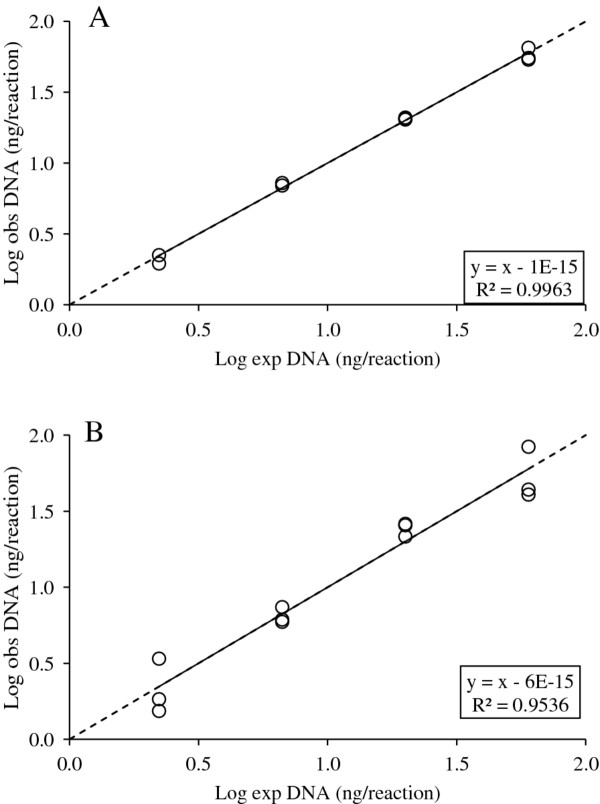
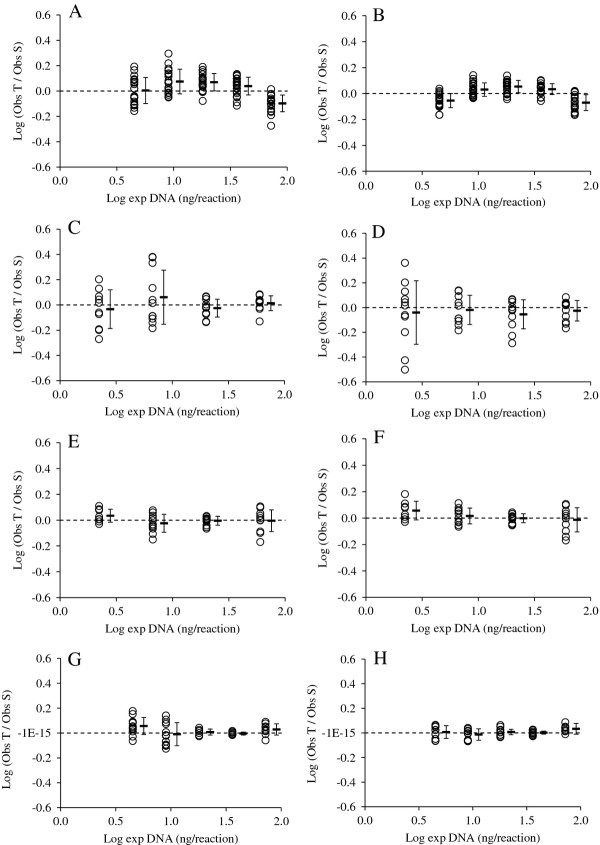
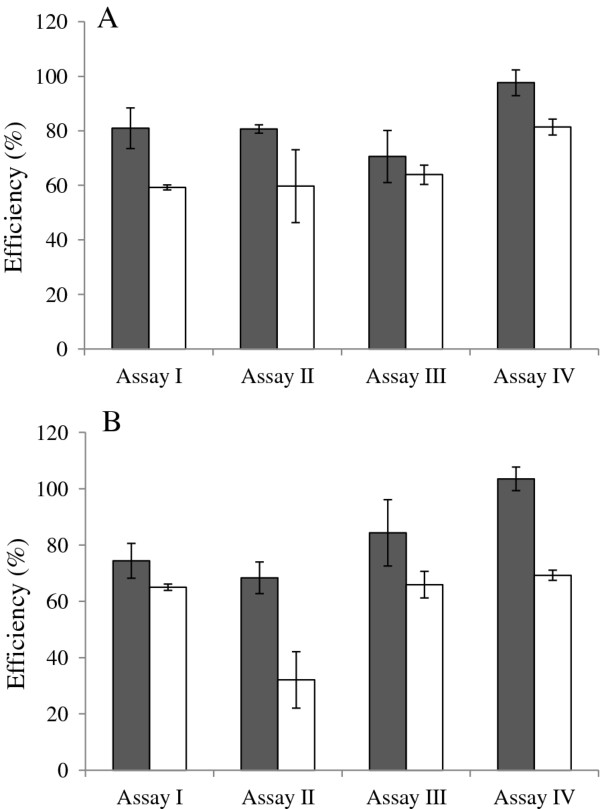
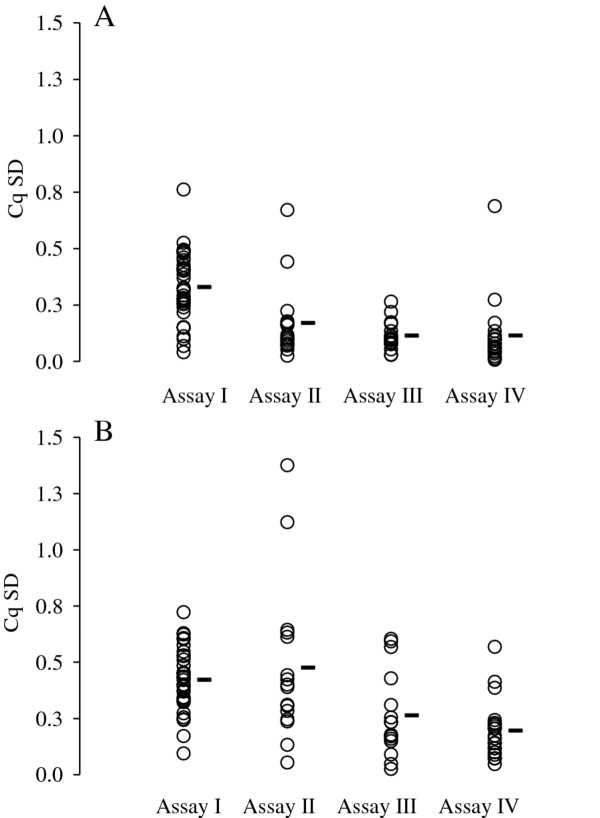
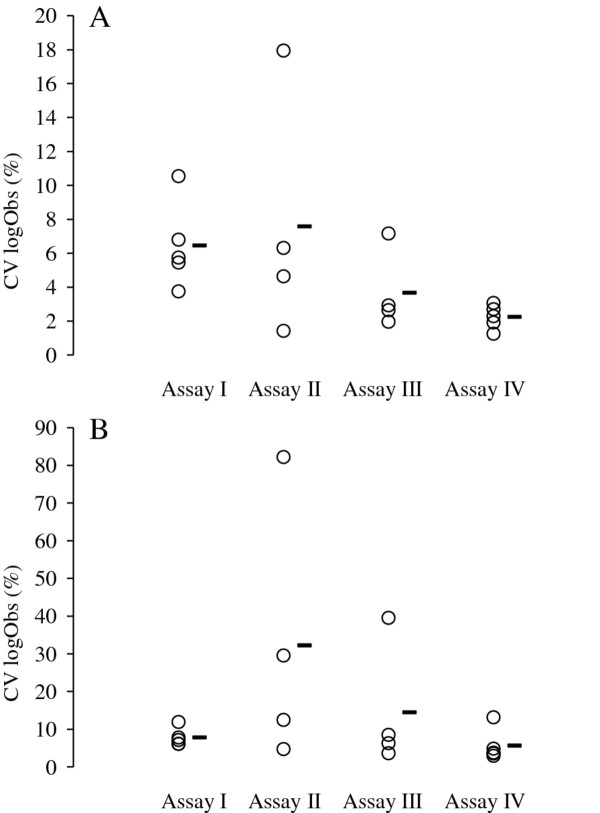
Performance differed substantially among assays and only one assay was found useful for telomere length estimation in humpback whales. The most notable factors causing these inter-assay differences were primer design and choice of using singleplex or multiplex assays. Inferred amplification efficiencies differed by up to 40% depending on assay and quantification method, however this variation only affected telomere length estimates in the worst performing assays.
Our results suggest that seemingly well performing qPCR assays may contain biases that will only be detected by extensive quality control. Moreover, we show that the qPCR method for telomere length estimation can be highly precise and accurate, and thus suitable for telomere measurement in non-model species, if effort is devoted to optimization at all experimental and analytical steps. We conclude by highlighting a set of quality controls which may serve for further standardization of the qPCR method for telomere length estimation, and discuss some of the factors that may cause variation in qPCR experiments.
端粒是染色体的保护性帽,已成为模型和非模型物种中生物年龄和生活史的强大标志物。用于端粒长度估计的 qPCR 方法是端粒长度估计最常用的方法之一,但最近因其误差率过高且结果不可靠而受到批评。这种批评恰逢人们越来越意识到 qPCR 技术的潜力和局限性,以及为标准化 qPCR 的实验、分析和报告步骤提出了一套通用准则(MIQE)。为了评估 qPCR 方法在非模型物种中端粒长度估计的实用性,我们进行了四项针对座头鲸端粒的不同 qPCR 检测,随后进行了严格的质量控制,以评估每个检测的性能。
检测之间的性能存在很大差异,只有一种检测方法被发现对座头鲸的端粒长度估计有用。造成这些检测间差异的最显著因素是引物设计和选择单重或多重检测。根据检测和定量方法的不同,推断的扩增效率差异高达 40%,但这种差异仅影响性能最差的检测中的端粒长度估计。
我们的结果表明,看似表现良好的 qPCR 检测可能存在偏差,只有通过广泛的质量控制才能检测到这些偏差。此外,我们表明,qPCR 方法可用于测量非模型物种的端粒长度,只要在所有实验和分析步骤上都努力进行优化,该方法就可以高度精确和准确。最后,我们通过强调一组质量控制措施来总结,这些质量控制措施可能有助于进一步标准化 qPCR 方法用于端粒长度估计,并讨论了可能导致 qPCR 实验出现差异的一些因素。