Netherlands Metabolomics Centre, Einsteinweg 55, Leiden, The Netherlands.
Rapid Commun Mass Spectrom. 2012 Oct 15;26(19):2275-86. doi: 10.1002/rcm.6340.
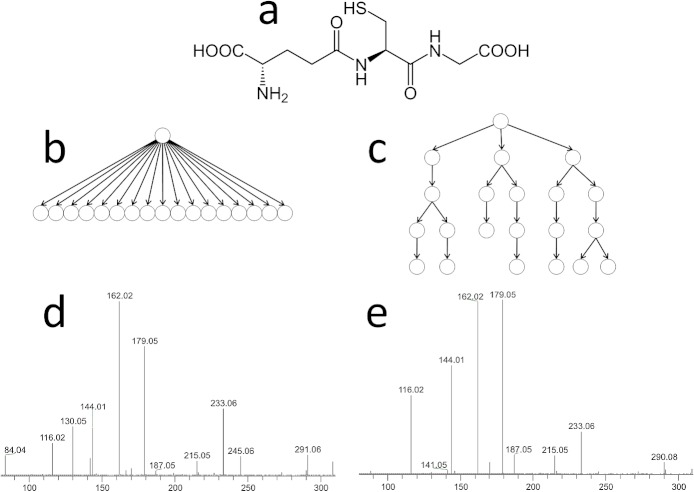
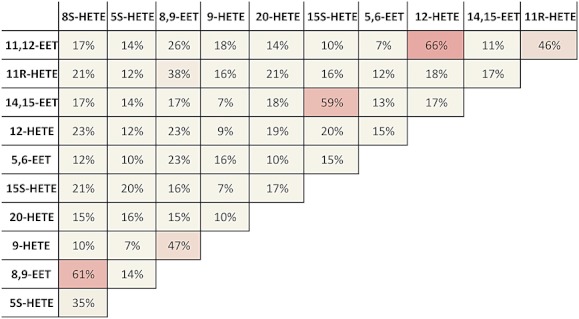
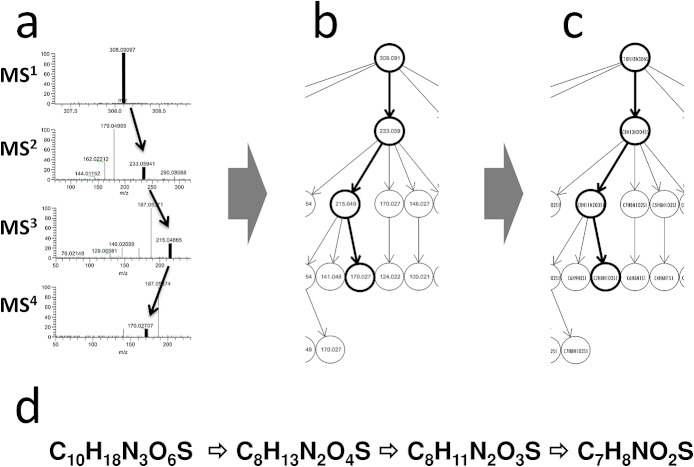
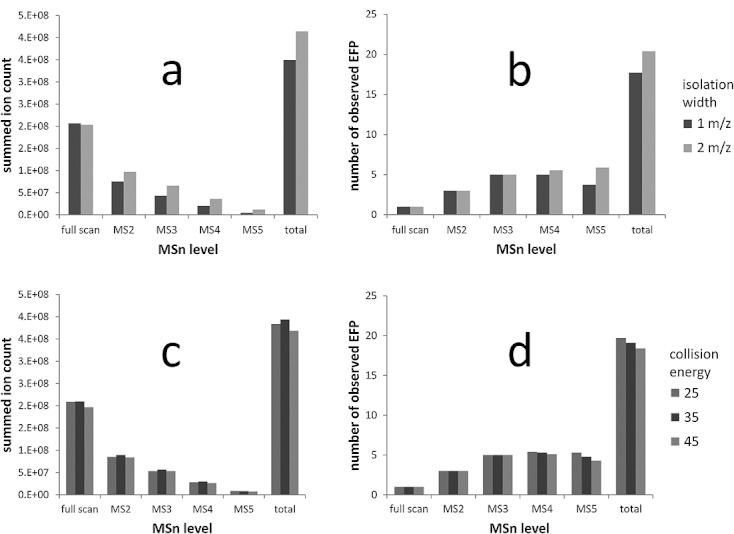
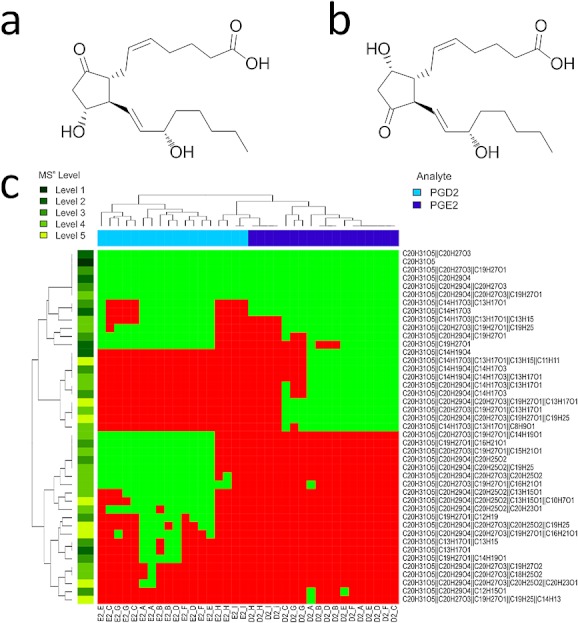
Metabolite identification plays a crucial role in the interpretation of metabolomics research results. Due to its sensitivity and widespread implementation, a favourite analytical method used in metabolomics is electrospray mass spectrometry. In this paper, we demonstrate our results in attempting to incorporate the potentials of multistage mass spectrometry into the metabolite identification routine. New software tools were developed and implemented which facilitate the analysis of multistage mass spectra and allow for efficient removal of spectral artefacts. The pre-processed fragmentation patterns are saved as fragmentation trees. Fragmentation trees are characteristic of molecular structure. We demonstrate the reproducibility and robustness of the acquisition of such trees on a model compound. The specificity of fragmentation trees allows for distinguishing structural isomers, as shown on a pair of isomeric prostaglandins. This approach to the analysis of the multistage mass spectral characterisation of compounds is an important step towards formulating a generic metabolite identification method.
代谢物鉴定在解释代谢组学研究结果中起着至关重要的作用。由于其灵敏度和广泛应用,电喷雾质谱已成为代谢组学中最受欢迎的分析方法之一。在本文中,我们展示了我们在尝试将多级质谱的潜力纳入代谢物鉴定常规中的结果。开发并实现了新的软件工具,以促进多级质谱的分析,并允许有效地去除光谱伪影。预处理的碎片模式被保存为碎片树。碎片树是分子结构的特征。我们展示了在模型化合物上获取这种树的重现性和稳健性。如一对异构前列腺素所示,碎片树的特异性允许区分结构异构体。这种分析化合物多级质谱特征的方法是制定通用代谢物鉴定方法的重要步骤。